

Plans for the construction of the Sea and Salt Museum and its surrounding area in Torrevieja have been approved. The project is co-financed by the European Union through the European Regional Development Fund (ERDF). Alongside the museum, approval was granted for the construction plans of the Saltworks Administration Building and the Saltworks’ Easel, which were drawn up by Pedrosa Arquitectos SLP. The base budget for the tender is €15,494,541 including VAT, with a planned construction period spanning 20 months.

This budget does not cover the construction of the open-air auditorium intended to host the International Habanera Competition. The governing team is expected to announce the details for the auditorium in the coming weeks, with its budget also set to exceed ten million euro. Both projects will be put out to tender simultaneously, and deadlines will commence once the construction contract is formalised.
Ongoing works
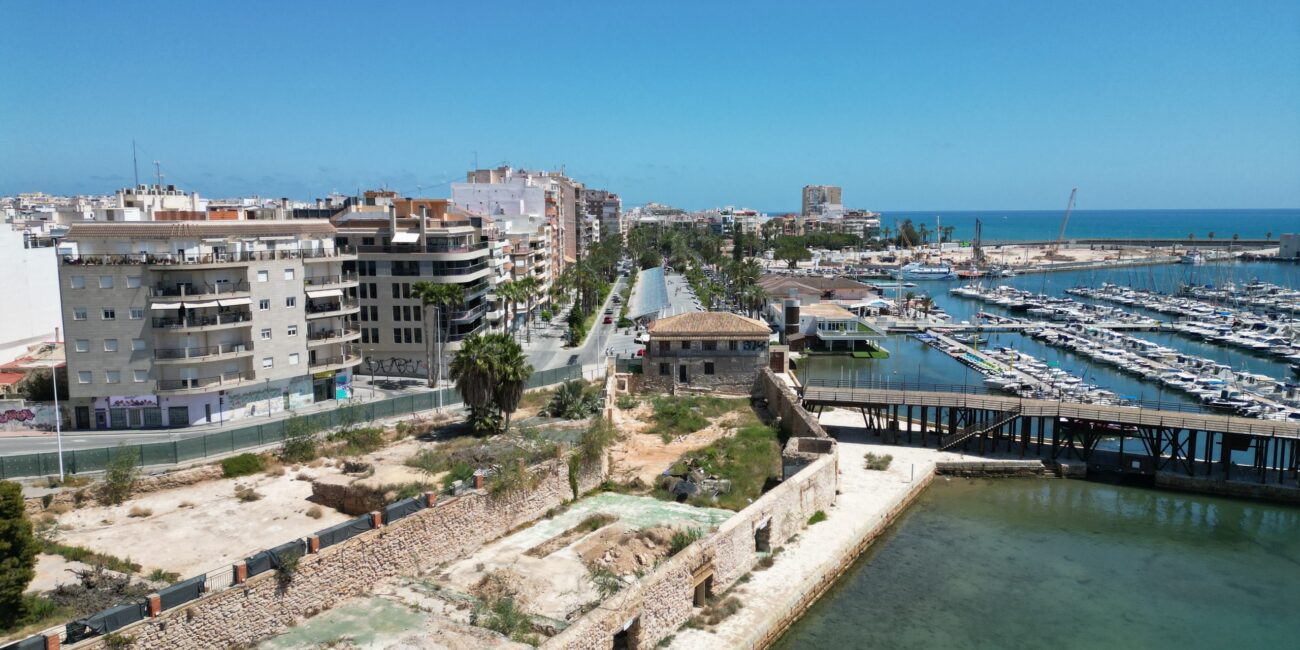
This approved plan guarantees that the site, which represents the historical origin of Torrevieja as a municipality, will be under construction during the final stretch of the current term. At present, the site is semi-abandoned, overgrown with weeds, and severely deteriorated around the sounding board. This includes archaeological remains discovered during council-commissioned excavations in both the upper and lower threshing floors. Part of the upper threshing floors is currently being utilised as a truck parking and storage area for materials required for the renovation of the Ice Factory.
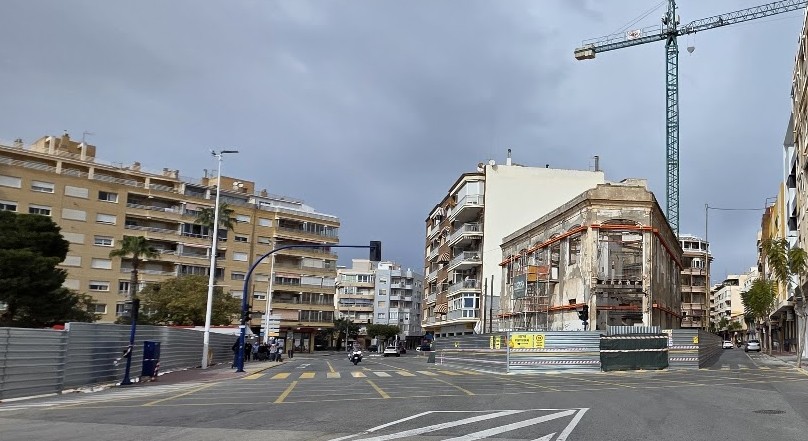
The deterioration has been hidden for several months by a perimeter fence displaying images of the final envisioned design. The council aims to create more pedestrian space with an upper promenade, named “Paseo de la Sal,” and a lower promenade, formerly referred to as “Paseo del Mar” before the name was taken by the leisure centre. This lower path will connect the Maestro Velero path with the Vista Alegre promenade, featuring a museum with a park on the upper deck. The project presents a “contemporary” vision for the rehabilitation of the 18th-century site.
The final project was approved by the governing board last Friday, five years after it was initially announced in February 2021 by Eduardo Dolón and the then president of the Provincial Council, Carlos Mazón, during a press conference at Eras de la Sal. During the 2023 election campaign, Dolón presented the project as imminent. Since 2022, he has repeatedly assured the public that the International Habaneras Competition would return the following year to its historic venue. However, the project faced delays due to its overall complexity, a lack of authorisation from the Consell (Valencian Government) regarding the use of the port’s public domain for the auditorium, and the municipal priority of financing the redevelopment of the waterfront next to the leisure area.
According to the City Council, this approval completes a decisive phase for one of the most important strategic projects for the urban and heritage transformation of Torrevieja, allowing the recovery and enhancement of the historical complex of the Eras de la Sal as a cultural, tourist, and civic space open to the sea.
A contemporary approach
The project opts for a contemporary intervention to recover the salt industrial landscape and reinforce the historical identity of the enclave. It aims to articulate the relationship between the museum, the Eras de la Sal, the new Paseo de la Sal, and the seafront through a sequence of public spaces, squares, and pedestrian routes to connect heritage, culture, and urban activity.
A major objective is to integrate the exhibition environment with the salt landscape, creating parallel routes at different levels. This is intended to help visitors understand the history and evolution of the salt activity that founded Torrevieja, whilst improving accessibility, reinforcing the continuity of the seafront, and transforming fragmented spaces into a coherent urban complex.
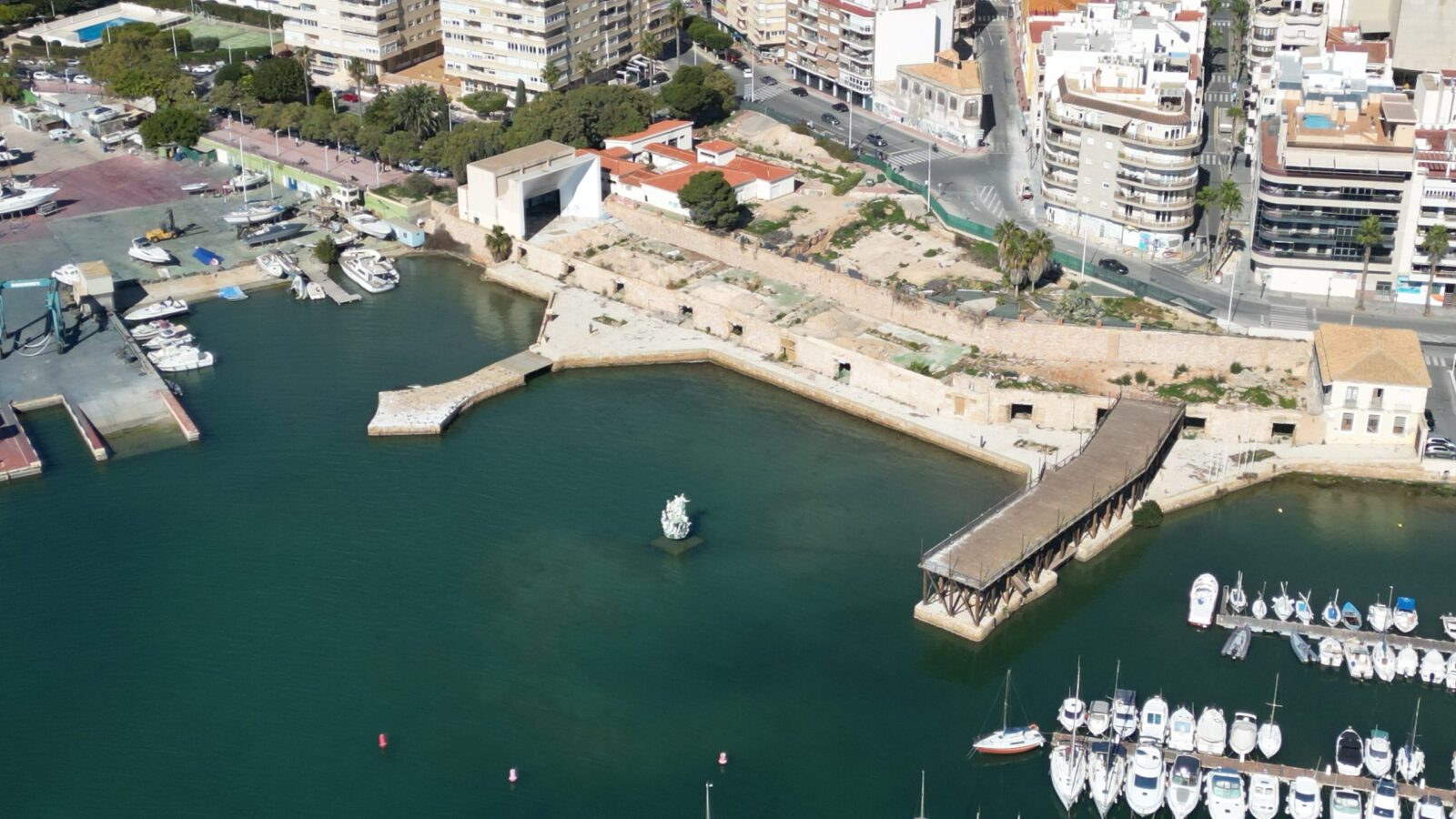
Of the total investment, 11,761,032.88 euro is allocated to the construction of the Sea and Salt Museum. Meanwhile, 3,733,508 euro will fund the execution of the new Salt Promenade, which runs through the upper area of the Eras along what is currently Faleria avenue and the Eras Altas. This promenade will act as a backbone for the heritage and cultural complex, connecting the Lower Era section, its walls, and the trestle with the Maestro Velero promenade to the south and the Vista Alegre promenade to the north.
The governing body also approved the execution project for the Salinas Administration House, a protected building listed as an Element of Urban Architectural Interest. The project will restore this historic building, respecting its architectural values by restoring its facades, interior spaces, and original structural elements. It will be adapted for the new cultural and museum uses planned for the Eras de la Sal complex. Studies carried out by the University of Alicante in 2021 found the building to be in very poor condition on the exterior but structurally sound inside. It will serve as a transition point between the city, the museum, the promenade, and the waterfront.
The Saltworks’ Easel
The project also features the comprehensive restoration of the Saltworks’ Easel, a structure built in 1999 as an improvement to the Juan Aparicio promenade. Though the municipal press release notes its historical significance as a representative symbol of Torrevieja’s salt-producing industrial heritage, it is a modern recreation. The restoration will focus on consolidating its structure, correcting structural defects, and adapting it to current safety and conservation standards.
The intervention aims to reinforce the structure’s role as a visual landmark of the salt flats landscape and as a fundamental element within the future cultural and tourist route of the Salt Works. The City Council has announced the project, though access to the foundational document for managing the public funds has not yet been provided.

