


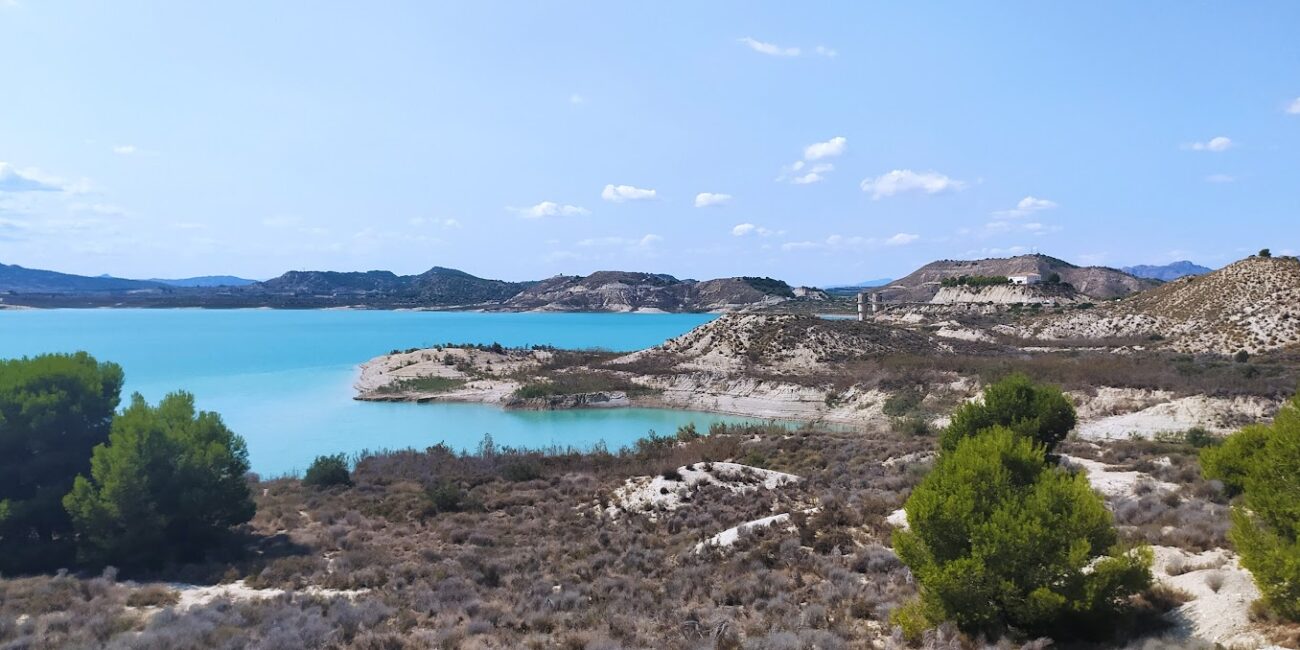
Shortly after it became known that the state-owned company Acuamed is opting for a mega solar plant on 140 hectares in San Miguel de Salinas, Los Montesinos, Almoradí and Orihuela to supply the Torrevieja desalination plant, the Orihuela Chamber of Commerce has proposed the La Pedrera reservoir, also known as Torremendo, as the location for the photovoltaic plant that will serve the infrastructure, an idea that the Government itself actually considered three years ago.

The desalination plant needs a solar power generation plant, with a capacity of at least 60 megawatts per year, to reduce its enormous energy consumption of around 50 million euro annually. The project is key to lowering energy costs and, therefore, reducing the price of a cubic metre of desalinated water for agriculture. It will also expand the capacity of the desalination plant, the largest in Europe in terms of production, by 50 per cent, from the current 80 cubic hectometres per year to 120.
In 2023, the possibility of locating it within the 1,400 hectares of water surface of the reservoir was raised, something technically viable, since its reserves only depend on artificial contributions from the transfer and the desalination plant itself but which would environmentally clash with the future Sierra Escalona Natural Park in which it is located.
The project on almost 200 hectares in the plain of Campo de Salinas was also discarded due to the considerable social rejection that the action provoked among the owners, many of them residents in the affected lands.
Thus, different alternatives have been studied to carry out the project announced in early 2024 by the Prime Minister, Pedro Sánchez, during his visit to the Torrevieja desalination plant. What the irrigators do not want is a lower cost at the expense of losing irrigated land.
Precisely in this context, during the conference on the Natural Resources Management Plan (PORN) of the Sierra de Escalona and the Dehesa de Campoamor, organised by the Chair of Water Efficiency and Sustainable Agriculture of the University of Alicante, the various modifications that this plan has undergone were addressed to include the installation of a photovoltaic plant that will serve the desalination plant and allow for a reduction in energy expenditure on the conventional network, thereby protecting the environment and lowering the price of water for irrigators.
The president of the Orihuela Chamber of Commerce, Mario Martínez, stated that the institution’s proposal for this installation in La Pedrera is based on “the project of a young businessman from Orihuela who a few years ago won an award in the Orihuela Emprende programme of the UMH and who proposed photovoltaics in irrigation ponds, as well as on the opinion requested from several experts.”
Martínez explained that the photovoltaic installation was included in a modification to the plan affecting the municipalities of Orihuela, San Miguel de Salinas, and Pilar de la Horadada, and that only the latter submitted objections within the established timeframe. “Since the period for submitting objections has already passed, the only option is to submit objections to the project itself, and this is the proposal we are making from the Chamber.”
The chamber representative is aware that the proposed solution may affect the landscape but added that “it’s an installation that, whether we like it or not, is going to be built, and it will allow our farmers to have cheaper water.” If we don’t propose the location from our region, someone will impose it on us. He added, “If we have to choose between the economy and a photo of the La Pedrera reservoir, I choose to sacrifice the photo.” However, he assured that other options that don’t affect the natural park as much can be explored, such as installing the panels on the roofs of buildings, irrigation ponds, and other alternatives.
Martínez also emphasised that the underlying problem is regional, and therefore the solution must be adopted by the entire region. He was referring to the fact that the Regional Natural Resources Management Plan (PORN) also opens the door to the waste treatment plant being located in Torremendo—a move that prompted several residents to protest outside the Parliament building throughout the day. “In the Vega Baja region, we still don’t have a place to take our waste, with unacceptable environmental and economic costs,” stated the president of the institution, adding that “the real problem we have is the lack of unity; everyone is acting independently, and we need to create a regional awareness.” To this end, he indicated that it is necessary to reinstate the Regional Council to “discuss, together, the solutions for the future of our territory.”