


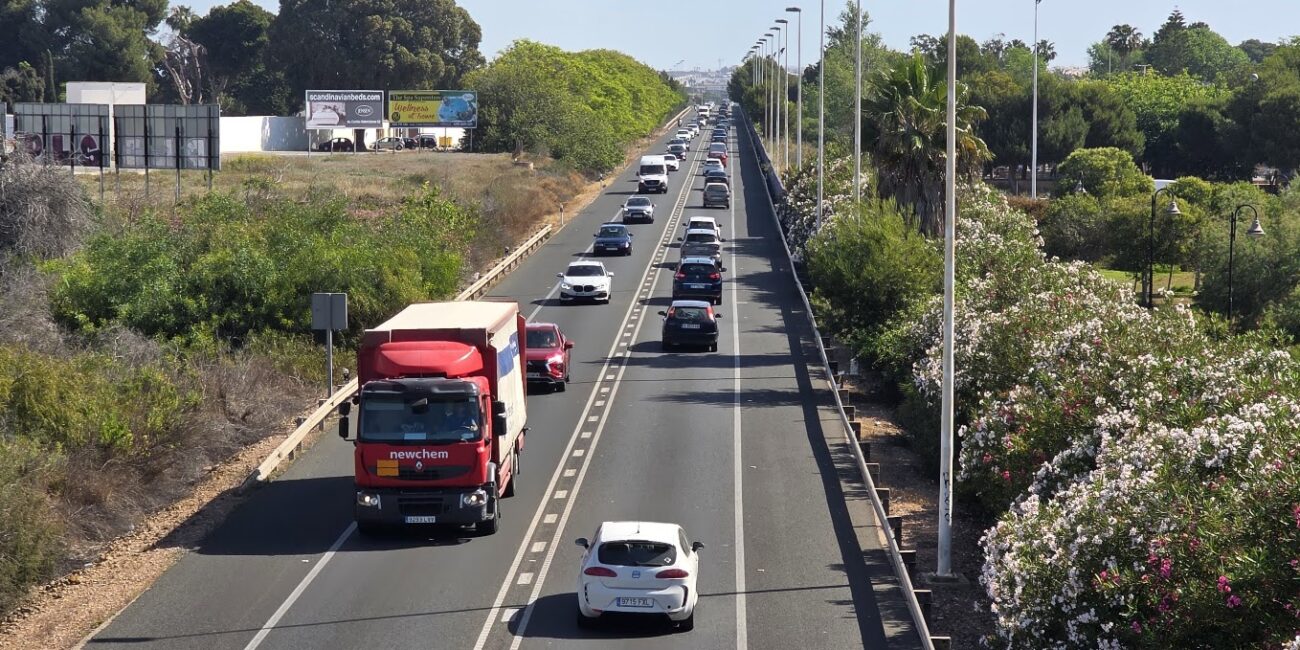
Widening work on the N-332 bypass through Torrevieja remains far from starting. As political representatives repeat the annual summer ritual of blaming one another for delays spanning more than twenty years, and with the Ministry of Transport failing to issue an official statement, an informal proposal is circulating among professionals who drive the route daily. They suggest implementing a temporary third lane, adjusting directions towards Alicante or Cartagena depending on traffic volume. The measure aims to ease severe congestion on a stretch that currently features just one lane in each direction yet handles up to 55,000 vehicles per day during peak months in July and August.

Physical limits of the roadbed
Documentation for the long-delayed road expansion project shows that the existing carriageway, constructed in the 1980s, consists of two 3.5-metre-wide lanes totalling 7 metres in width, alongside hard shoulders of at least one metre on each side. A total width of 7 metres of main road surface makes fitting three standard 3.5-metre lanes impossible.
The current layout enables emergency service vehicles, including fire engines and ambulances accessing Torrevieja University Hospital, to pass through heavy congestion. The shoulders also allow motorcyclists to filter past tailbacks. Adding a third temporary lane would require using shoulder space and reconfiguring the entire road surface, necessitating a complete technical safety review.
Creating three standard lanes without extending the overall structure would require 10.5 metres of lane width alone. Project planning would also need to address rainwater drainage, clearance spaces, side safety barriers, and road access points. Simply repainting line markings would not be sufficient, though it would cost significantly less and take far less time than the full 4.47-kilometre duplication project budgeted at over 50 million euro.
Comparisons with Orihuela Costa
Proponents of the temporary lane highlight the N-332 dual carriageway through Orihuela Costa further south, where two lanes run in each direction with virtually no hard shoulders. Its overall safety performance has not been formally questioned since opening in the late 2000s, when nearby commercial and residential access roads constrained the space available for shoulders.
Traffic authorities have previously made safety modifications across the eight-kilometre Torrevieja bypass. Following fatal crashes in 2010, clearer signs were erected to prevent drivers mistaking two-way sections for single-direction carriageways, particularly between the Quirón Hospital and Ozone areas.
Flashing warning signals were subsequently added to alert drivers to queueing traffic, overtaking across double continuous lines was banned in 2014, and the section near the San Roque and Villa Amalia residential developments was classified as an accident blackspot. While severe head-on collisions dropped, rear-end shunts increased as motorists encountered sudden tailbacks.
Growing congestion issues
Data from the Directorate General of Traffic (DGT) indicates that congestion has intensified this summer. Tailbacks heading toward Cartagena traditionally began at the Ozone-IMF commercial zone slip road, but queues extended along the entire eight-kilometre stretch up to Quirón Hospital on peak days.
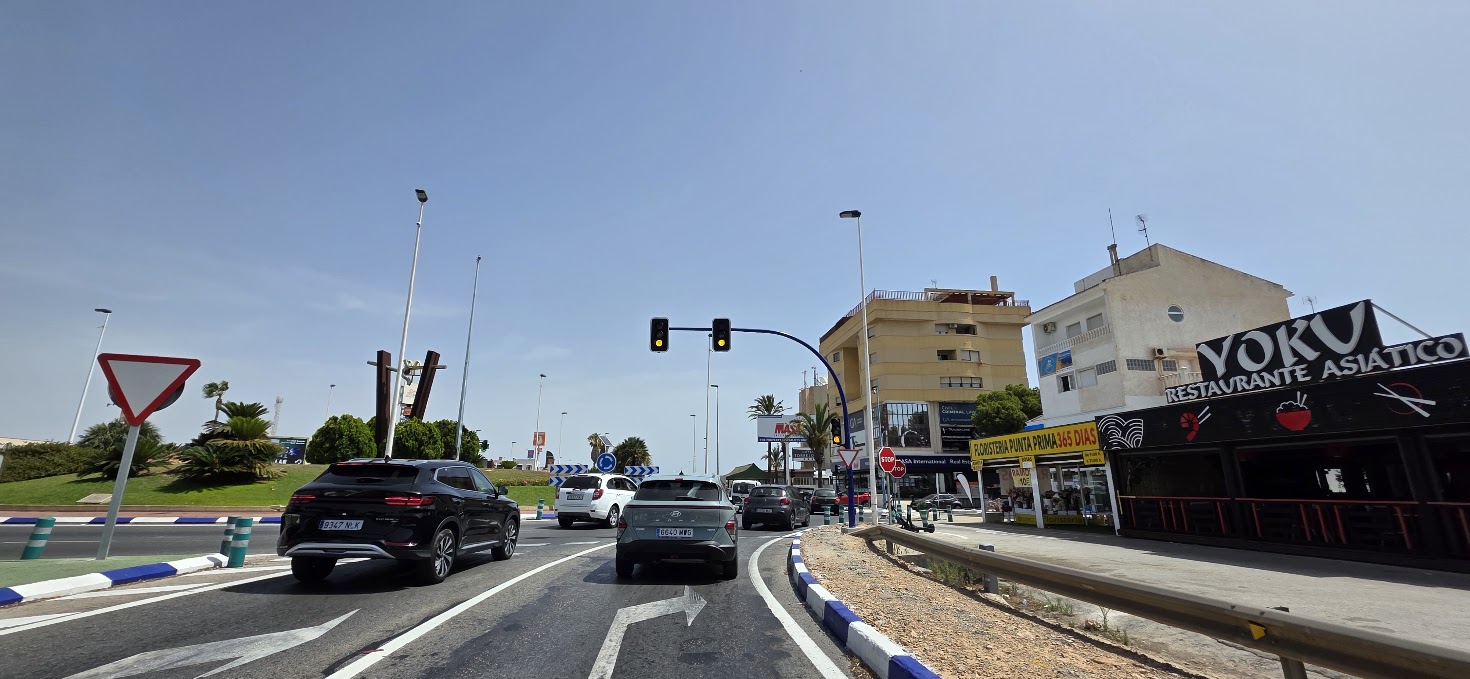
Local congestion has been further complicated by the recent introduction of an experimental smart traffic light system at the Punta Prima-Rocío del Mar roundabout, a 400,000 euro project managed by the Ministry of Transport. Additionally, parking shortages near Acequión and Los Náufragos beaches have led some San Roque residents to park vehicles on the N-332 slip road itself, creating further obstructions.