

Orihuela City Council has approved three direct grants totaling almost 100,000 euro for the Diocese, the Historical and Artistic Board of the City of Orihuela, and the Miguel Hernández Foundation. Since these grants are not earmarked funds included in a municipal budget specifically approved for 2026, but rather the accounts have been extended from the previous fiscal year, they have had to be processed as direct grants on an exceptional basis. This requires that the reasons of public, social, cultural, tourism, and economic interest justifying their direct award be expressly demonstrated, as well as the reasons why they are not being carried out through a public call for proposals under a competitive bidding process.

Specifically, 63,000 euro is being granted to the Church for the third consecutive year. This amount remains the same, despite the fact that the plenary session in April 2025 approved a motion to increase it to 100,000 euro — a peculiar initiative that presented two paradoxes: it was promoted by Vox, which used this tool despite being part of the governing coalition, and it passed thanks to the support of the PSOE, as their PP partners abstained.
The file contains a report of suspensive objection from the Intervention, which indicates that the legal report and the memorandum provided by the managing centre — the Department of Culture — lack sufficient justification regarding the exceptional nature of the subsidy, the reasons of public, social, economic or humanitarian interest and the reasons that hinder its processing through a public call under a competitive bidding system, something that was remedied by emphasizing that the Bishopric presents “a singular character” that does not respond to “a subjective preference of the City Council nor to the religious condition of the entity, but to the objective circumstance that it is the owner and responsible for an essential and irreplaceable part of the historical-artistic heritage of Orihuela.”
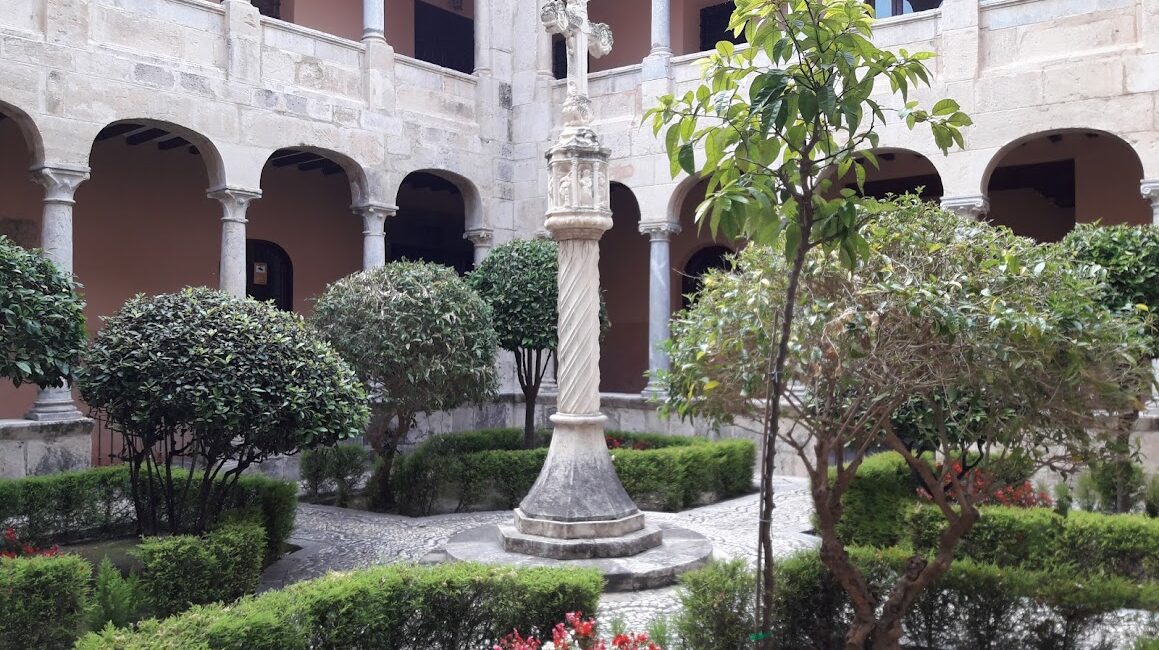
In this regard, the purpose of the aid is to collaborate in the promotion, conservation, opening, dissemination, and enhancement of “specific, unique, and highly distinctive assets” that “no other entity can undertake,” such as the Episcopal Palace, the Diocesan Museum of Sacred Art, the Diocesan College of Santo Domingo, the cathedral, the Church of Saints Justa and Rufina, the Church of Santiago el Mayor, and the Sanctuary of Our Lady of Monserrate. All of these, it is added, have been declared Assets of Cultural Interest due to their special historical, artistic, architectural, documentary, and museological significance.
Thus, it is specified that the aid may not be used to finance acts of worship, liturgical celebrations, pastoral, catechetical, sacramental, doctrinal or internal religious organisation activities, but will be used for the promotion, conservation, dissemination, opening, revitalisation and enhancement of the tourist-cultural value of the historical-artistic heritage owned or managed by the Church during the year 2026, due to its unique relevance to the municipal public interest.
In this way, the Bishopric will promote public access to these properties, allowing the City Council to conduct guided tours, cultural activities and official visits, fostering culture and cultural tourism and ensuring that these assets can be known, visited, interpreted, preserved, disseminated and enjoyed by citizens, visitors, researchers, tourists and educational centres.
Likewise, the PP-Vox coalition government is once again providing direct aid of 15,000 euro to the Miguel Hernández Cultural Foundation, an amount that increased by 150% last year, rising from the usual 6,000 euro since 1994. The funds must be used exclusively for expenses related to the organisation, judging, and awarding of the “Miguel Hernández-Comunidad Valenciana” International Poetry Prize in this year’s edition.
The third grant is intended to contribute to the financing of cultural, educational, publishing, literary, and heritage promotion activities included in the project submitted by the Valencian Community Foundation Historical-Artistic Trust of the City of Orihuela for the year 2026, which coincides with the cultural commemoration of the Year of Theodomir. In this regard, it is specified that the public purpose pursued is not to generically finance the ordinary activities of a private entity, but rather to contribute to the execution of a unique cultural project directly linked to the defence, conservation, promotion, study, and dissemination of the historical, artistic, archaeological, and documentary heritage of Orihuela.
Other Articles

Fire breaks out at car park near Alicante-Elche Airport
Seven arrested after 2.4 kilometres of copper cable stolen