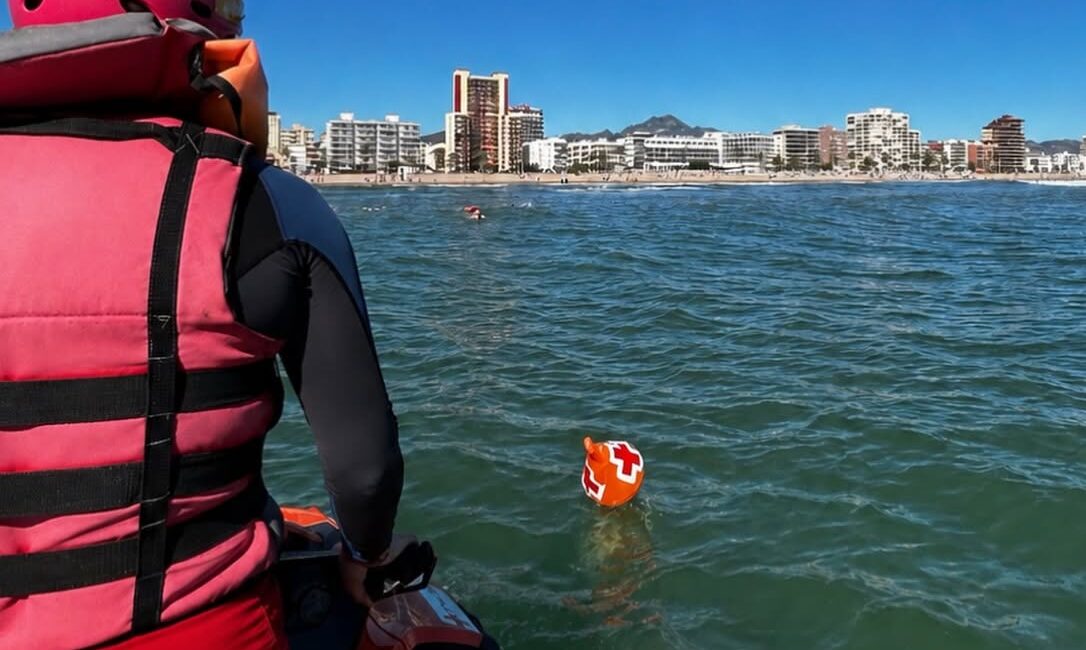
The summer season demanded intense activity from the Red Cross Maritime Rescue service in Dénia. During the months of July and August, the operational unit carried out 62 interventions at sea, with actions ranging from towing disabled vessels to rescues and searches for people, fires, sinkings, and a medical evacuation.

Behind these figures was a team consisting of 37 people, including 36 volunteers and one Maritime Rescue technician, which kept the service operational 24 hours a day throughout the 62 days of July and August. To make this possible, three daily shifts were organised—morning, afternoon, and night—accumulating 517 duties and nearly 3,800 hours of volunteering. More than a third of the duties were carried out at night.
Towing disabled or endangered vessels constituted the most common type of intervention, with 23 actions. These were joined by eight rescues and searches, some related to activities such as kayaking, paddle surfing, and wing foiling.
The record also includes three vessel fires, two of them outside the municipal boundary of Dénia, in Gandia and Oliva; three sinkings, one of them inside the port; and a medical evacuation from the coast of Cova Tallada. The Red Cross intervention dossier also logs another 22 actions.
The rise in recreational activities at sea was similarly reflected in the emergencies attended to. Specifically, five interventions were linked to light nautical leisure, involving paddle surfing, kayaking, wing foiling, and jet skis.
The Red Cross records also highlight the work behind every outing. Out of the 517 duties covered during July and August, 184 corresponded to the night shift, from 10 pm to 8 am, representing 36 percent of the total. Another 181 shifts were carried out in the afternoon and 151 in the morning.
In addition to the hours on duty, preparation is essential to face emergencies. During those two months, the team carried out 15 training activities, at a rate of approximately one every four days. These included nine training sessions, four drills, and two joint exercises with the Maritime Rescue helicopter.
Each trip out to sea relies on many hours of duty and training that are not visible. This summer, 37 people remained prepared, day and night, to respond when needed, as summarised by Lola Panadés, technical coordinator of Maritime Rescue for the Red Cross in Dénia.
Other Articles
Guardia Civil smash fuel fraud ring in Alicante and Murcia
Man injured in random stabbing in Guardamar del Segura
