

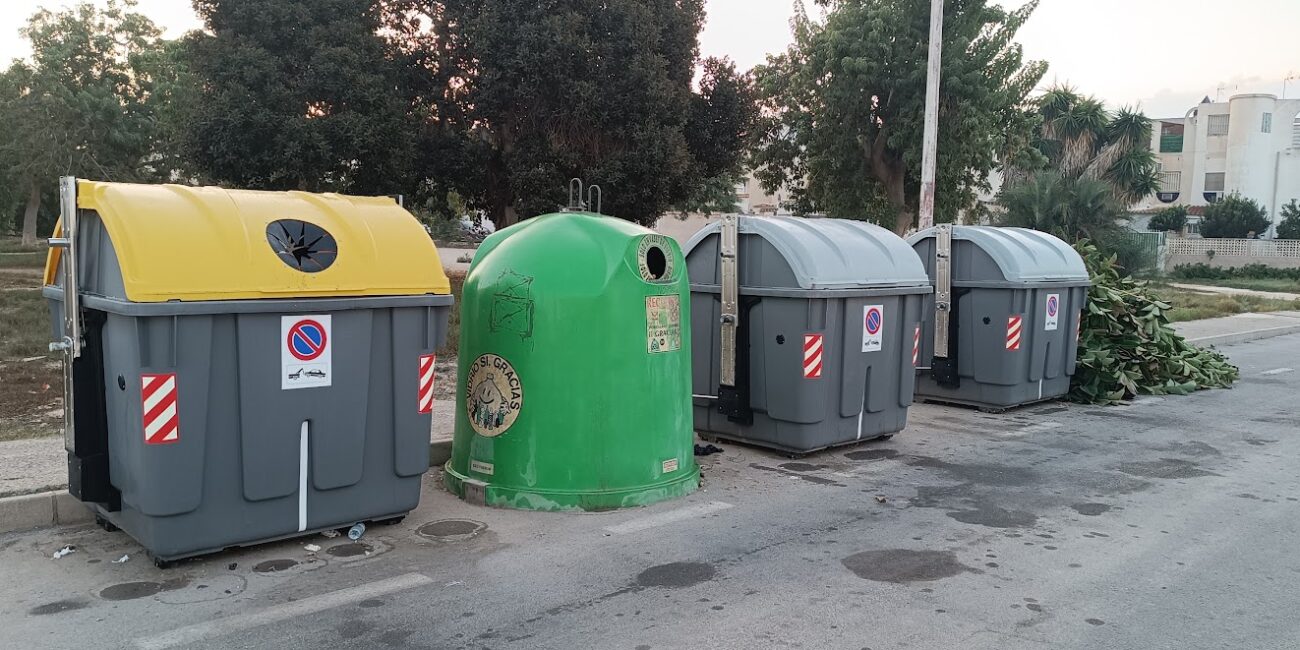
Torrevieja City Council plans to begin implementing the brown bin system for the separate collection of organic waste in November. The rollout will start in the city centre, where the new bins will be placed alongside existing container collection points, before expanding to La Mata and other areas of the municipality.

The Councillor for Urban Cleaning, María José Ruiz, explained yesterday, Tuesday 20th October, that the local authority has divided the municipality into zones. The cleaning plan will start in the city centre, taking advantage of a period of lower activity prior to the local festivals and Christmas. The schedule will remain flexible, as the time required to complete each area could bring forward or delay the transition to the next location.
The brown bins will primarily be integrated into existing collection points. According to the planning for the area, there are more than 700 complete collection points and approximately 190 others that currently only feature a general waste container. At some of these latter sites, an organic waste bin will also be added to reduce distances and offer both disposal options.
Deciding to deploy a new container is always complicated. The container islands in Torrevieja currently host between four and seven bins. Adding another could trigger further complaints from residents—similar to those raised in late 2022 when the new containerisation was implemented—who do not wish for their building facades to become rubbish dumps. Overflowing containers and other waste remain common at the end of the day, and occur daily during the summer, compounded by the inconvenience caused by passing collection lorries.
The installation will be accompanied by an information and awareness campaign that will be rolled out as the new container arrives in each zone. The phased rollout also addresses the difficulties of conducting the work simultaneously across the entire city, including restrictions on reserving parking spaces and managing traffic during operations.
The November start date represents a further delay compared to previous projections. At the start of the year, February was considered as the start date for implementation, a timeline that was ultimately not met. Ruiz maintains that planning is now complete and that, barring unforeseen circumstances, the first containers will begin to be installed during November.
The inclusion of the organic waste fraction also brings with it an outstanding issue from the beginning of the cleaning and waste collection contract. Acciona’s winning bid included, as a preferred improvement, the installation of privacy screens around the containers designated for organic waste.
That upgrade cannot be implemented now as originally proposed. The design envisioned at the time was for rear-loading containers, which could be removed from the enclosure for emptying. However, the fleet was ultimately renewed almost entirely with side-loading lorries, and this is the system that will finally be implemented. Because of this, the lorry needs direct access to the container, and the planned panels would prevent proper collection. The City Council maintains that the improvement has not been offset by another and is working on an alternative solution.
Separating organic matter can also reduce treatment costs, although the outcome depends on the waste arriving free of contaminants for recycling as compost or fuel. When the brown bin contains materials that do not belong in this category, it ends up being treated as mixed waste, making its cost equivalent to that of conventional rubbish and rendering the separation and treatment effort pointless.
Theory indicates that 60% of the contents of a typical household rubbish bag is organic matter. This means that if every household properly separated its waste at source and recycled it, the volume of rubbish that ultimately ends up buried without being repurposed should be at least 40%. Currently, almost 70% of waste ends up buried, creating capacity issues at facilities and high disposal costs for municipalities: around 150€ per tonne in the Vega Baja region, which lacks an authorised landfill.
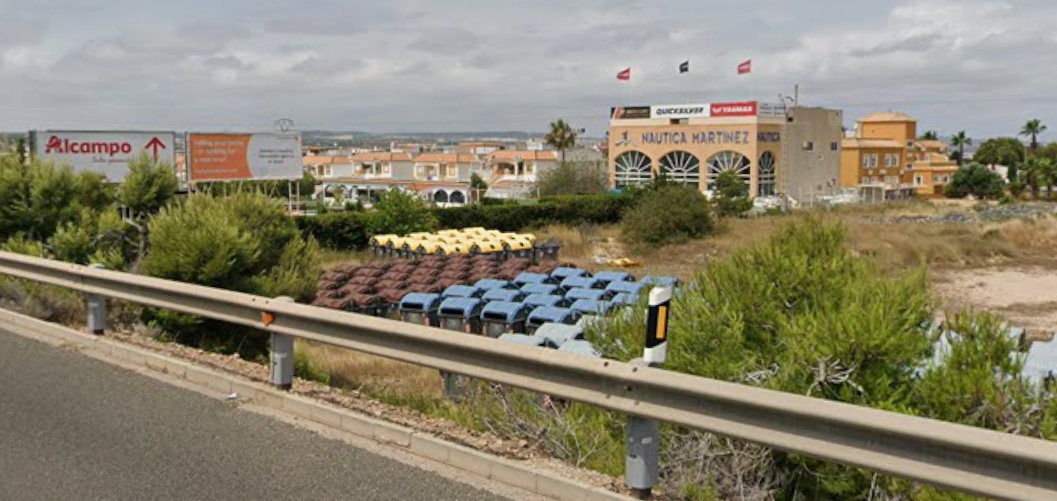
The organic waste containers have been stored in the pruning and algae management facility of the UTE Cuida Torrevieja, formed by Acciona and Grupo Hozono (Actúa), since last January.
Torrevieja is the largest generator of waste in the region, producing over 88,000 tonnes annually out of the 200,000 tonnes managed by the region’s 27 municipalities. It pays 26 million euro for waste collection, street cleaning, and beach maintenance, plus an additional 5 million euro for landfill transport. This expense consumes more than 20% of fixed costs in the municipal budget.
The deployment of organic waste containers was listed in the tender specifications as one of the main objectives of the new service, intended for launch from 2022, alongside being a legal requirement from 2023. Implementation could now begin almost four years later.
Other Articles
Delay to Alicante parking tender after request for further reports
Aena to renew seating at Alicante-Elche Miguel Hernández airport