


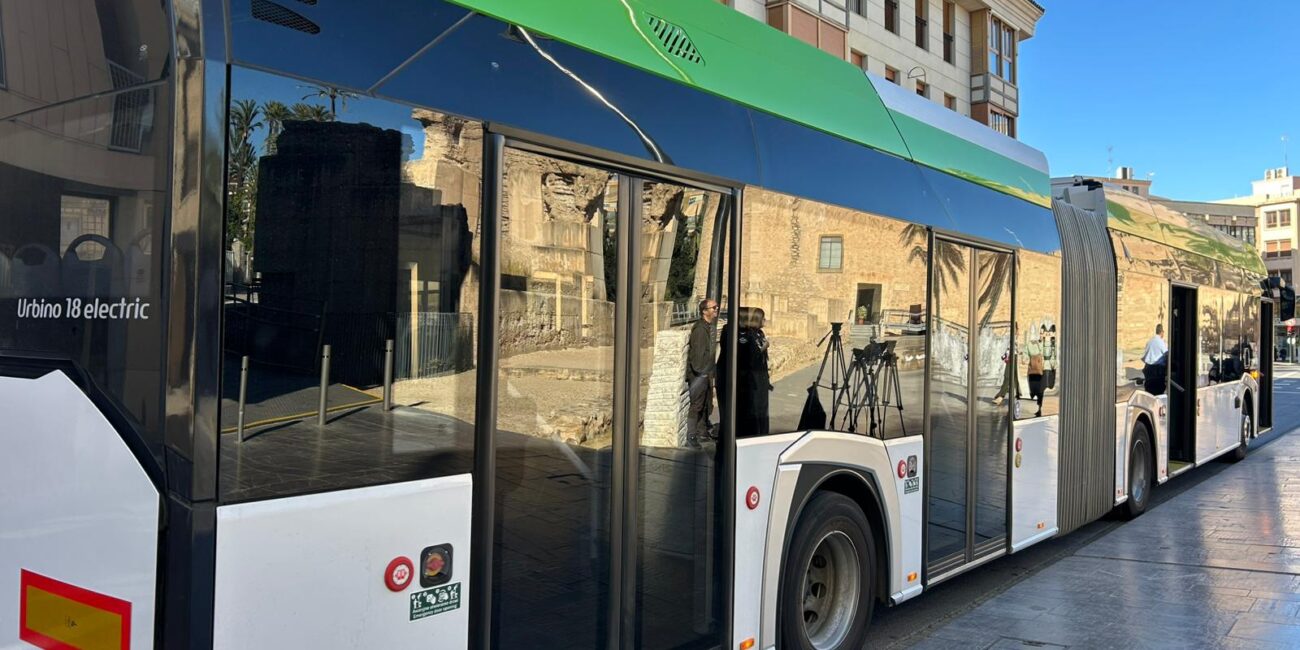
The Mobility Department has begun testing the integration of electric articulated city buses into the transportation system. If implemented, this would be part of the new bus contract, with service set to commence in 2027 or early 2028. Several evaluation phases are presently underway to determine the practicality of deploying these buses in the municipality, as their size would limit them to specific lines and routes while also disrupting ordinary bus routes.

This week, technical assessments are being carried out to investigate implementation possibilities, driver training, depot and workshop layout, and economic costs. A second phase will be used to test the technology with passengers. The investigation is currently focusing on the lines with the most demand and utilisation, which include K1, K2, D, and B, as well as longer routes. The vehicles’ size limits their manoeuvrability on tiny streets and curves, especially when considering angles and turns.
These buses are 1.5 times the size of conventional buses, ranging from 12 to 18 metres in length and seating 120 to 125 people. As a result, it is vital to investigate how, and if possible, to fit the cars into specific streets while taking into account curbs, roundabouts, and other impediments. Councilman Claudio Guilabert stated that a grant has been requested to further investigate these experiments and their prospective adoption.
If these buses enter service, bus stop platforms will need to be extended to 18 metres. This will require considerable improvements on major thoroughfares like Avenida de la Libertad in Novelda and Vicente Blasco Ibáñez. Ángel Luis Andreu, manager of Elche’s Urban Buses, stated that they are considering using them for specific services or periods, such as summer months at the beaches or to improve school bus operation.
And, because these are higher-capacity trucks, their service may interrupt the frequencies and schedules of other lines. Nonetheless, the economic sustainability of this option must be investigated, according to Guilabert, who adds, “We are studying these alternatives as a result of the increase in public transport users.” As a result, more spacious buses are being considered.
The new contract looks ahead until 2028
Regarding the new tender criteria for the contract renewal, which would integrate the service for the town center and outlying regions, a study to explore ideas and alternatives for the full service will be awarded soon. It’s worth mentioning that buses will not run in the northern outlying areas, which are mostly country roads. As a result, the option of employing minibuses was previously mentioned, and this study will need to clarify the problem. The council will issue a tender for the new contract, with an effective date of 2028. This period accounts for the appropriate procedures, public consultation, and other bureaucratic processes, which might take place between the end of this year and sometime in 2027. In addition, the contract will be subject to harmonised legislation and published in the European Official Journal.

