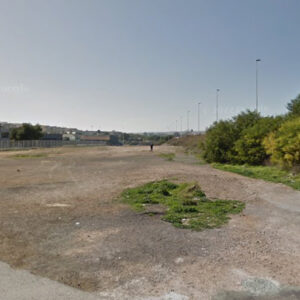



The Environmental Prosecutor’s Office has brought the initial cases to trial as a result of a comprehensive investigation into illicit construction in rural areas of Alicante. Last year, a comprehensive inspection campaign was implemented, and the findings are currently being presented in the courts as criminal proceedings with allegations of violations of land-use regulations. One of these cases, which pertains to the unauthorised construction of a building on rural territory in the Fontcalent district, has already been referred to a criminal court with a request for a two-year prison sentence for the accused.

The case is a component of Operation Urbanitas, which was initiated by the Nature Protection Service (Seprona) of the Guardia Civil. As a result of this operation, 64 individuals are currently under investigation for offences against land planning and urban development, as well as in certain instances, document forgery and tax fraud.
In the current trial, the indictment alleges that the defendant, a 48-year-old male, executed a private purchase agreement with the proprietor of a 2,658-square-metre plot of land on November 1, 2023. The agreement stipulated that the price would be paid in instalments. The defendant was cognisant of the fact that the property is classified as non-developable rural land in the General Urban Development Plan (PGOU) of Alicante, as per the prosecution.
However, the Public Prosecutor’s Office has determined that he was the developer and engaged in unlicensed construction work on a substantial building situated on rural land. To be more precise, he excavated a pit that was approximately 370 square metres in size and three metres deep. Subsequently, he constructed a subterranean level that was 33 metres in length and 11 metres in width. The slab was then covered with concrete. Construction of a second floor was also in progress on top of the extant structure at the time of the inspection.
Seprona agents confirmed the facts on February 5th, 2025, by verifying the construction and the abundance of construction material on the plot, including bricks, blocks, cement, and sand.
The prosecution believes that these actions are a violation of land-use regulations and, as a result, is requesting an 18-month sanction at a rate of €10 per day in addition to a prison sentence. Additionally, it has requested that the landowner’s involvement in the construction work and her awareness of the urban development plans that the buyer intended to implement on the plot be disregarded, as they have not been substantiated.
Disparate criteria and distinct causes
The operation has resulted in the division of the proceedings into numerous procedures, which are currently being processed in various courts in Alicante. This is the first of these procedures to reach the trial phase.
The Public Prosecutor’s Office has already lodged similar indictments for urban planning offences in a number of these cases. Nevertheless, in other instances, the investigating courts have terminated the cases due to a lack of evidence of a crime. The Public Prosecutor’s Office has appealed these decisions to the Provincial Court, arguing that there is sufficient evidence to continue with the criminal case.
This situation is resulting in the generation of varying criteria in the judicial approach to the same urban planning practices, while the Court awaits a more consistent stance.
More than 70 inspections of rural property
The investigation, which was initiated in response to complaints from residents and actions taken on its own initiative, has encompassed over 70 inspections in locations such as Fontcalent, El Moralet, El Verdegás, La Cañada del Fenollar, and La Alcoraya.
The Guardia Civil has identified a pattern in numerous instances, which involves the parcelling of non-urbanisable rural land for sale through private contracts. This process often occurs without a specific allocation within the parent property, thereby transferring responsibility for the entire land to the purchasers.
Additionally, some of these structures are situated in dry riverbed regions, where construction is explicitly prohibited by regulations. This can result in penalties, legal complications, and the demolition of the residences.