

Torrevieja City Council will have to resolve the status of the Temporary Business Union (UTE) of La Hoya as the urban development company if its members fail to reach an agreement to resume urbanisation works. The project, which has the capacity for 7,400 homes and 100,000 square metres of commercial areas, has been practically paralysed since August last year due to disagreements between the UTE members regarding the execution phases.

Sources from the PP government team still see room for an agreement, despite eight months of fruitless negotiations. This deadlock has delayed the development of public infrastructure and the bulk of the Vive Plan in Torrevieja. Developing land involves financing and executing works to convert plots into urban spaces equipped with streets, sidewalks, lighting, water, sanitation networks, and green spaces. In La Hoya, the developers are the majority landowners.
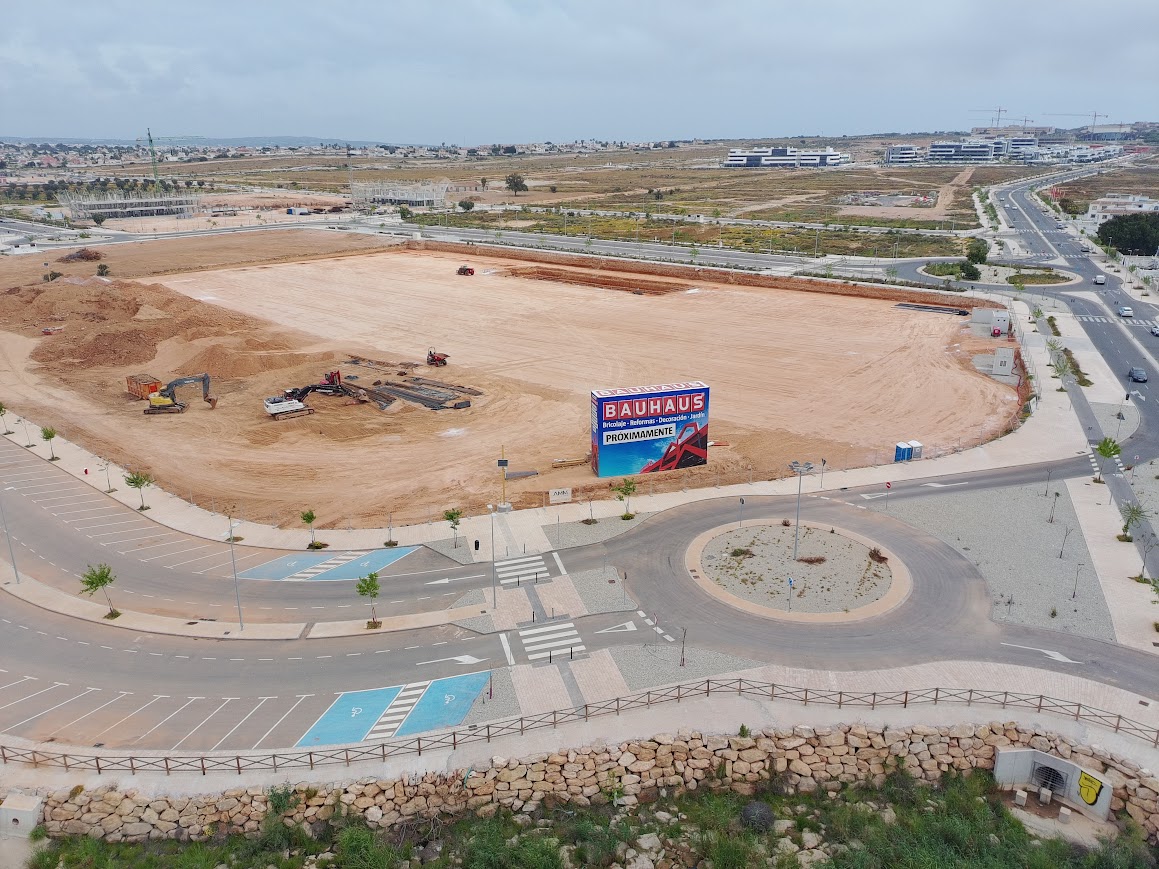
These internal difficulties do not affect the ongoing development of urban plots, which have a capacity of 100,000 square metres of commercial and residential space, approved in the first phase. Approximately 45 per cent of the plan, covering some 800,000 square metres, has already been developed. The area is currently seeing significant construction activity, including housing blocks and the first Bauhaus store in the province, located next to the CV-905 highway.
The UTE management informed the City Council this week of the internal difficulties in reactivating the pending works of Sector 20, following the legal acceptance of phase 1 by the governing board on 17th April 2026, effective from 8th August 2025.
The joint venture is managed by companies linked to the Elche-based Corpic (48 per cent) with minority ownership held by Villaviñas (39 per cent) and the Nicolás Mercader Group (15 per cent). A meeting called to proceed with Phase 2 works ended without an agreement, marking the second meeting that failed.
Corpic proposes a phased implementation of phases 2, 3, and 4 over 24 months. Villaviñas and Grupo Nicolás Mercader rejected this, demanding simultaneous implementation of all phases. Both parties claim their options comply with the plan approved by the Generalitat after 25 years of processing and fulfil the developer’s obligations regarding land transfers and outstanding infrastructure. If no agreement is reached, some members have raised the legally complex possibility of each member carrying out its own sector urbanisation through different implementation units.
The 11-month paralysis of phase 2 compromises important public facilities for the municipality, such as a pedestrian and cycle bridge, the widening of the bridge deck over the N-332, external drainage infrastructure to evacuate rainwater from an area of 1,800,000 square metres towards the salt flats, and the restoration of the Masía de la Hoya Pequeña. Furthermore, it delays the transfer of land for two educational centres and the construction of the bulk of the Vive Plan programme for protected housing in Torrevieja, awarded to Grupo Hozono and Livanto.
The joint venture invested over 30 million euro (including VAT) in the completed first phase. Corpic is marketing the 100,000 square metres of commercial space next to the CV-905 alongside its own residential plots. Licenses already granted by the City Council include those requested by Bauhaus and Consum. Villaviñas has developed several phases of its promotions with around 300 homes, alongside its headquarters and a commercial area. The investment needed for the second phase is estimated at around 12 million euro.
The president of the Generalitat, Juanfran Pérez Llorca, and the mayor, Eduardo Dolón, officially launched the Vive en Torrevieja Plan in the La Manguilla sector, on La Mata beach. This plot contains only 30 of the more than 750 subsidised housing units planned for La Hoya. The event was held there because the Vive Plan lacks a permit in La Hoya. Developments can begin at the same time as urbanisation works, but never simultaneously.
Meanwhile, the La Hoya Joint Venture has demanded that the City Council assume responsibility for the maintenance of green areas and irrigation systems in Phase 1, following the legal acceptance of the works. The joint venture points out that from 8th August 2025, the City Council assumed ownership of water and energy supplies for irrigation and general maintenance.
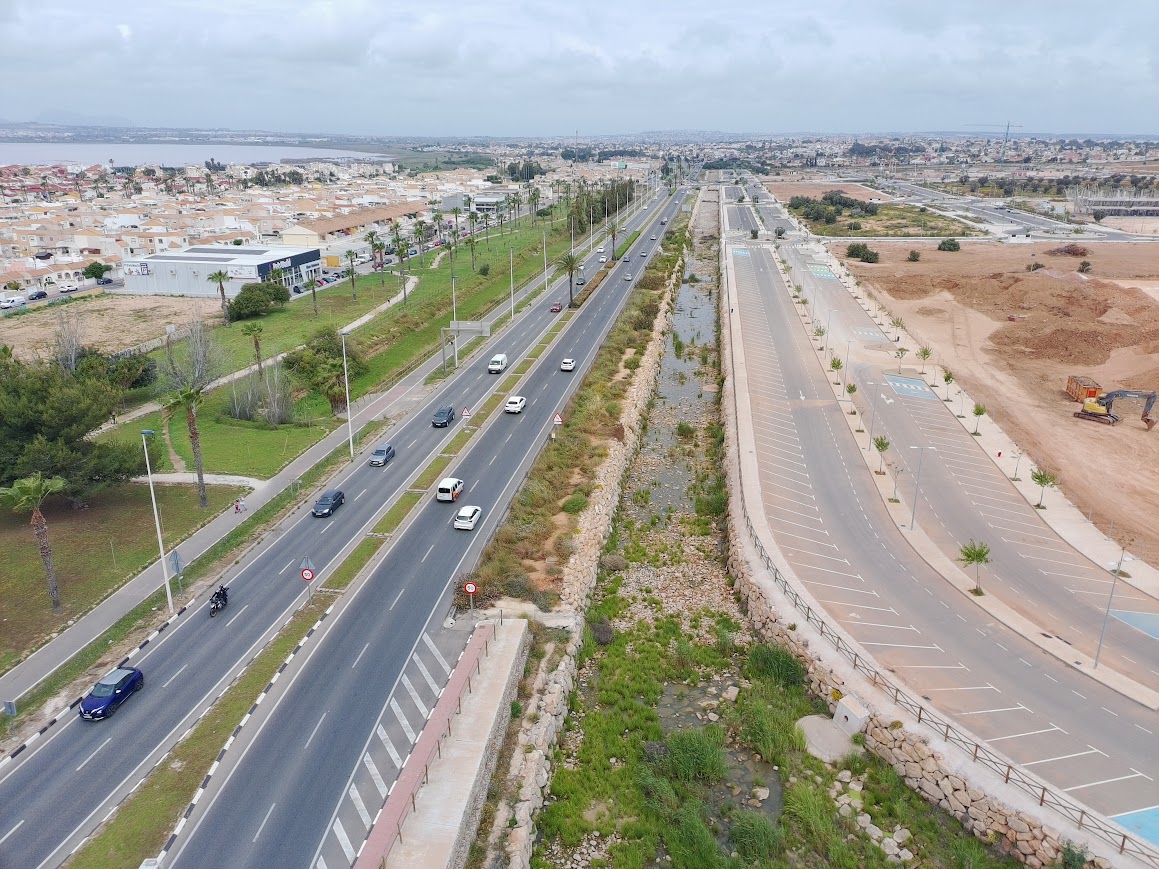
The company states the City Council reported maintenance would begin in early May but claims there is no record of this starting. The lack of maintenance, also criticised by the local Socialist Party (PSOE), is apparent. Trees and vegetation planted in early 2025 along the avenues parallel to the CV-905 and on Avenida José Carreras are dying, and weeds are covering sidewalks near residential areas where home prices start at 250,000 euro.
Administratively, the City Council has not modified the contract with the maintenance company Actúa, which provides services for the municipality at a cost of 113 million euro for a ten-year period. This modification is essential to assume the new responsibilities and requires a formal assessment to evaluate the increased cost and service type.
Other Articles
Torrevieja property giant Eden del Mar enters liquidation