



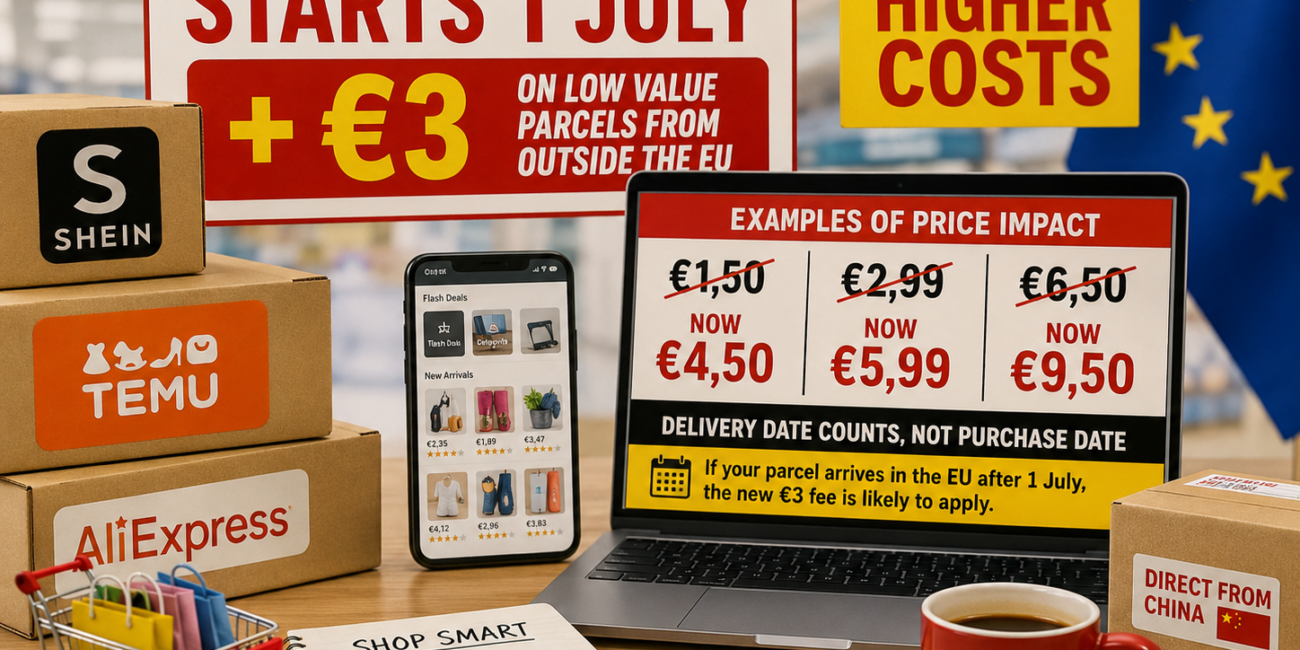
If you’ve been browsing Temu, Shein or other Chinese shopping platforms recently, you may have seen reports about a new €3 import handling fee that comes into effect across the European Union from 1 July.

The change is expected to increase the cost of many low-value items shipped directly from China, but there is one important point worth knowing before rushing to place an order.
The fee is based on when the parcel enters the EU, not when you click “Buy”.
That means placing an order before 1 July does not guarantee you will avoid the charge if your parcel arrives after the new system begins. Unless a retailer has specifically confirmed your order will already be within the EU, there is little advantage in panic buying during the final days of June.
Why is the EU introducing the fee?
The European Union says the measure is designed to create a fairer marketplace.
For years, millions of low-value parcels have entered Europe directly from overseas sellers, allowing platforms such as Temu and Shein to sell products at prices that many European retailers simply cannot match.
The new fee aims to recover some of the costs of processing these imports while helping to level the playing field for businesses already operating within the EU.
What is Temu doing?
Temu has not simply been waiting for the change to happen.
Over recent months the company has been expanding its network of warehouses across Europe, allowing more products to be stored within the EU before they are sold. Instead of shipping every individual order from China, many popular products can now be delivered from European distribution centres.
Temu has also been recruiting more European sellers to join its marketplace and is expected to absorb some of the additional costs where possible.
However, despite these efforts, most analysts believe consumers should still expect some prices to rise from next week, particularly on the cheapest items where a €3 charge represents a significant percentage of the purchase price.
What about the UK?
Although the UK is not affected by the EU changes, British shoppers should not assume they are immune.
The UK Government is already considering reforms to its own low-value import rules, and many retail experts believe any future charges could be higher than those now being introduced by the EU.
No equivalent UK fee has yet been announced, but anyone regularly ordering inexpensive products from overseas should keep an eye on developments over the coming months.
The bottom line
For residents in Spain, there’s no need to rush into a last-minute Temu shopping spree.
If your parcel reaches the EU after 1 July, the new rules are likely to apply regardless of when you ordered it. Instead, shoppers may find that over the coming months more products are shipped from European warehouses, delivery times improve, and price increases are spread across retailers rather than appearing as a simple €3 addition to every order.
One thing is certain: the era of ultra-cheap direct imports is beginning to change.
A word of reassurance
While the headlines may make it sound like online shopping is about to become much more expensive, the reality is likely to be more gradual.
Major marketplaces such as Temu, Shein and AliExpress have been preparing for these changes for many months. More products are already being stored in European warehouses, more European businesses are joining their marketplaces, and some of the additional costs are expected to be absorbed rather than passed directly to customers.
The new charge is also not something shoppers will usually have to pay separately at the door. In most cases it will simply be reflected in the price you see when ordering, making costs more transparent.
If you regularly buy inexpensive items online, you may notice some prices increasing over the coming weeks, particularly on the cheapest products. However, it is unlikely to signal the end of bargain shopping altogether.
As always, compare prices, check where an item is being shipped from, and remember that the lowest advertised price is not always the lowest total cost.
Watch out for scammers exploiting the new import fee
Whenever a new charge, tax or regulation is introduced, fraudsters are quick to take advantage of the confusion.
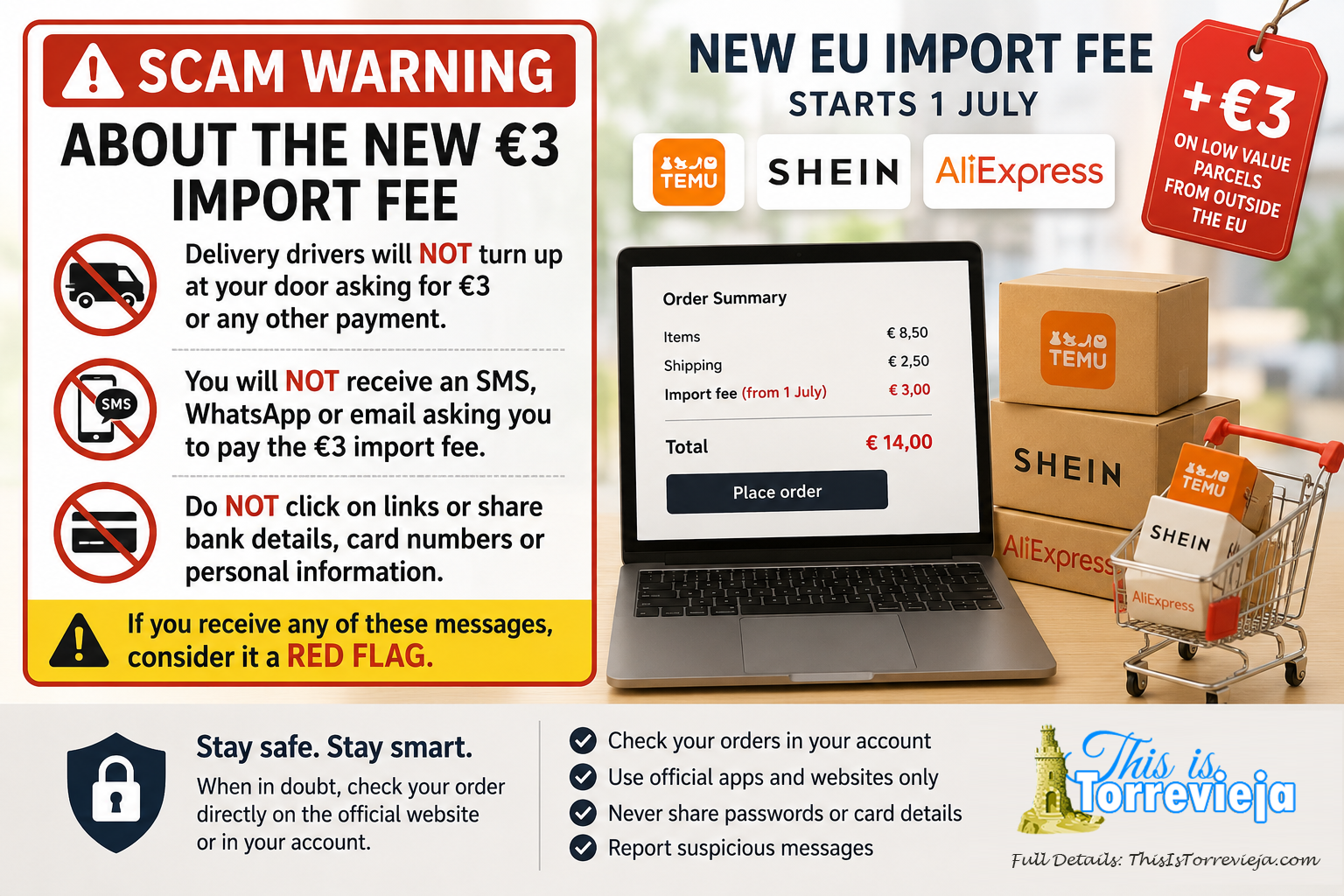
If you receive an unexpected text message, WhatsApp message, email or phone call claiming you need to pay a €3 import fee before your parcel can be delivered, treat it as a potential scam.
Equally, you should never expect a courier or delivery driver to knock on your door asking for €3 in cash or requesting payment by card before handing over your parcel.
In most cases, major online marketplaces such as Temu, Shein and AliExpress will include any applicable charges as part of the checkout process or within your online account. If additional payments are ever genuinely required, they will normally be communicated through official channels linked to your order, not via unsolicited messages asking you to click a link or provide your bank details.
As always:
- Never click on links in unexpected text messages or emails.
- Never share your banking or card details in response to an unsolicited request.
- If in doubt, log in to your shopping account directly through the official app or website to check the status of your order.
- If something doesn’t feel right, it probably isn’t.
A little caution could save you far more than €3.

Minor earthquake hits San Miguel de Salinas
Illegal airport parking closed down