

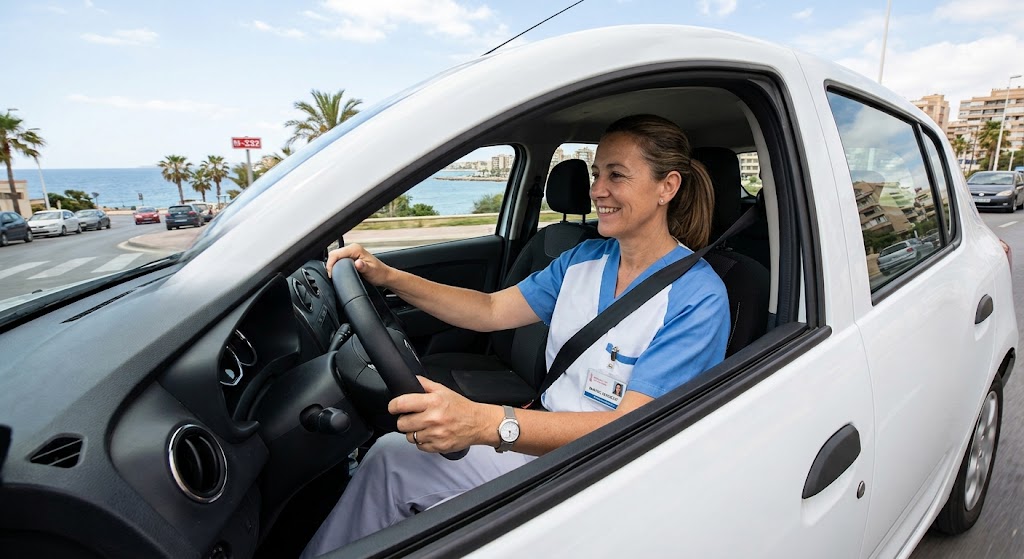
Healthcare workers in the Marina Alta region are routinely using their own private vehicles to carry out scheduled and emergency home visits. The SATSE Alicante union, representing workers in the Denia Health Department, has filed an official complaint with the Provincial Inspectorate of Labour and Social Security in Alicante to address the issue. The union states that forcing staff to use personal cars violates occupational risk prevention regulations and compromises public health service guarantees.

According to the complaint submitted by SATSE, nurses within the Denia Health Department regularly have to use their private transport for patient visits. In addition to driving their vehicles, these healthcare professionals must transport medical supplies, treatment bags, biological materials, clinical samples, and even medical oxygen cylinders during certain urgent calls.
The union highlighted that the Denia Health Department serves a permanent population of around 170,000 residents, a figure that surges significantly during holiday seasons with visiting tourists. This population occupies numerous basic health zones, auxiliary clinics, and scattered communities, making appropriate public transport essential for safe and efficient home care.
SATSE argues that the current system unfairly transfers administrative costs and responsibilities onto individual workers. Staff are forced to pay for vehicle maintenance, insurance, fuel, cleaning, and general wear and tear incurred purely for the benefit of a public service.
Furthermore, the union pointed out that risk assessment documentation from other provincial health departments identifies clear hazards tied to home care visits. These include traffic accidents while on duty, exposure to biological agents, manual handling of heavy loads, and the transport of medical supplies. The administration has a legal obligation to implement preventative measures and provide necessary material resources.
SATSE expressed particular concern over transporting potentially contaminated medical materials and medical oxygen cylinders in private cars that are neither designed nor officially approved for such purposes, posing risks to both staff and third parties. The union noted that management recently admitted to lacking specific risk assessments for transport and material handling within certain primary care roles.
As a result, SATSE has requested that the Labour Inspectorate investigate the situation, order the Ministry of Health to stop the use of private cars for home visits, and ensure centres are equipped with officially approved vehicles adapted for healthcare functions.