
Torrevieja City Council approved the tender on Friday, 24th July, for the construction of the new Sea and Salt Museum and the Auditorium for the International Habaneras and Polyphony Competition. The two contracts represent a total investment of 29,186,968 euro and form part of the comprehensive rehabilitation of the Eras de la Sal monumental complex and its surrounding area. The tender process comes five years and five months after Mayor Eduardo Dolón, alongside the then-president of the Provincial Council, Carlos Mazón, announced the project at the site itself. He reiterated the project’s imminent implementation during the 2023 election campaign.

One phase of that promise has already been fulfilled: the rehabilitation of the Ice Factory and the construction of a new municipal building, which is currently under construction with an additional investment of six million euro.
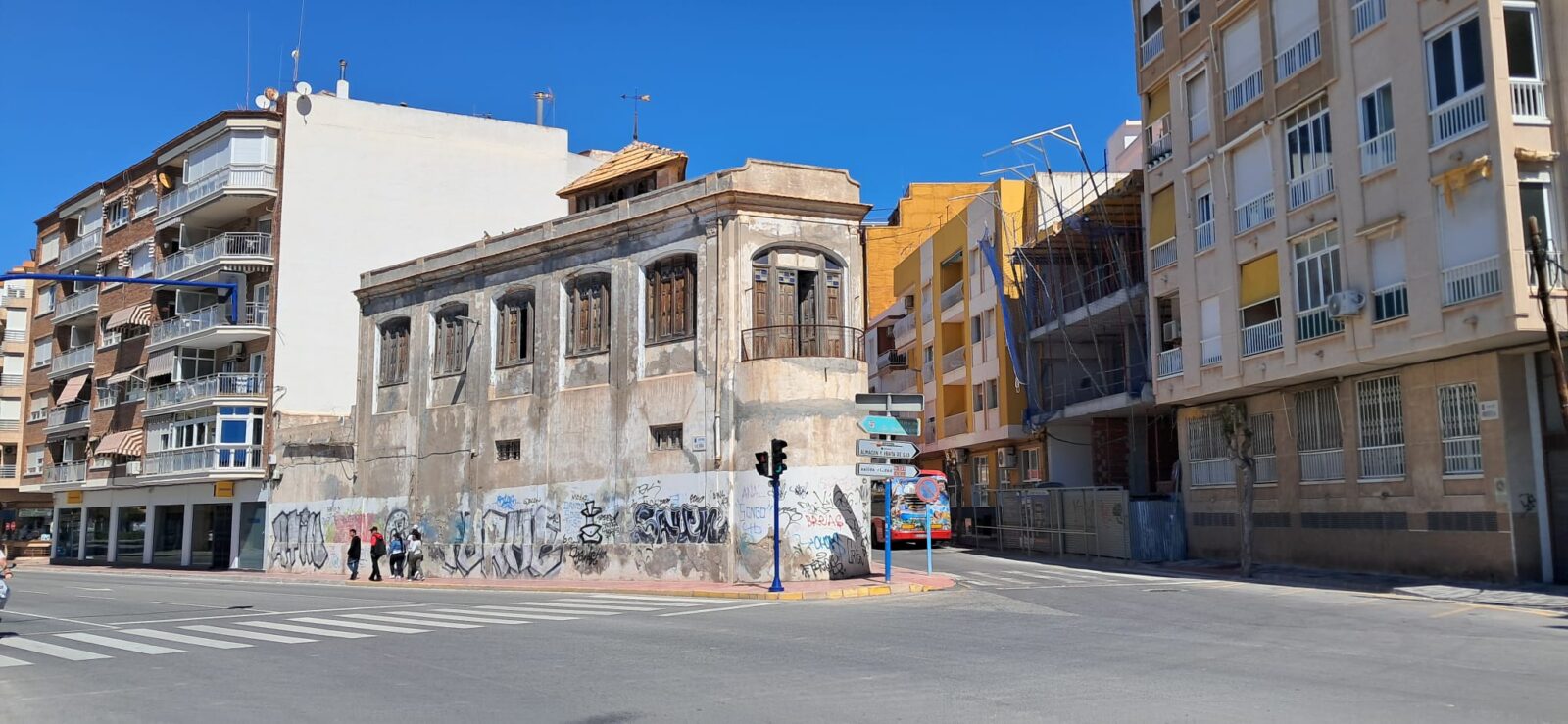
The expectation now is that both projects will be awarded in October and, barring any appeals, construction work will begin in November. The projects, designed by the renowned architecture firm Paredes Pedrosa, have been conceived by the governing team with the goal of respecting the location, history, and roots of Torrevieja, preserving the city’s connection to the sea, the salt industry, and the Habaneras Festival. However, the municipal focus of the project is primarily centred on creating a new promenade and constructing the auditorium.
Mayor Eduardo Dolón emphasized during the tender announcement, made on the final evening of the competition, that the Habaneras Festival will once again be held in the same venue, but with more modern facilities for technical and stage equipment, as well as improved comfort and accessibility for the public and choral groups. The construction timeline is 20 months for the Sea and Salt Museum and 24 months for the auditorium. The auditorium will not be ready for the 2027 or 2028 editions of the Festival. If the current schedule holds, it will be completed in November 2028, meaning the choral singing event will spend two more years performing at the Municipal Theatre. The goal is for it to be ready for the 75th anniversary in 2029.
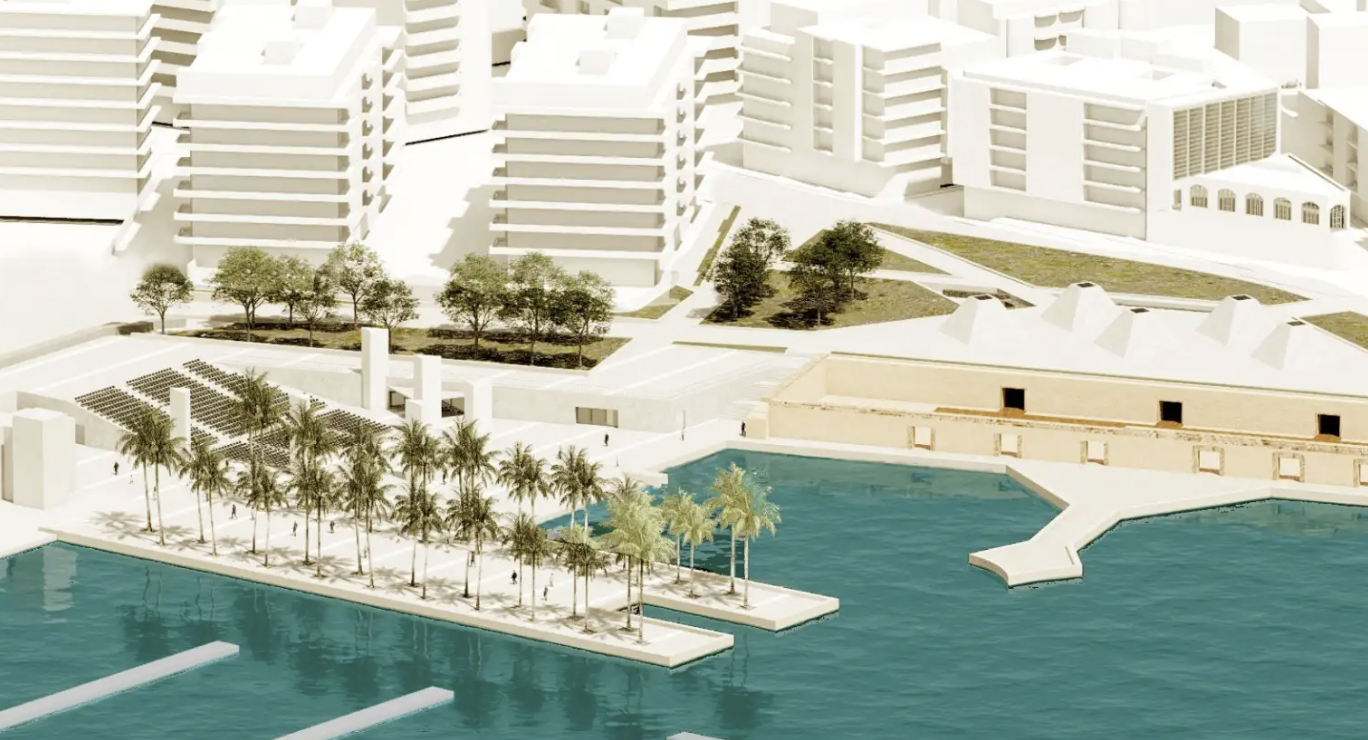
The new venue is designed as an open-air amphitheatre with a capacity for 1,502 people, approximately 300 more than the previous space situated within the Eras area. Its design will allow for other events to be held throughout the year and serve as a viewpoint overlooking the bay. The project will incorporate a removable acoustic shell made up of four elements, designed for larger events and the windy seafront conditions. Once events conclude, these elements can be removed and stored in an underground space of approximately 200 square metres.
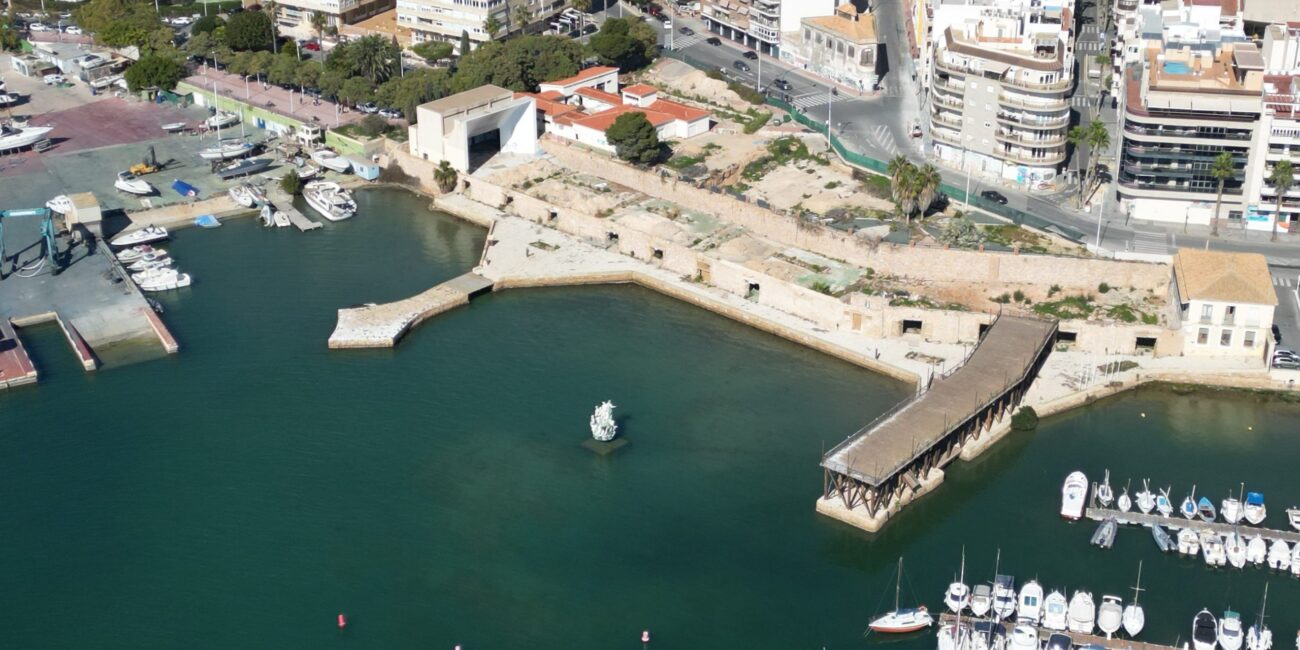
The project will restore the pedestrian connection to the Muelle de la Sal (Salt Wharf), creating a seaside promenade from the entrance gate to Las Eras next to the Vista Alegre promenade, under the trestle, and extending to the area around the auditorium. In reality, a continuous passage between the Acequión area and the Vista Alegre promenade has never existed, so a brand new promenade is actually being created. Las Eras de la Sal was an enclosed saltworks facility until the early 1970s. This project requires a concession of the public maritime-terrestrial domain, affecting both wharves and the passageway between the walls of Las Eras and the bay.
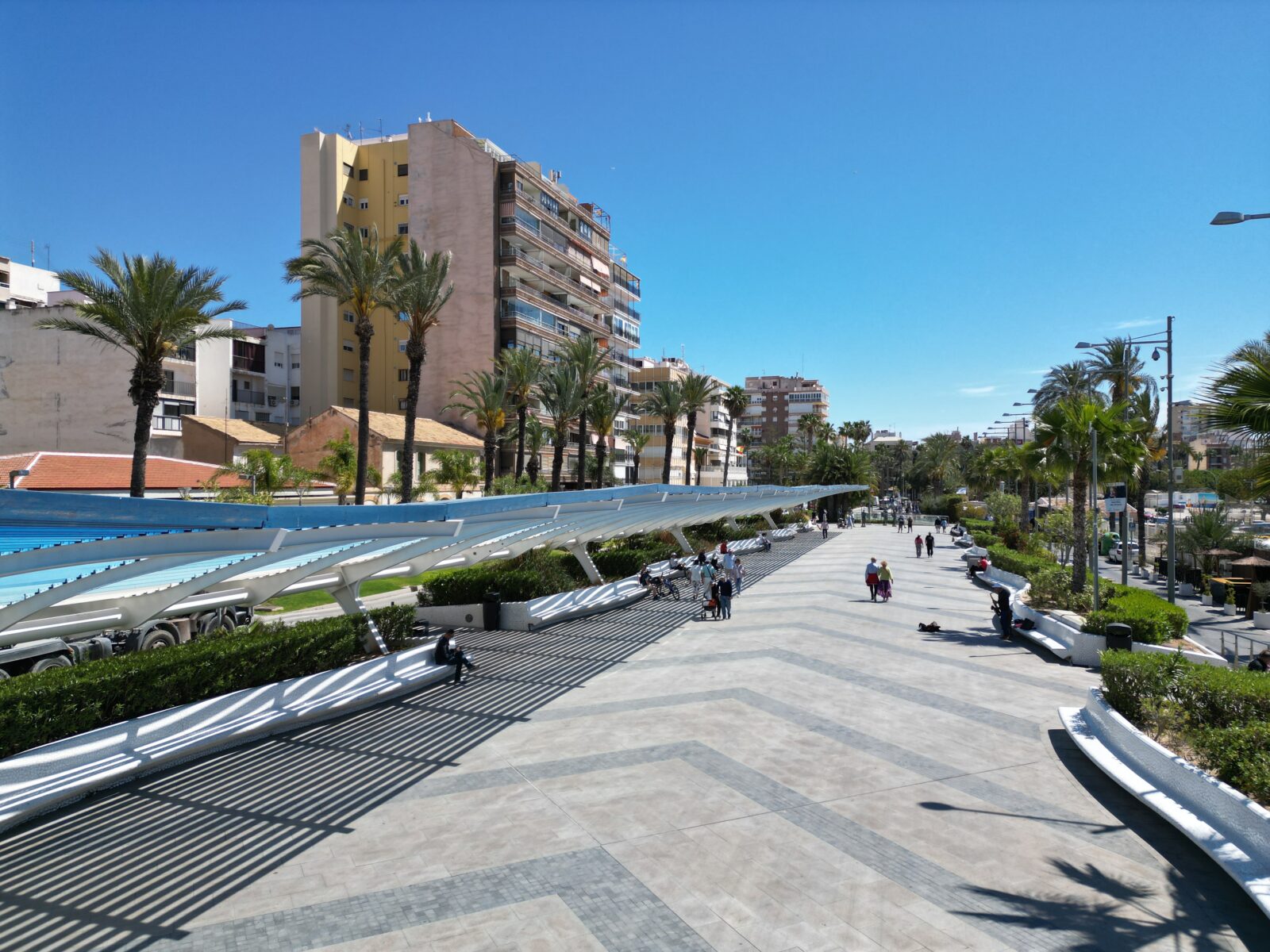
The project also includes the redevelopment of Avendia Faleria and the Maestro Velero Buades promenade. Spaces beneath the seating of the new auditorium and the extension of the promenade will house three rehearsal rooms, a classroom, a storage room, five dressing rooms, a 319-square-metre waiting area for choirs and artists, and a first-aid room.
In total, the facilities built beneath the stands will cover 1,743 square metres. The stands and stage area will occupy 2,284 square metres, within a larger 8,532-square-metre project on the esplanade located at the current Marina Internacional boatyard. The base budget for this tender is 11,077,883 euro.
The new Sea and Salt Museum will complete the rehabilitation of the historic complex. The project includes the restoration of the Saltworks Administration Building next to the Vista Alegre promenade, which is currently in disrepair, although preliminary studies confirm its structure is in good condition. It will serve as the museum entrance alongside the extension of the old trestle recreation to Avenida Faleria, the construction of the new museum space, and the landscaping of the esplanade above. The project preserves the original paving of the saltworks and features an interior illuminated by skylights evoking salt mounds. Its nine exhibition areas will explain Torrevieja’s historical relationship with the sea and salt extraction in the lagoons.
The planned exhibition space covers 1,305 square metres. The overall project includes 2,287 square metres for the museum itself, 236 square metres for the Administration Building, 686 square metres for the easel, 2,000 square metres for the promenade along the Muelle de la Sal, 7,465 square metres for the redevelopment of Avenida Faleria, and 3,438 square metres for the museum entrance. The total area of this project is 16,112 square metres, with a base budget tender of 18,109,085 euro. The local government considers both projects a decisive step in recovering one of Torrevieja’s most historically significant spaces.
It remains unknown what solution will be given to the archaeological remains of Eras de Arriba, the historical origin of the city. The City Council can act as it sees fit because the entire complex lacks heritage protection beyond a generic classification. The municipality chose not to preserve the site as a Locally Relevant Asset to avoid obstacles to its vision for the space.
Mayor Dolón described the project as one of the city’s largest undertakings since the port area. He noted that it will allow for the recovery of a historic space, the redevelopment of approximately 25,000 square metres, and provide the city centre with a multi-purpose venue capable of hosting concerts and events. The mayor acknowledged that the project will be complex as it must be carried out in phases within a historic area requiring restoration.
Regarding funding, Dolón clarified that 5 million euro would come from the Valencian Regional Government, 2 million euro from the Alicante Provincial Council through provincial plans, and 8.5 million euro from European funds, with the possibility of increasing European contributions if milestones are met. The municipal contribution will be between 10 and 15 million euro. In addition, nearly one million euro went towards drafting the projects, six million euro to the Ice Factory, and almost two million euro to acquiring that building and adjacent land from private owners.