
Torrevieja Town Hall has taken a new step to allow the construction of a projected 11-storey hotel in La Veleta, despite the opposition from neighbours that has accompanied the urban planning procedure. The Local Government Board has issued a favourable strategic environmental and territorial report for the Internal Reform Plan (PRI) of Calle Coral, 5, promoted by Grupo Insara, after rejecting all submitted objections and the request to suspend the process.

The agreement, adopted on 7 August and published this Thursday in the Official Gazette of the Generalitat Valenciana (DOGV), allows the file to move forward via the simplified procedure. It does not yet mean the final approval of the PRI, which must subsequently be submitted for public participation and gather the corresponding sector reports, but it clears one of the main hurdles to make the hotel establishment possible.
The resolution comes after significant pushback during the environmental stage. In total, the Town Hall recorded 14 objection filings submitted by 13 different parties, as one individual submitted two documents. Objectors include the Euromarina, San Marino, and Edificio Los Foques owners’ associations, alongside a dozen individuals. All were rejected by the local authority.
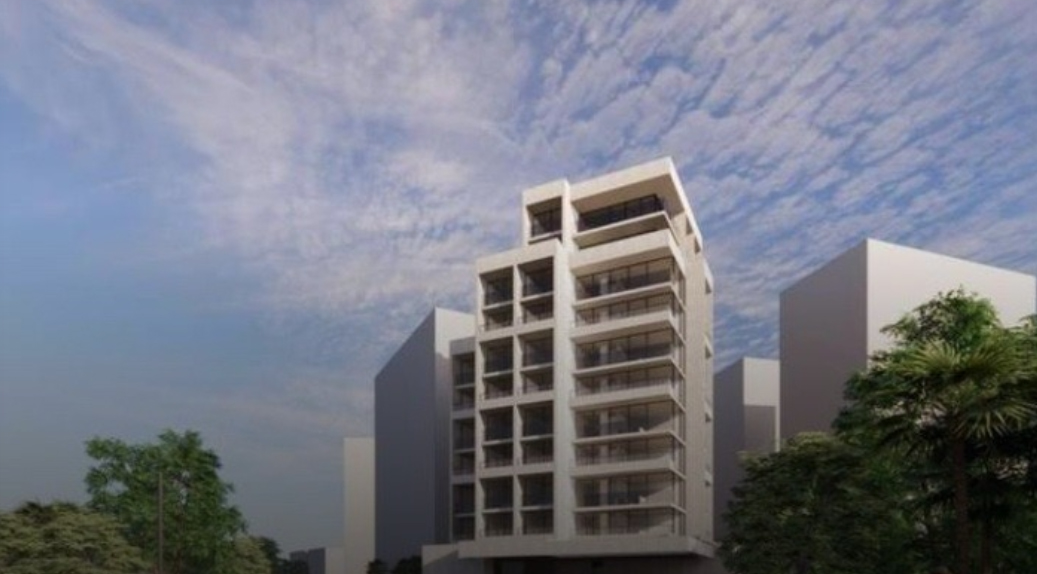
The project involves transforming a 1,389-square-metre plot currently designated for residential use into tertiary-hotel land to erect an establishment rated at least three stars. The proposal submitted by Grupo Insara plans for an 11-storey, 36-metre-tall building at the junction of Calle Mar del Coral and Calle Mar del Norte, close to the seafront.
Precisely, the height and impact of the building on the coastal environment form the core of the neighbour objections. Objectors question why the environmental evaluation is being processed via the simplified procedure rather than the ordinary one, arguing that increasing plot coverage from 20% to 30% and modifying the building typology are structural changes. They also warn that the building would disrupt the urban scale of La Veleta and question the landscape integration analysis.
Other submissions warn of potential consequences for traffic, parking, and public services. Neighbours consider that the hotel could increase congestion, overload public space, and create noise issues for residents, whilst questioning whether utilities like water and electricity supplies are guaranteed. They also argue that changing to hotel use would alter the established residential character of the area.
Municipal technical services rejected these arguments. Regarding the initial objections, the municipal architect considers opposition to the hotel to be “discretionary” and notes it fails to prove that the development breaches urban planning legislation. Furthermore, the Town Hall highlighted that under current planning rules, without needing the PRI, a building licence for a 36-metre-tall structure of around 12 storeys could already be granted on that same plot.
The local authority maintains that the PRI only affects detailed planning and can therefore undergo a simplified strategic environmental and territorial evaluation. According to the resolution, it does not meet any legal criteria requiring an ordinary procedure, and the municipal environmental body determined back on 20 March that the simplified route should be followed.
Regarding the impact of the new establishment, the municipal report argues that it will not impose a greater burden on the coastline because the plot’s urban development yield is not being altered. It also asserts that hotel use is compatible with residential use under the General Plan, rendering a specific acoustic study unnecessary. The future establishment must also provide its own allocation of parking spaces and areas for personal mobility devices.
However, the Town Hall acknowledged that during the environmental evaluation, it requested an assessment from the Urban Transport department and received no response. The consultation will be repeated before the PRI goes to public display.
Facing objections alleging the operation primarily serves the economic interests of a private developer, the Town Hall explicitly defended the public interest of the initiative. The resolution frames the reclassification from residential to tertiary hotel as part of the municipal strategy to diversify the economy, boost tourism offerings, and create direct and indirect jobs.
In this regard, the local authority highlighted its policy to encourage new establishments, including modification number 74 of the General Plan, which favours hotel uses and tax discounts on the Construction, Installations and Works Tax (ICIO). It argues that these measures aim to increase regulated accommodation, combat seasonality, and energise the local economy.
With these arguments, the Local Government Board concluded that the PRI “has no significant effects on the environment and territory” and issued a favourable environmental report. Grupo Insara must now present the version of the plan that it will submit for public participation and sector reports before moving towards final planning approval.
The resolution specifies that the favourable environmental report will expire if the plan is not approved within a maximum period of four years from its publication in the DOGV, though that period can be extended by a further two years.