



The Vega Baja del Segura region now counts 154,665 foreign national residents, a figure that represents 38.6 percent of its 400,884 total inhabitants. Over the last analysed year, the foreign population grew by 7,629 people, according to the report “Statistical Approach to the Foreign Population in the Province of Alicante”, compiled by the Diocesan Secretariat for Migration using data from the National Statistics Institute (INE).

The study analyzes the reality of the region within Vicarage I of the Diocese of Orihuela-Alicante, which corresponds to Vega Baja del Segura, and reflects the significant weight of the international population in the area. Vicarage I records the highest proportion of foreign residents across the entire diocese. Gender distribution amongst foreign residents is virtually equal, with 49.9 percent men and 50.1 percent women.
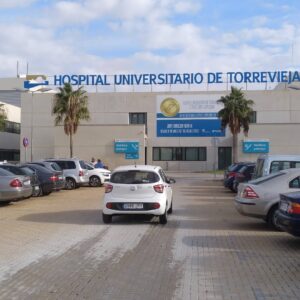
Torrevieja and Orihuela hold more than half of the area’s foreign population. Distribution varies greatly across municipalities, with Torrevieja leading by a wide margin at 49,699 foreign residents, followed by Orihuela with 30,946. Together, these two towns account for 80,645 foreign nationals, representing 52.1 percent of the total foreign population in Vicarage I.
Following Torrevieja and Orihuela are Rojales with 11,914 foreign inhabitants, Pilar de la Horadada with 9,749, Guardamar del Segura with 7,139, San Fulgencio with 6,616, Almoradí with 5,827, Callosa de Segura with 4,555, and San Miguel de Salinas with 4,202. Albatera records 2,977 foreign residents, while Catral registers 2,527, Los Montesinos 2,264, Algorfa 2,218, and Formentera del Segura 2,043.
In six municipalities in Vega Baja, foreign residents make up more than half of the total local population. Rojales tops the region with 68.1 percent, followed by San Fulgencio at 66.8 percent, Daya Vieja at 63.3 percent, Algorfa at 59.2 percent, San Miguel de Salinas at 57.1 percent, and Benijófar at 52.3 percent.
The migration map of Vega Baja is consequently uneven. Whilst these specific towns have a majority foreign population, other areas fall well below the 38.6 percent average, particularly in the interior of the region.

Geographically, Europe holds a predominant role in Vega Baja. Of the 154,665 foreign residents recorded, 61,750 come from European countries outside the European Union, while another 41,235 are citizens of EU27 nations. Africa accounts for 26,436 residents, the Americas 19,850, Asia 5,318, and Oceania alongside stateless individuals make up 76. Citizens from EU and non-EU European countries together total 102,985 people, approximately two out of every three foreign residents in the area.
However, national origin varies depending on the municipality. Orihuela hosts a large European presence, whereas towns like Almoradí, Callosa de Segura, and Albatera show a notable population originating from Africa.
The United Kingdom remains the primary foreign nationality in Vega Baja with 34,035 residents, forming 22 percent of the total, despite losing 834 residents over the last year. Morocco follows in second place with 22,038 people (14.2 percent) after adding 746 residents. Ukraine ranks third with 13,039 (8.4 percent), and Russia fourth with 8,968 (5.8 percent). These four nationalities together make up 50.4 percent of all foreign residents in Vicarage I.
The overall breakdown continues with Colombia (8,819), Belgium (6,290), Romania (4,753), Germany (4,434), Netherlands (4,128), and Bulgaria (3,364).
The report highlights notable shifts in demography. Although the UK retains the largest share, its resident count dropped by 834 people, and Russia lost 246. Conversely, Colombia experienced the largest increase with an additional 1,481 residents, followed by Ukraine with a rise of 1,144, and Morocco with an increase of 746. These movements illustrate an evolving demographic landscape, even as European nationals maintain a major role in the structure of Vega Baja.

