
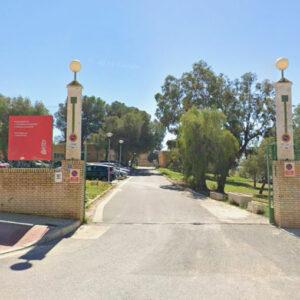
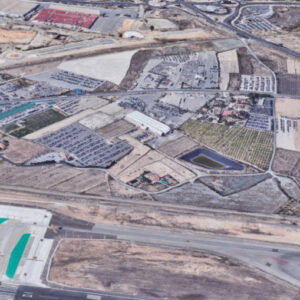


Torrevieja local government board approved the tender on Friday, 25th September, for the construction works of the “Tomás Ballester Herrera” Day Centre for people with Alzheimer’s and other neurodegenerative diseases. The local PP government points out that this is an infrastructure long demanded by Torrevieja society.

The project has a total execution budget of 10.856.623 euro including VAT, reflecting the scale of an action that aspires to become a benchmark in specialised care at the regional level.
Doubled budget
The new centre will be built in Sector 25 of the general plan, in a strategic location opposite the private Quirón Hospital. It will have a built surface area of approximately 2.700 square metres within a plot of more than 7.900 square metres, allowing for the integration of spacious, functional areas adapted to the needs of users. When the award for the drafting of the project was announced at the end of 2025, the estimated budget stood at half that amount, at around 5,5 million euro. It has doubled in a year.
Functional design
From a functional standpoint, the building has been designed to offer comprehensive care structured into three large distinct areas. Firstly, the access and administration area, with more than 400 square metres, will include a reception, offices, a staff room, an assembly hall and spaces adapted for visits.
Secondly, the general services area, with nearly 500 square metres, will house a dining room, kitchen, laundry, staff changing rooms and essential logistical zones for the proper functioning of the centre.
Finally, the specialised care area, exceeding 1.000 square metres, will concentrate the assistance core with activity rooms, living spaces, rehabilitation, occupational therapy, physiotherapy, medical consultation, a psychological cabinet, and complementary services such as a hairdresser and podology, all with fully adapted geriatric toilets and bathrooms.
New resource This new social and healthcare resource will respond to one of the main needs of Torrevieja, offering a specific space for the care of people with neurodegenerative diseases with a focus centred on both the quality of life of patients and support for their families and caregivers. According to the government sources, the execution period once the project is awarded exceeds a year, meaning the centre will not be finished before 2028, as acknowledged at a public event by Torrevieja mayor Eduardo Dolón.
The design of the centre bets on modern, accessible, and safe facilities conceived to favour cognitive stimulation, personal autonomy, and the emotional well-being of users in a friendly environment adapted to the different stages of the disease. The future commissioning of the “Tomás Ballester Herrera” Day Centre will mark a before and after in the municipal network of social and healthcare resources, consolidating Torrevieja as a benchmark in specialised care and in the care of the most vulnerable people.
Currently, the Association of Relatives and Friends of Alzheimer’s Patients of Torrevieja manages a centre with a capacity for 32 users, although it attends up to a hundred at different times, located in the rehabilitated railway garage on Avenida de la Estación, which is municipal property. The association is sustained through subsidies from different administrations, receiving around 200.000 euro annually combined from the regional government and Torrevieja council. This raises uncertainty about how it will manage a much larger entity with day centre capacity for a hundred users at the same time.
Management and funding questions Once the work is awarded, something that could happen before the end of the year, the execution period places its completion for launch in 2028. The unknown after carrying out such a relevant investment is what the management model will be, whether the local association can assume facilities of this scale, whether Torrevieja council can finance such a healthcare infrastructure, or whether the regional government will do so through agreements and subsidies.
Other previous experiences in Torrevieja are not the best example of management in this social and healthcare field. This is the case of the assistance centre for comprehensive accommodation for people with physical and mental disabilities that was supposed to start up in 2011 on Avenida Delfina Viudes. When it was finished at that time, the regional government stated it lacked the resources to address it. In 2015, the regional council wanted to use it as a centre for minors under guardianship, and with a change of government, it returned to its initial use. After works costing one million euro that lasted four years, a future that was a priority for Mayor Eduardo Dolón remains unclear.
Other Articles
Torrevieja set to approve new bus fares, ending free travel for most
Elche Local police celebrate patron saint day with hundreds of awards