


After more than two years and nine months of processing, the Torrevieja City Council is set to submit the final approval of urban transport fares to the plenary session today, Monday 28th September. The ordinance sets prices for all tickets for a service that, according to the service’s supervising engineer, has operated free of charge for too many years. This statement is made verbatim by the engineer in the report in which he rejects the PSOE proposals to implement social fare alternatives for vulnerable groups. The new payment model, which will come into effect in October according to Torrevieja Mayor Eduardo Dolón (PP), will require 80% of all users to pay. Currently, and for more than 30 years, it is free for all registered residents. The new service began operating at the end of July but remains free due to an error when approving the fares. Only pensioners and retirees will be exempt from paying for tickets starting in October. The exact date the fares will come into effect after the plenary session has not been made public.

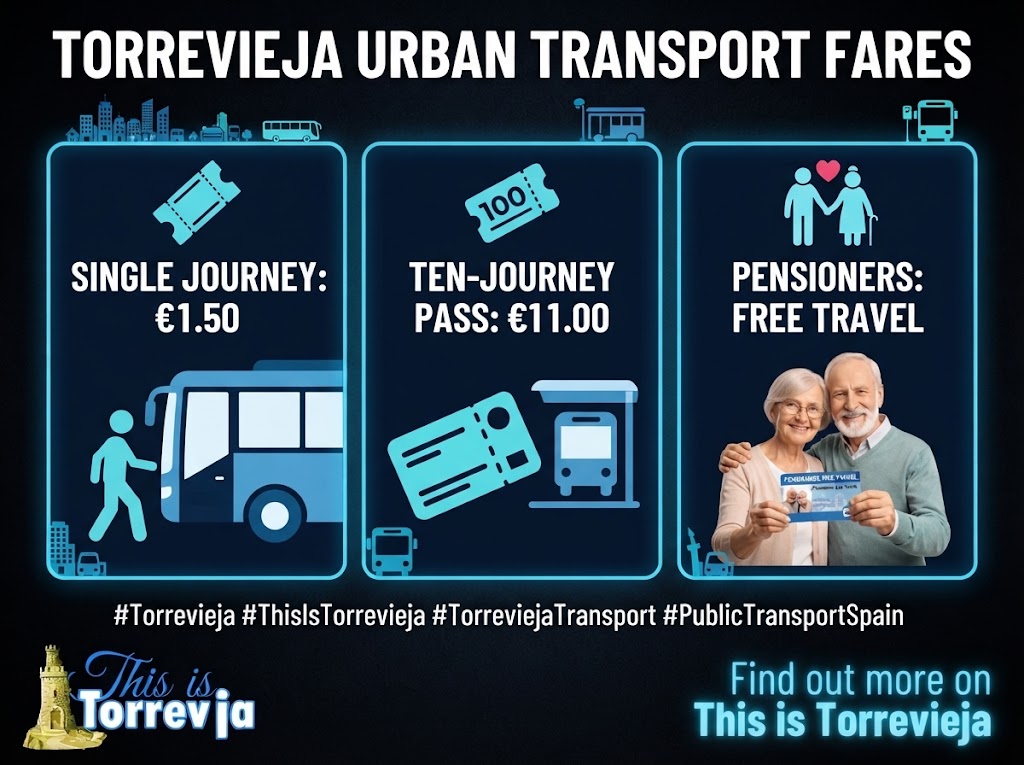
Single ticket and ordinary pass A single ticket will cost €1.50 per journey. Payment is made upon boarding the bus and transfers are not permitted. For frequent users, a regular travel pass will offer ten journeys for €11 or twenty for €22: in both cases, €1.10 per journey. This pass can be purchased by any user and used on all lines.
Special bonus
The price will drop to €0.88 per trip with the special pass, which will be sold in packs of ten trips for €8.80 and twenty for €17.60. This pass will be reserved for those under 26, large families, and people who have been unemployed for more than two years. It will be personalised. To apply, applicants must provide proof of eligibility; in the case of the unemployed, the regulations require up-to-date employment documentation and proof of active job searching during the previous two months.
The councillor in charge of the area, Antonio Vidal, avoids specifying the October date when 80% of users will begin paying, while the company indicates that it is awaiting instructions from the City Council.
Five euro per card
The Gold Pass will allow free travel for those over 65, pensioners, and people with a disability rating of 33% or higher. In all cases, it is required to have been registered as a resident of Torrevieja for more than one year. There is a practical detail regarding the free travel: those who want this pass in physical form will have to pay €5 for the card. There is no issuance fee for the digital version. Children under four years old will also travel free when accompanied by an adult with a valid travel pass, provided they do not occupy a seat.
The offering is completed with the 30-day pass, which will grant unlimited travel for 30 days for 44 euro, and with two tourist cards: 10 euro for three days or 18 euro for seven. For these passes, the validity period begins from the first use. Although they allow unlimited travel during their validity period, the regulations only permit one validation per issue. Regular passes and tourist cards in physical format will cost an additional 3 euro; digital versions will not have this surcharge. In practice, this means the elimination of free travel for 80% of users, who until now had unlimited access to the service at no cost as long as they were registered residents and applied for a citizen card, which cost just 7 euro annually.
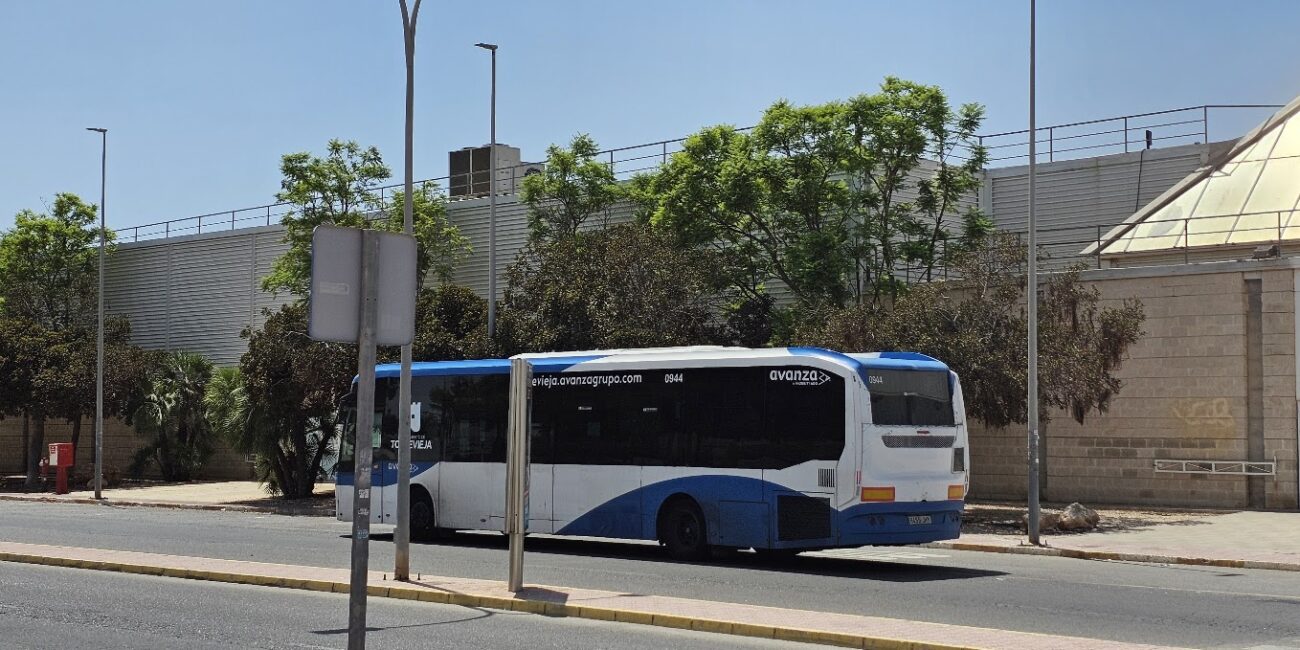
The controversy surrounding the transfer Except for single tickets, passes will allow passengers to change lines within the next hour, a controversial aspect of the fares because the technicians who drafted the specifications for the new service designed it based on supposed efficiency criteria, effectively splitting in half lines that offered direct routes, especially in the southern residential areas of the municipality. Now, residents of Rocío del Mar, Los Altos, and Los Balcones have to transfer at the University Hospital to reach the centre of Torrevieja. In this regard, Avanza, the company operating the service, said that the City Council has conveyed the users concerns and that solutions are being studied.
The ordinance also includes an annual review of the rates linked to price indices and their automatic modification if the taxation applicable to transport changes, which is currently 10% VAT.
Economic equilibrium The City Council has taken so long to finalise this process that it has allowed time to increase prices before implementing them. The initial technical report, dated March 25, 2024, proposed a single ticket price of €1.35, compared to the current €1.50 in the proposal, an increase of 11.1%. The standard ten-trip pass went from €9 to €11, and the twenty-trip pass from €18 to €22: a 22.2% increase in both options. The price of a single trip with the special pass rose from €0.65 to €0.88, the largest increase at 35.4%. The 30-trip pass increased from €38 to €44 (15.8%); the three-day tourist card from €8 to €10 (25%); and the seven-day card from €16 to €18 (12.5%). The Gold pass remained at zero euro. These percentages compare two successive proposals in the file. A new report from November 2025 already contained the amounts that are now being presented to the full council. That first technical report mistakenly applied a 21% VAT rate. This is what caused the delay in implementing the rates. The tax ordinance was initially approved with a 21% tax rate. Then came the initial version with 10%, and now the final, corrected version. The service began in July, maintaining the free model for this reason. The City Council will have to cover the costs until October.
Economic equilibrium The municipal engineer linked that review to the need to preserve the financial balance planned for the transport contract, following the reports issued during its processing. In the initial proposal, he had already warned of the difficulty in setting prices: high prices could discourage users accustomed to free service, while prices that were too low would increase the municipal contribution required to cover the cost.
Allegations rejected
The PSOE has submitted several objections that will be rejected. The socialist group requested the creation of a social voucher and the inclusion of single-parent families and students among the eligible beneficiaries. The technical expert rejects this—a position accepted by the governing team—arguing that the long-term unemployed already have access to the special voucher and that pensioners can obtain the Gold voucher if they meet the requirements. He adds that Social Services provides free vouchers to vulnerable individuals after reviewing each case, regardless of whether or not they are registered residents, although this mechanism is not listed as a separate rate in the annex. This latter information had not been made public until now.
For students, the report refers to the special pass for those under 26; being a student, in itself, does not entitle them to it after that age. Nor is a specific pass created for single-parent families: they can access the special pass if they meet certain conditions or purchase the €44 pass (number 30), which the technician describes as very economical. His other reason for rejecting the requests is that multiplying the options would complicate management. He proposes starting with the rates established in the ordinance and evaluating possible changes later.
The full council will decide whether to accept the proposal. Even with a favourable vote, the fees would not take effect simply by being approved on Monday: the ordinance must be published in full in the Official Gazette of the Province and follow the established procedure for its implementation. The documents examined do not specify a date for the fees to begin being collected.
Other Articles

Bauhaus Torrevieja could open early than planned
Torrevieja approves tender for new Alzheimer’s centre with doubled budget