

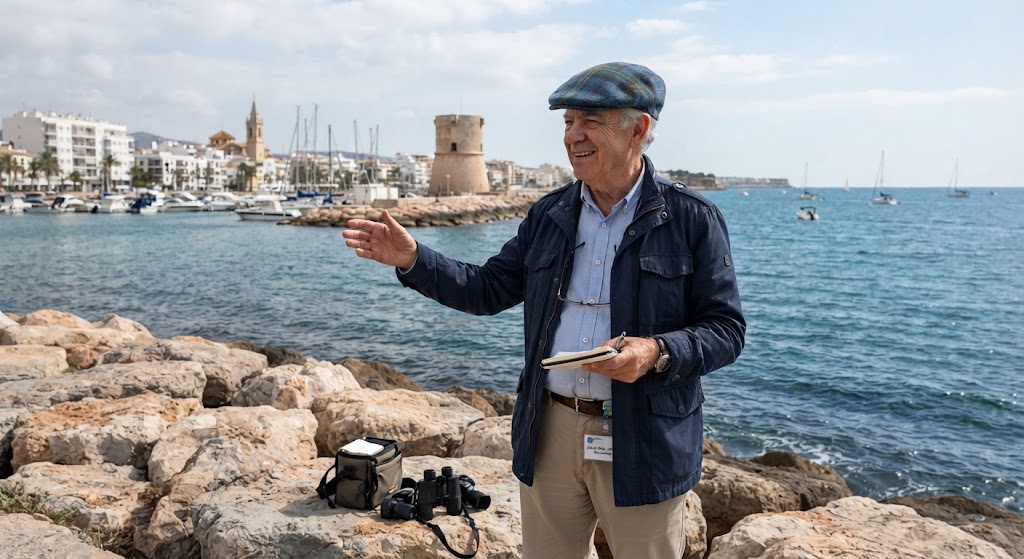
Biologist and oceanologist Julio Mas Hernández took centre stage for the second session of the 18th “Torrevieja and the Sea” lecture series, organised by the Ars Creatio Cultural Association. Hosted at the main hall of the Casino Cultural Society of Torrevieja, the event featured local figures alongside the retired Spanish Institute of Oceanography researcher, who delivered a talk titled “Torrevieja in the path of the ocean giants: The Spanish Mediterranean cetacean corridor.”

During the presentation, Mas brought attendees closer to the rich biodiversity found within Mediterranean waters, outlining the specific migration paths taken by various marine species, including dolphins, pilot whales, and large rorquals. He also addressed the conservation challenges faced by other marine wildlife, such as sea turtles and the Mediterranean monk seal. While the seal population has been extinct as a stable breeding group in Spanish Mediterranean waters since the second half of the twentieth century, the Ministry for the Ecological Transition has identified protected southeastern coastal zones as potential habitats for future recovery initiatives.
A central theme of the evening focused on the Spanish Mediterranean cetacean corridor, highlighting the vital underwater geology and natural wealth situated directly off the coast of Torrevieja. Mas emphasised that understanding these large marine animals and safeguarding their migration routes remains crucial for maintaining healthy marine ecosystems against growing human pressures. With decades of research experience across more than sixty oceanographic campaigns, the former director of the Murcia Oceanographic Centre successfully bridged the gap between scientific research and public awareness during the well-attended cultural event in Torrevieja.
Other Articles

Local Police vehicle heavily vandalised in the centre of Benferri
Torrevieja Local Police to celebrate holy guardian angels feast