


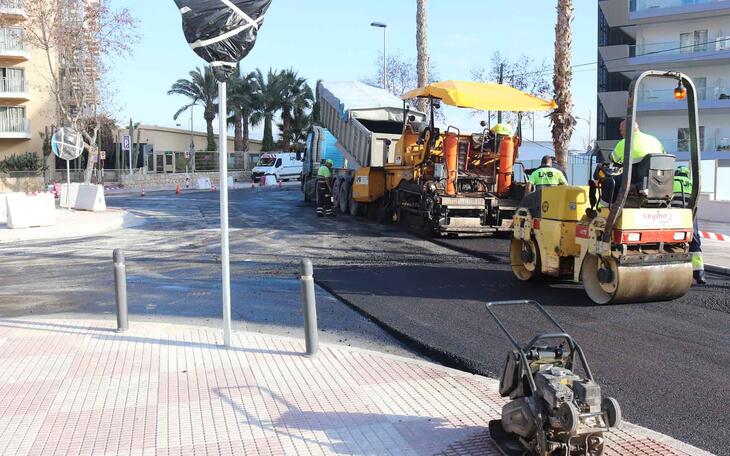
The Local Government Board of the Benidorm City Council has approved the project for the first phase of the 2026 asphalt operation, which will span twelve streets and avenues, alongside other specific locations where these works have been deemed necessary, together with pothole and drainage repairs due to the condition of the road surfaces. The proposal put forward by the councillor for Works and Public Space, Francis Muñoz, starts with a base tendering budget of 1.346.766,60€.

The next step will be to transfer the file to the contracting department to begin the tendering of the works, with the objective that these are finalised before the end of the current year. The expected execution period, Muñoz explained, is set at two weeks.
This first phase of the asphalt operation includes paving, milling, drainage and localised road repair work, as well as other complementary actions required for its proper execution. Consequently, the works will affect Primavera, Mirador, Castellana, Almirante Bernat de Sarrià, Gerona, Dinamarca, Puig Campana, Santa Faz and Roldán streets; and Montbenidorm, Comunitat Valenciana and Juan Antonio Baldoví avenues. Added to these routes are the car park of the Vicente Pérez Devesa trinquet, the Guillermo Amor Sports City and the surroundings of the Ermita de Sanz. Likewise, specific interventions are included on Mallorca street (the section between Lepanto and Mediterráneo avenue), where milling of the pavement will be carried out and a new wearing course placed, as well as pothole and drainage work on Assagador de la Torreta (between Comunitat Valenciana avenue and Camí del Palasiet).
Francis Muñoz explained that the intensive use of certain routes, the age of the road surfaces, the impact of heavy traffic, interventions on urban infrastructure or rainfall episodes are causes that have provoked the appearance of different deteriorations in the paving of some streets. He noted that authorities must attend to the detected needs by scheduling a new road surface renewal action, since potholes, cavities, fissures and other flaws have been confirmed where action must be taken to improve traffic safety conditions.
The execution of this new phase is the continuation of other asphalting plans that have already been undertaken. The councillor for Public Space also remarked that the deterioration of the roadways significantly influences road traffic. These anomalies, Muñoz explained, usually occur for various reasons. Therefore, the councillor continued, the council carries out actions annually based on needs, budgetary possibilities, the state and importance of the routes to be treated or their impact on traffic.
Francis Muñoz took the opportunity to apologise to neighbours and drivers who may be affected by the inconveniences derived from the execution of these works once they have begun, although they will not be prolonged for a long space of time. The authorities want residents to understand that this is done to improve road traffic safety and to avoid damage and accidents, he concluded.