
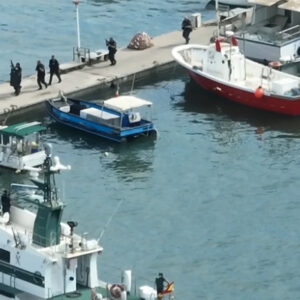
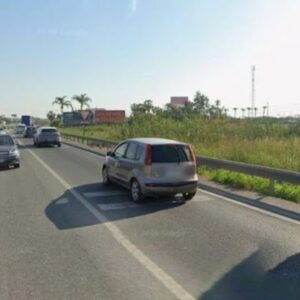

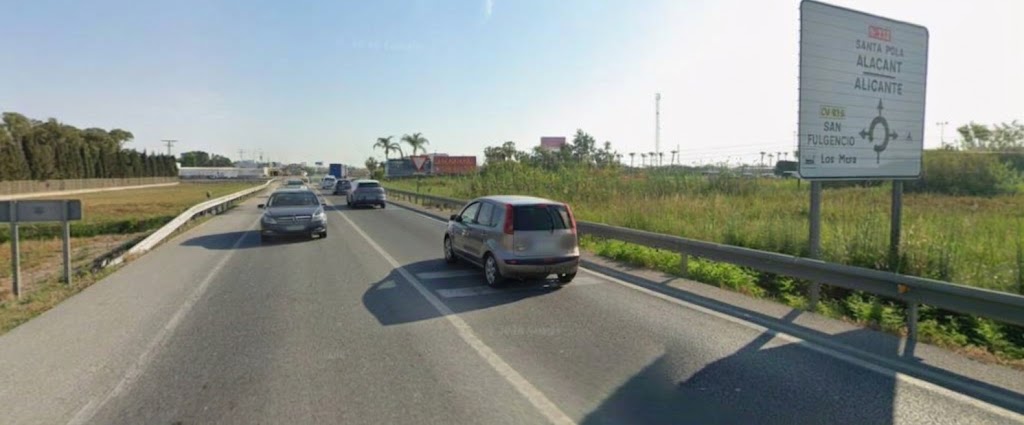
The Mayor of San Fulgencio, José María Ballester, has demanded that the Generalitat Valenciana immediately remove a provisional bridge installed to provide access to a battery factory near the N-332 road. The temporary structure has been built over the channel of the Azarbe de la Reina, which belongs to the Sindicato de Aguas de San Fulgencio.

The Mayor reported that installing three large concrete frames inside the Azarbe reduces the capacity of this drainage infrastructure and creates a serious flood risk for the population of San Fulgencio. The purpose of the installation is to serve the multinational battery company Clarios while work takes place on a section of the rainwater corridor for the azarbe de la Reina, which is intended to prevent flooding and will affect the N-332 in the coming weeks. Neither the technicians working on the multi-million euro project carried out via Tragsa nor the Generalitat informed the irrigators of the Sindicato—the owners of the channel running through the municipality of Guardamar—about the construction of the temporary bridge.
The mayor’s request is included in a formal document signed on 30th October and sent to the Generalitat’s Director General for Water, Lourdes María Pérez Berná, demanding urgent intervention to remove the obstacles placed in the channel.
According to the mayor, the solution used for the provisional crossing involves inserting three large pipes into the azarbe, an action that reduces its channel by no less than 30 centimetres. The mayor warned that the azarbe de la Reina is the main water evacuation artery for the municipality of San Fulgencio during flooding events. He considers that the installed pipes could act as a blockage that hinders drainage and creates a dangerous situation for local residents. The route runs underground beneath several streets in the urban core of San Fulgencio, meaning that in the event of torrential rain, an evacuation failure could cause severe damage to the area. In his letter, the mayor went as far as describing the structure as a vital risk for the population of San Fulgencio due to the channel’s key role in diverting water.
Although the hydraulic infrastructure belongs to the Sindicato de Aguas de San Fulgencio, the mayor argued that his official duties compel him to intervene against any action that could compromise the safety of local residents. The board of directors of the Sindicato is scheduled to meet this Wednesday to address the issue. Consequently, the mayor has explicitly requested that the Director General immediately remove the aqueduct pipes. Furthermore, he suggested that if an access bridge to the battery factory is required, it should be built using an alternative method that does not reduce or affect the flow of the azarbe de la Reina.
“My town and my neighbours are the priority,” indicated the mayor, who is confronting an administration managed by his own political party, highlighting the concern caused among San Fulgencio residents by the Generalitat’s actions. The Director General visited the area on Monday alongside representatives of the irrigators and technicians, without notifying the mayor despite his earlier demands for solutions.
Ballester, a former lawyer for the irrigators with extensive knowledge of the traditional irrigation network, attended the site anyway to outline his objections and propose alternatives that would maintain access to the factory. During the visit, one technician claimed that torrential rains do not sweep reeds into the azarbes or cause blockages.
The temporary bridge is part of wider works expanding the capacity of the azarbe de la Reina in its final section up to the mouth of the River Segura. It represents the primary flood protection project undertaken by the Generalitat Valenciana in the Vega Baja and the province. The plan utilises the traditional agricultural drainage channels to improve the evacuation capacity of the irrigation network near the mouth of the Segura. During events such as the 2019 DANA, thousands of hectares flooded at this location due to lack of capacity in both the old riverbed and the azarbes themselves.
The project originated after the 2019 DANA under the Plan Vega Renhace and continues under the current Consell. The DANA caused major damage through sediment accumulation in the underground conduit of the azarbe del Señor, which runs parallel to the Reina channel but belongs to the Juzgado de Aguas de Formentera del Segura. The project involves removing an underground pipe installed four decades ago to restore an open-air channel and widen it by several metres across an eight-kilometre stretch from the Los Palacios area near Rojales to Guardamar, although the current phase focuses on the section closest to the mouth of the River Segura.