


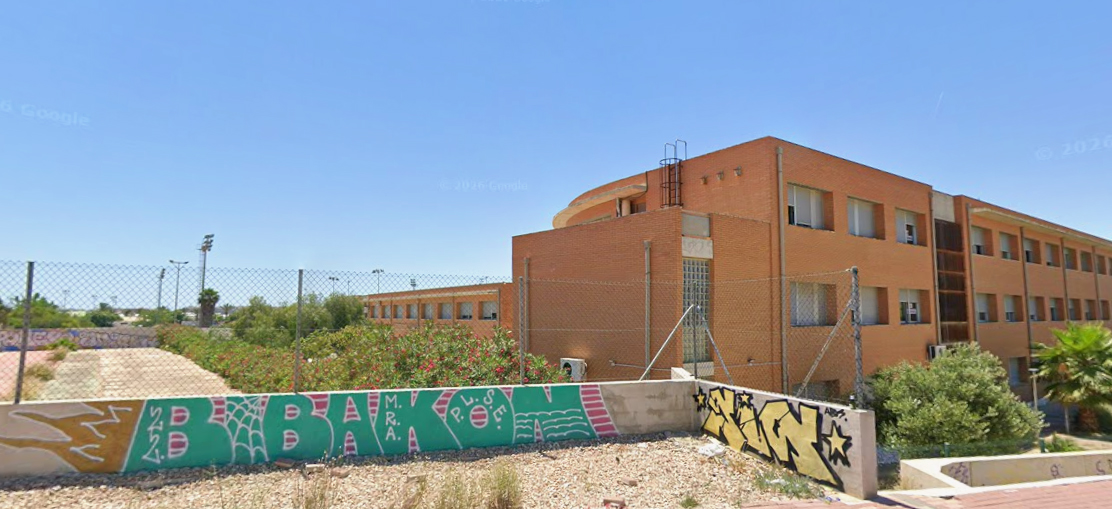
Cultural association Ars Creatio visited IES Mare Nostrum in Torrevieja to present a lecture on the origins and historical heritage of the city. Ana Meléndez Zomeño, a board member of the association, delivered the talk titled “Brief history of Torrevieja: origins and historical heritage of our city” in the assembly hall of the institution.

The event was organised by the Department of Hospitality and Tourism at the request of teachers Francisco Javier Sánchez Marín and Lorena Mayor Hernández for students in the higher vocational training cycle for Tourist Guides, Information and Assistance. Students from the fourth year of secondary education in the reinforcement programme also attended, accompanied by history teacher Juan Luis Gómez Gallo.
Ana Meléndez highlighted the tourism potential of Torrevieja beyond its well-known aspects, focusing on three economic pillars that have shaped local history: salt, fishing, and tourism. Discussing the geological origin of the two salt lagoons near Cape Cervera, she noted that Phoenicians may have visited the area for salt in their metallurgical activities between the eighth and sixth centuries BC. Archaeologists have also identified the remains of a Roman fish factory from the first century, alongside traditional Mediterranean crops such as grapes, olives, and cereals. Another notable discovery was the treasure of La Marquesa, consisting of tenth and eleventh-century Arab coins. The importance of the salt flats of La Mata is documented in archives from Venice in 1384 and Genoa in 1465.
The speaker clarified the distinction between the two towers of Cape Cervera. The older tower, now gone and responsible for giving the city its name, was ordered in 1313 by the Aragonese king James II near the current Eras de la Sal. The newer tower, also known as the Moor’s Tower, was commissioned in 1553 by the Viceroy of Valencia, Bernardino de Cárdenas and Pacheco, during the reign of Charles I. Both structures were built along the Levantine coast for surveillance against piracy. Cape Cervera functioned as a significant commercial hub in the Mediterranean and Atlantic networks during the fourteenth, fifteenth, and sixteenth centuries. Luis de Santángel, a lessee of the La Mata salt flats, played a key role in supporting Christopher Columbus’s voyage. Among the most valuable archaeological elements in Torrevieja is the Acequión canal with its ashlar bridge from 1482.
Population growth driven by salt extraction led to the formation of a settlement that King Charles IV granted town status under the name Torrevieja in 1803, following the relocation of the salt offices. The town suffered devastation in the 1829 earthquake, similar to other towns in the Vega Baja region, before being rebuilt according to a plan by engineer Agustín de Larramendi. The lower line of stone ashlar in the current Church of the Immaculate Conception originates from the old tower. By the late nineteenth century, the town regained economic and cultural momentum, pioneering health tourism with spa facilities and adopting a wet salt extraction system that established it as a major salt complex in Europe within a protected natural park.
Ana Meléndez concluded by encouraging students to investigate the historical and scientific features of Torrevieja to engage future visitors, and recommended attending the theatrical routes organised by Ars Creatio regarding the salt flats and the earthquake.