


A company is constructing tourist accommodation on non-developable agricultural land in Catral, on a plot that until two years ago functioned as a piglet and fattening farm. On 2nd October, Catral Town Council submitted a planning violation report, signed by the municipal architect, to the Valencian Agency for Territorial Protection (AVPT), the body responsible for managing planning regulations on non-developable land in the municipality.

The property spans 66,453 square metres, of which 1,629 square metres were previously occupied by around twenty fattening buildings, corrals, feeders, slurry pits, and other agricultural facilities. Known locally for over half a century as Granja de Los Ñíguez, the site sits along Camino del Hondo in the rural district of Santa Águeda, right in the heart of the traditional Vega Baja orchard area.
Only the farm facilities closest to the access road have been demolished so far. In their place, five single-storey houses featuring solariums and a swimming pool have been constructed. A large green mesh fence conceals the new buildings from view, as they remain surrounded by the remaining agricultural structures.
Located 900 metres from El Hondo Natural Park, the majority of the plot is designated as Non-Urbanisable Land under Catral urban planning regulations, while a smaller section is classified as Environmentally Protected Non-Urbanisable Land. Furthermore, the entire area carries one of the highest flood risk levels under the regional government Generalitat’s Territorial Action Plan against Flood Risk (Patricova).
The works are currently proceeding as normal. Any order to stop construction must be resolved by the AVPT, which can request assistance from the Local Police. Catral Mayor Joaquín Lucas stated that the developer’s representative only submitted a declaration of responsibility to carry out the works. The mayor offered no further comment on the severity of the violation, referencing only the formal communication sent to the AVPT.
Declarations of responsibility serve as self-declarations intended solely for minor alterations, such as renovating commercial premises on urban land. They cannot be used to authorise residential builds, which strictly require formal building licences. The developer has also not initiated a Community Interest Declaration (SIC) procedure, which could potentially validate an economic activity justifying accommodation built on large plots, such as rural lodging or tourist apartments.
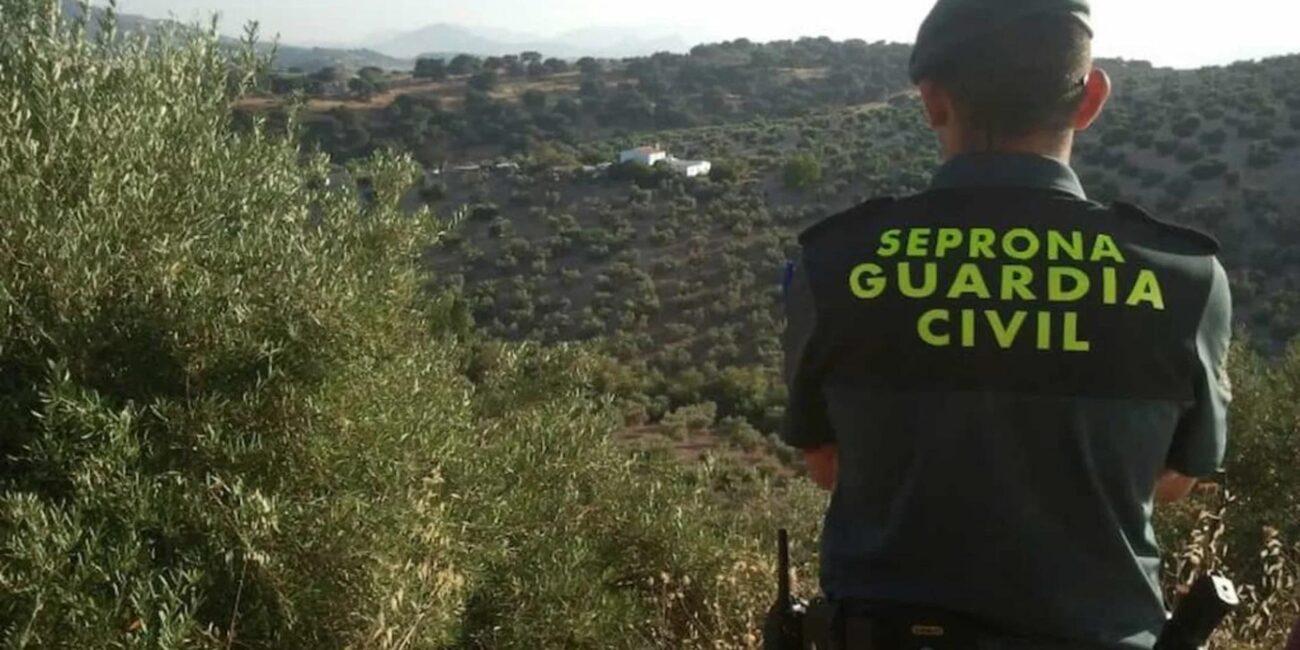
The site has also been reported to the Nature Protection Service of the Guardia Civil (Seprona), specifically its Orihuela detachment. The complaint highlights not only the unauthorised construction on protected land, but also alleges that hazardous asbestos cement roofing was removed without required safety protocols during demolition. It is alleged that this polluting material was used as fill inside empty slurry pits before being covered over with concrete.
The firm responsible is owned by a resident of Catral who has previously secured minor municipal contracts and primarily operates in urban development within the neighbouring municipality of Dolores.
Unauthorised residential building has a long history in the rural stretch between Catral town centre and El Hondo. Hundreds of irregular homes built during the 2000s remain standing, including properties near the Dolores border that suffered severe flooding during storms in 2019. That historical surge in construction previously led the regional government to assume municipal planning powers. Subsequent legal proceedings regarding land crimes eventually concluded after two decades with the acquittal of former officials and developers.
Although the AVPT established an impact minimisation process allowing pre-2014 rural homes to be legalised if provided with basic services such as individual wastewater treatment, new unauthorised developments remain subject to strict oversight.