


Torrevieja is currently facing an educational emergency because the population has grown beyond the capacity of the educational infrastructure. This fact has been acknowledged by the governing Popular Party, which has been compelled to request the construction of four schools in prefabricated classrooms over the past four years. These schools include the IES number 6 “Eras de la Sal” secondary school, as well as primary schools number 14, 15, and 16, the latter of which is scheduled to open today, Tuesday April 14th, five months behind schedule, with three full classes per grade. In the interim, the IES Mare Nostrum secondary school is in the process of establishing a branch for the upcoming academic year. The school’s ultimate goal is to become IES 7, which will also be located in temporary modules on the municipal grounds adjacent to the Language School.

Registration
The school census, which is based on public data provided by the Municipal School Council and collected by the local PSOE, shows that 14,488 students are enrolled in regulated education. This figure exceeds 17,000 students when non-compulsory education is included, representing a 5,000-student increase over the course of three years.
Students from schools 14 and 15 will be the primary source of students at the centre, which is scheduled to open its doors on Tuesday. The student profile will be substantially similar. For the remaining two months of the academic year, they will transition from prefabricated classrooms to prefabricated classrooms. Families have expressed their dissatisfaction with the lack of guaranteed school transport in many instances.
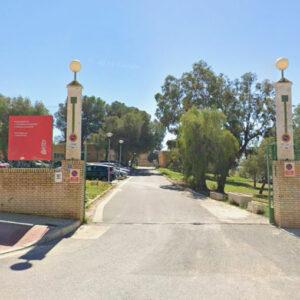
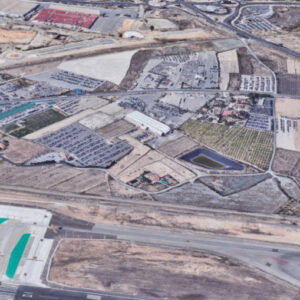
The new school is intended to be permanent, despite being situated in temporary facilities. Located in the Mar Azul residential area, on a verdant space that had remained undeveloped for over 40 years, it was used for 17 years to house the Amanecer school. The school vacated its temporary classrooms a few years ago.
A three-stream school, School Number 16 is comprised of a ground floor and an upper floor that span approximately 4,000 square meters. Each grade level is equipped with three classrooms. The total cost of renting, assembling and dismantling the building for the three academic years until 2028 exceeds 2.2 million euros (including VAT), with the potential for an extension. An open house has been scheduled for this Monday by the Education Department. The monthly rent exceeds 43,000 euros. A total of 67 prefabricated modules have been installed for classrooms, a library, a staff room, a parents’ association room, and other facilities. Additionally, 65 modules have been adapted to fit nearly 1,000 square meters of covered common areas, including porches, corridors, and stairwells. Furthermore, ten lavatories measuring 15 square meters have been installed for primary school students, five for preschool students, and four for teachers.
Unique requirements
The socialist municipal group’s data indicates that the situation is further exacerbated by the influx of students throughout the year, which is estimated to be between 2,000 and 2,300 new students annually outside the deadline. The same figures indicate that 65% of these students reside permanently in the city.
The data suggests that the UECO classrooms, which are designed to accommodate students with special educational needs, are overcrowded in terms of inclusion and diversity. The student-teacher ratios in both primary and secondary institutions have surpassed the established regulations, indicating a shortage of these units. A prime example of this is the specific situation of the 11 pupils at School Number 15 who have been without educational support since the school’s inception. The Generalitat, the regional government of Catalonia, has stated that the situation will be resolved imminently after the families made it public.
Vocational Training
In the field of Vocational Training, Torrevieja’s offerings are restricted to 23 training cycles for a population exceeding 100,000, with a single specialisation: the Basic Qualification Training Program in Agro-gardening at the IES Torrevigía. This figure is in stark contrast to the 145 cycles that Elche offers for 245,000 inhabitants and the 30 cycles that Orihuela offers for 85,000 inhabitants. Although a study for an Integrated Vocational Training Center was announced in September 2024 and progress was reported in January 2026, there is no public confirmation regarding the project’s implementation as of March 2026.
Other Articles

Orihuela invests almost 80,000 euros in San Isidro Murals 2026