



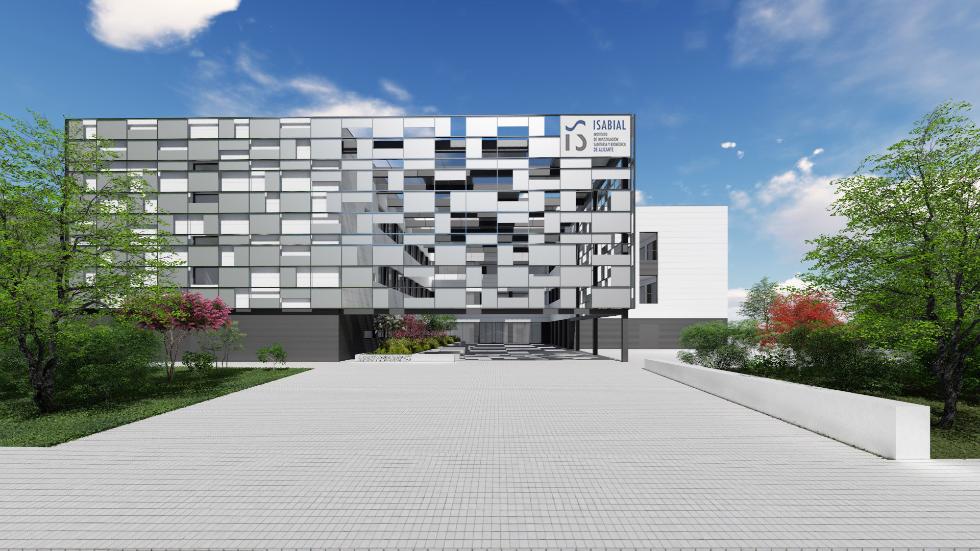
The Emergency Service of the Doctor Balmis University General Hospital in Alicante is in its final phase of refurbishment and extension, after the Valencian Ministry of Health has invested around seven million euros. Yesterday, Tuesday May 5th, minister Marciano Gómez visited the construction site and declared that the area will be operating before the end of the summer. The construction on the side of the building facing Maestro Alonso Street is still in progress.

“Now that the work is almost complete, we can say that we have one of the most modern Emergency Departments, not only in the Valencian Community, but also nationally,” said Gómez, who was accompanied on his tour of the facilities by the manager of the Doctor Balmis Hospital, Francisco Soriano, and by the head of Emergency Department, Pere Llorens, who explained the details of the new infrastructure.
“In line with a commitment to modernise and adapt healthcare to current needs,” the regional minister emphasised the enhanced personnel that will be offered to these new Emergency Departments, with roughly one hundred additional workers across several categories.
The Emergency Department will have a total of 88 beds under its direct control, including 25 in the observation unit, 25 in the short-stay medical unit, the 38 beds in the main ward, the inpatient ward, and 18 reclining chairs. The space has separate circuits and CBRN ( chemical, biological, radiological and nuclear) protection, protocols, protective equipment and high-level isolation units prepared for infections or pandemics.
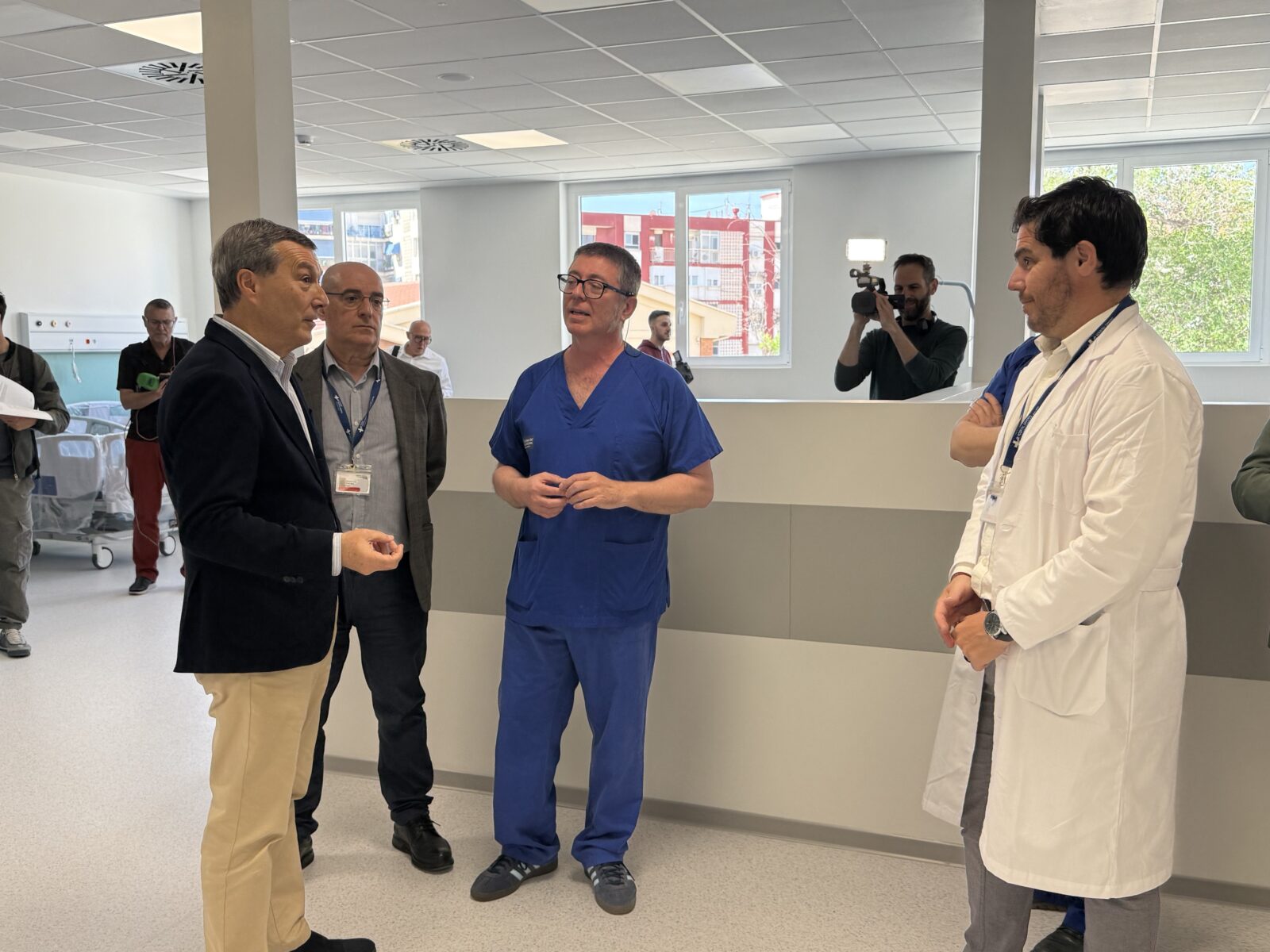
Large Area
This expansion has increased the space for the General and Paediatric Emergency Departments, according to the Health Department. The overall construction area has expanded from 2,902 m2 to 6,252 m2, with the addition of the new building completed during the second phase of the project. That is to say, the space is twice as big.
Phase four, the remodelling of the General Emergency Department, was recently finished with the completion of the outpatient section (level 1), which is currently operational. “It now has three times as many consultation rooms, from four to twelve,” Gómez added, “and includes two fully equipped, dedicated Ophthalmology and Otolaryngology rooms.”
It is worth recalling that phase three of the project included the complete refurbishment of the Paediatric Emergency Department, thereby completing the modernisation of both hospital facilities.
Phase five is underway and encompasses external landscaping. Key spaces such as critical care and radiology rooms are being completed as well as the level 2 area, which will be furnished with beds and chairs, increasing from four to eighteen. This phase is for hospital inpatients.
Complexity
The Minister of Health noted the “complexity of balancing healthcare services with an intervention of this magnitude. The third phase involved moving the General Emergency Department to the new structure to allow for rehabilitation of the ageing facilities. “This has meant concentrating the care in half the space and distributing it over three floors, which has meant a great effort on the part of the professionals, who have maintained the quality of care at all times,” he pointed out.
The new facilities provide a more efficient organization, with larger and more open areas, and a layout that promotes both the work of the health teams and the care of the patients. Each level features a centralised control centre for health care workers to monitor patients for better safety and efficiency. “From the point of view of such an important aspect as humanisation, patient privacy is increased, but the possibility of having a companion is still guaranteed; therefore, the family environment will also be in the best possible conditions,” said the Minister of Health.
“These improvements have allowed us to have a modern, functional and patient-centered Emergency Department adapted to current needs, with a double circuit: one for outpatients and another for patients with multiple conditions,” said Gómez. “And moreover,” he added, “it is equipped to deal with any emergency or illness, including infectious diseases, for it has isolation rooms.
Three critics rooms
Among the primary novelties of the service will be visual and parametric monitoring in all stations, in beds and chairs, which will allow constant monitoring of patients. The number of critical care rooms will also be increased from one to three.
It also contains two negative pressure isolation rooms for infectious disorders and a specific isolation room with adjustable pressure for care of patients with nuclear, biological or chemical risk.
In the area of diagnosis, in addition to conventional radiology, as a novelty, the service incorporates CT scanners and ultrasound machines that will be located centrally, which avoids unnecessary transfers of patients to the second floor where the radiodiagnosis service is located and accelerates care.
In the meantime, Traumatology’s plaster and treatment room has been enlarged and enhanced, with monitoring and appropriate equipment to carry out urgent interventions.
Once the work is completed, the layout will be organised in the following way: the first floor will be occupied by the consultation area (level 1), with 25 beds; the second, the observation area, with 38 beds and armchairs; and the third, the Short Stay Unit, with another 25 beds, which is a conventional hospitalisation unit functionally integrated into the Emergency Department.