



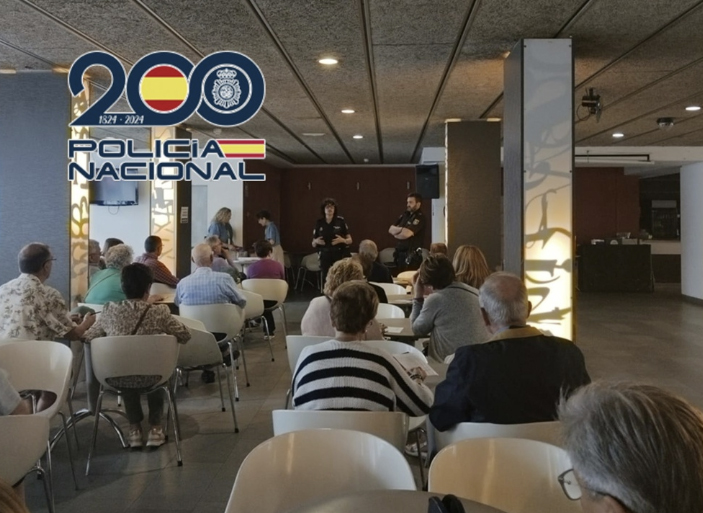
The National Police have stepped up their prevention efforts in Benidorm aimed at protecting senior citizens through the “Plan Mayor Seguridad”. As part of this initiative, officers are holding weekly safety talks at hotels participating in the Imserso social tourism programme. To date, more than 3,000 beneficiaries have received guidance on how to reduce the risk of theft, scams and cybercrime during their stay in the city.

The sessions began in October and are scheduled to continue until June, aligning with the peak season for these holiday programmes. These meetings take place within hotel establishments managed by Mundiplan, in close collaboration with local hotels in Benidorm. The primary goal is to provide practical recommendations so that the elderly can enjoy their holidays with greater peace of mind. Given that the city welcomes thousands of senior visitors every season, these preventative campaigns are considered a vital tool in avoiding situations of vulnerability.
Officers from the Citizen Participation unit of the Benidorm Police Station lead the talks. During the sessions, the National Police explain basic steps to prevent getting lost or falling victim to minor crimes like pickpocketing, particularly in crowded areas or during tourist activities. One of the main pieces of advice is for visitors not to let their guard down while resting. Officers remind holidaymakers that criminals often exploit moments of distraction in busy areas, especially when victims are carrying bags, wallets, mobile phones or important documentation.
The National Police also issued warnings regarding the “shell game” or trile, a fraudulent gambling practice still detected in some tourist spots. Officers explain that these games are often used to lure victims into a scam or to create crowds where pickpockets can operate more easily. Furthermore, seniors are advised against booking excursions or travel packages offered outside hotels by unauthorised individuals, as these can lead to fraud targeting tourists.
The programme also addresses technological crimes, following an increase in smartphone usage among the elderly. Officers explain how to respond to suspicious messages received via SMS or messaging apps. Examples discussed include “relative in distress” scams, where fraudsters pretend to be a child or grandchild who has lost their phone and requires an urgent payment via a money transfer app or a verification code.
The National Police stressed the importance of never sharing passwords, codes or personal data over the phone. They also recommend being wary of unknown links and verifying any financial request before making a digital payment or transfer. These sessions are part of a wider strategy to decrease the vulnerability of the elderly to both physical and digital crimes. The continuity of the talks until June reflects the positive reception of the programme and the cooperation of the participating hotels.
Other Articles

Elche retains five blue flags for its beaches
