


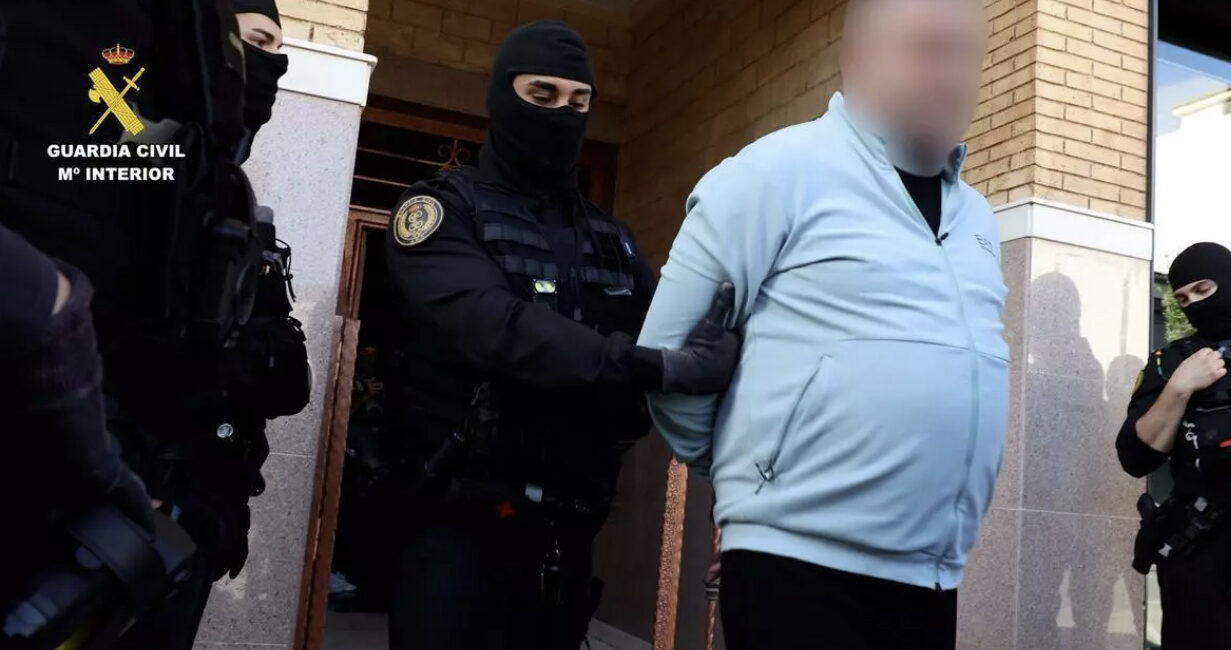
The Guardia Civil has dismantled a criminal organisation in the province of Alicante allegedly dedicated to the illegal trafficking of mid-range and high-end vehicles and drug trafficking to various European countries. The operation has resulted in the arrest of 19 people, accused of forming a group that stole cars using technological smart key cloning systems.

The investigation, carried out under the name Operation Grzech, has led to the seizure of 17 stolen vehicles and another 21 vehicles allegedly used for the illicit activity. The detainees, 13 men and 6 women aged between 31 and 63, are charged with vehicle theft using technological devices, membership of a criminal organisation, forging documents, counterfeiting currency, drug trafficking and money laundering.
The investigation began in October 2025, after agents recorded four vehicle thefts in just two days in different towns across the Alicante province. Agents detected the same modus operandi in all cases, which raised suspicions about the possible involvement of the same organised group.
According to the investigation, the alleged perpetrators used a radio frequency system to clone smart keys and steal the vehicles in just a few seconds, without needing to force them open. From that moment on, agents began collecting and analysing information which allowed them to locate the spaces where the group allegedly manipulated the stolen cars.
Investigators identified two illegal workshops, a garage and an industrial warehouse linked to the organisation. These sites were allegedly used to alter the vehicles and prepare them for transport and sale outside of Spain.
One of the key points of the operation was an industrial warehouse in Bigastro, considered the band’s centre of operations. Around twenty high-end vehicles used in the criminal activity were hidden in this property, and a CCTV camera system had been installed to reinforce security measures.
In that same warehouse, agents also dismantled a clandestine narcotics laboratory, where drugs were allegedly prepared to be exported later. Furthermore, the searches allowed officers to locate material related to both the manipulation of vehicles and the trafficking of narcotic substances.
Among the seized items are smart key cloning systems, tools to modify chassis numbers and number plates, an on-board diagnostics system, circuits, smart keys, multi-brand remote controls, drones, frequency jammers, beacons, mobile phones and a blank-firing pistol.
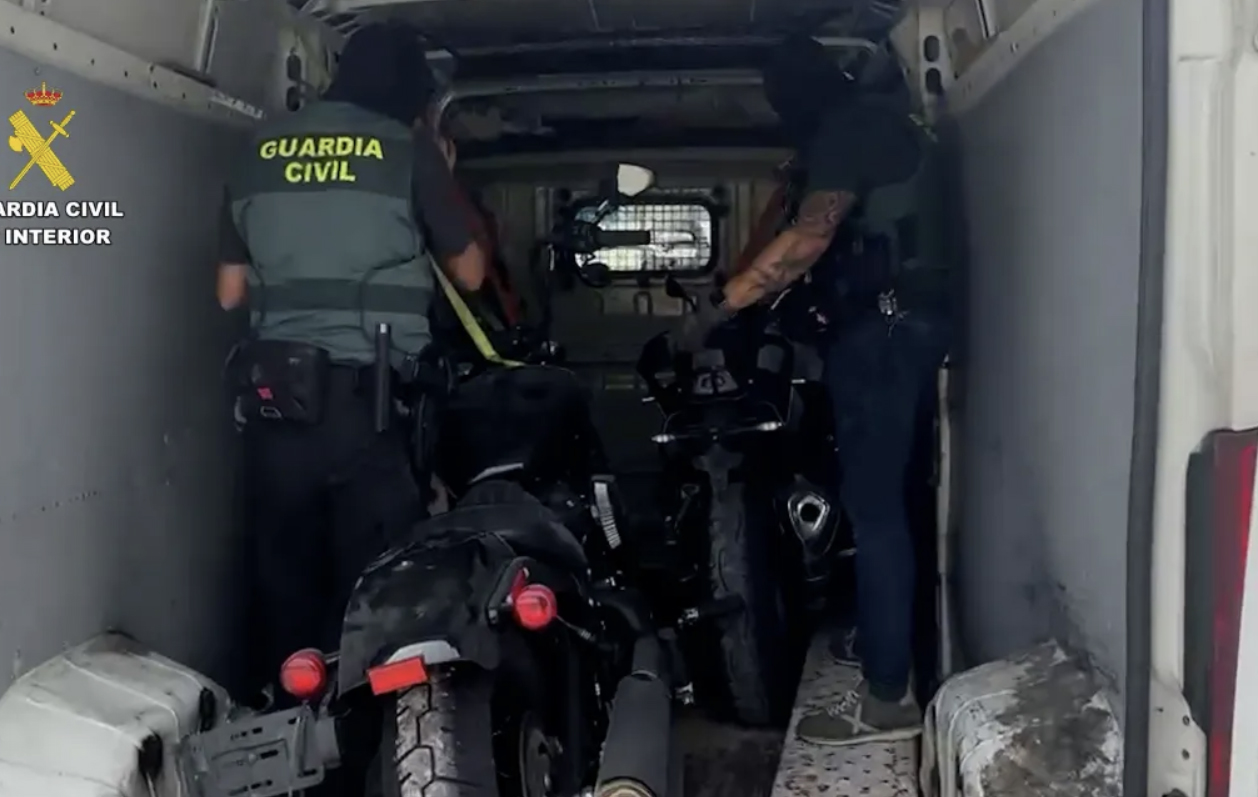
The operation included 16 searches in different parts of the province of Alicante and the Region of Murcia. Specifically, actions were carried out in Algorfa, Bigastro, Guardamar, Muchamiel, Orihuela, San Juan, San Miguel de Salinas and Torrevieja, as well as Mar de Cristal, in Cartagena.
Four of these searches focused on spaces considered strategic for the organisation’s activity: the industrial warehouse in Bigastro, two mechanical workshops in Jacarilla and San Juan, and a garage in Torrevieja.
During the proceedings, agents seized 50 number plates of different nationalities, including Germany, Austria, Holland, Poland, Sweden and Ukraine, which were allegedly used to forge the identity of the stolen cars and facilitate their transport abroad.
In addition to the material linked to the theft and transformation of vehicles, the Guardia Civil seized 40,000 euro in cash, 350 euro in counterfeit notes and various quantities of marijuana, cocaine, heroin and hashish.
Elements intended for purity testing, weighing and packaging of narcotics were also seized, reinforcing the line of investigation related to the drug trafficking attributed to the group.
The operation was carried out by the investigation areas of the main Guardia Civil posts of San Juan and Torrevieja, with the support of specialised public safety, canine, air and reserve units.
The proceedings have been placed at the disposal of Investigating Section Number 2 of the Court of First Instance of Torrevieja, which has decreed the release with monitoring measures for 16 of the alleged members of the organisation.
The other three detainees have been remanded in custody due to European arrest warrants for extradition from their countries of origin.
Other Articles
Driver arrested in Elche following a hit and run
Iberia announces significant changes to hand luggage rules