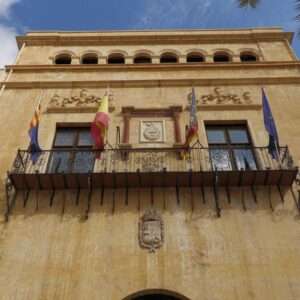



Elda has completed a major phase in the restoration and recovery of Elda Castle, transforming the monument into a prominent cultural and tourist landmark. The local council approved the justification for the project, titled “Recovery of Elda Castle as a tourist symbol of the city,” which has been submitted to the Ministry of Industry and Tourism. The completed works represent a total investment of more than 2.37 million euro, co-financed by European funds from the Recovery, Transformation and Resilience Plan (PRTR)-Next Generation EU, under the programme for improving competitiveness and revitalisation of historical heritage for tourist use.

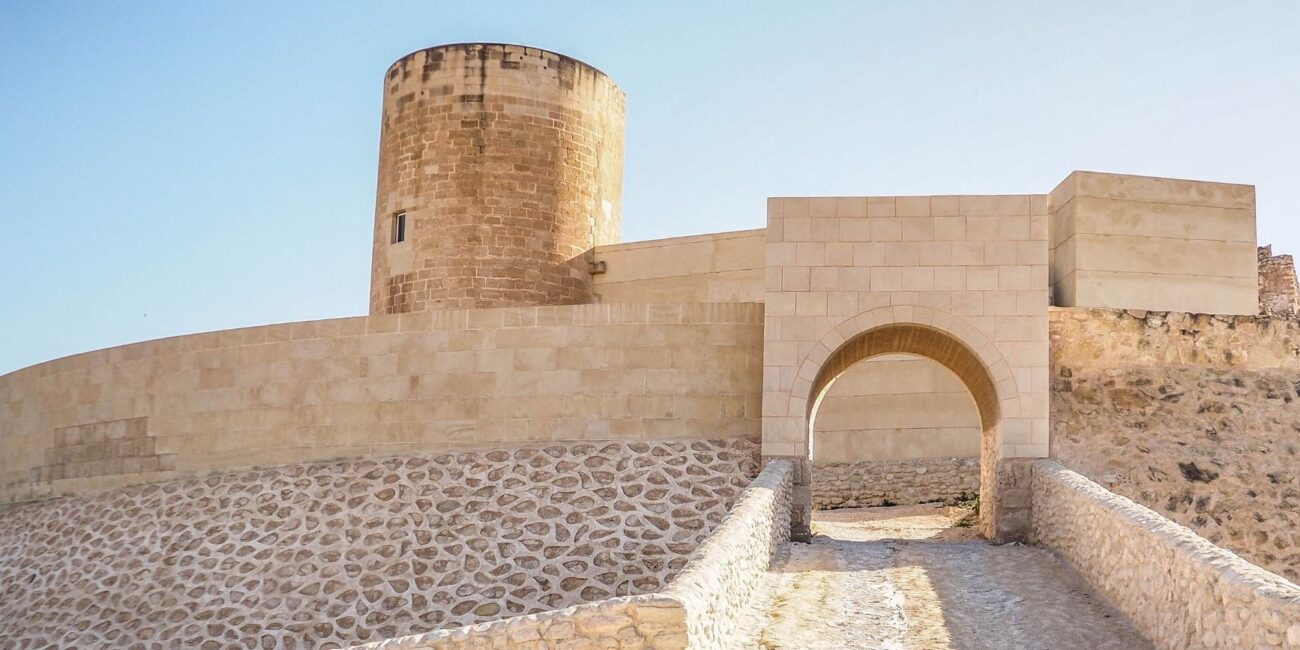
The castle, designated as a Asset of Cultural Interest, is one of the most representative historical monuments in the municipality and the wider region. Over time, previous interventions and deterioration had left the site with a fragmented appearance. The newly completed works have restored key sections of the walled complex, including the Barbican, the main entrance gate to the inner enclosure, the T2 Tower, and the connecting stretches of wall. These actions were carried out under strict heritage conservation criteria to ensure structural stability while respecting the authenticity of the historical materials.
The restoration of the inner entrance gate now features a new stone layout that improves the historical clarity of the complex. The Barbican restoration has successfully recovered surfaces and volumes that were previously at risk of irreversible damage. All work was accompanied by archaeological monitoring and supervised by the Territorial Culture Service of the Generalitat Valenciana.
The project also focused on the urban surroundings connecting the historic centre with the walled site. Surrounding streets have undergone a comprehensive upgrade, including new paving reflecting the area’s historical character, accessible pedestrian routes, the removal of architectural barriers, and the undergrounding of overhead power and telecommunications cables to reduce visual impact.
Specifically, Calle Castillo, a main pedestrian route to the monument, has been fully rehabilitated with new steps, retaining walls, and integrated paving. The steps and garden area on Calle Clérigos, at the junction with Avenida Novo Hamburgo, have also been renovated to improve the southern approach to the castle. Additionally, the project introduced highly efficient, remotely controlled LED street lighting to reduce energy consumption.
This initiative is aimed at driving economic development within the historic centre of Elda by attracting cultural tourism. It forms part of Component 14 of the Recovery, Transformation and Resilience Plan, which supports the modernisation of the public tourism sector through historical heritage. Elda Council intends to continue with future phases of the castle’s recovery using both municipal funds and external grants, in line with the Elda 2030 Strategic Plan.
The specific sum justified to the Secretariat of State for Tourism from the completed works stands at 2,370,053.16 euro. Further municipal-funded infrastructure works in the surrounding area, including the redevelopment of Calle Espoz y Mina, Calle Clérigos, Calle Ramón y Cajal, and Calle Virtudes, alongside the construction of a Visitor Reception Centre and works near the castle cistern, are scheduled for completion soon.