

A nest containing 61 loggerhead turtle (Caretta caretta) eggs has been discovered on Muchavista beach in El Campello. Found early yesterday morning, Wednesday 29th July, the eggs are expected to hatch following an incubation period lasting between 49 and 58 days, helping to boost the species’ population in the Spanish Mediterranean over the coming months.

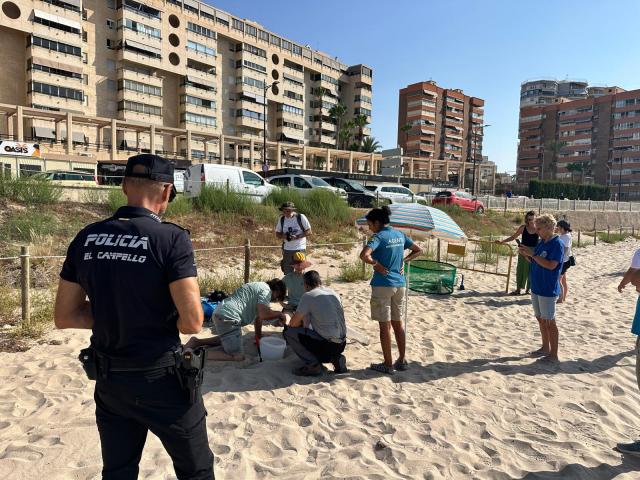
The nest was originally spotted in the southernmost section of Muchavista beach, adjacent to San Juan beach in Alicante, close to the Tobago residential area. A beach worker in the capital observed clear signs on the sand, including footprints and a nest, and immediately dialed 112. Emergency services activated the standard protocol, notifying El Campello Town Hall, the Oceanographic Institute of Valencia, and the Department of Marine Zoology at the University of Valencia. Experts from these institutions travelled to El Campello to lead the operation.
Officers from the El Campello Local Police and personnel from the municipal Environment, Beaches, and Tourism departments arrived promptly to perimeter and secure the site. Upon arrival, the specialist team carefully excavated and measured the 61 eggs, according to municipal sources.
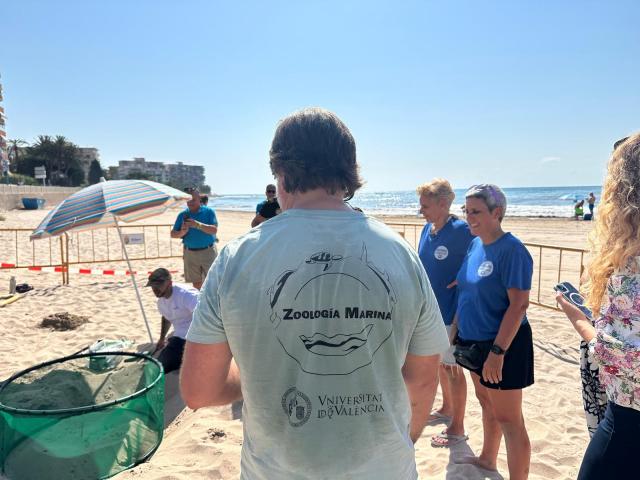
Because the initial location experienced high levels of foot traffic, authorities took the decision to relocate the eggs to a quieter stretch at the opposite end of Muchavista beach, in the Rincón de la Zofra area. A new nest was dug by hand, fenced off, and placed under special surveillance. In a month’s time, a volunteer camp will be established at the site to monitor the eggs until they hatch, at which point experts will be recalled.
This marks the second consecutive year El Campello has hosted loggerhead turtle activity. On the morning of 3 September last year, emergency teams were deployed when dozens of newly hatched turtles emerged on Carrer la Mar beach and headed toward the sea. After being catalogued and examined, most were released, whilst five were transferred to the Oceanogràfic in Valencia to take part in a Head Starting programme designed to raise hatchlings safely until they reach a size that improves their survival odds in the wild.
The loggerhead sea turtle spends the vast majority of its life in oceans and shallow coastal waters, with females only coming ashore briefly to dig nests and deposit eggs. The species inhabits the Atlantic, Pacific, and Indian Oceans, alongside the Mediterranean Sea, which acts as a key nursery. Major spawning locations in the Mediterranean include Greece, Cyprus, Turkey, and Spain.
As the largest hard-shelled turtle species in the world, adult loggerheads weigh between 80 and 200 kilograms and measure 70 to 95 centimetres in length. By contrast, hatchlings measure roughly 4.6 centimetres and weigh approximately 20 grams. The adult turtle laid these eggs after digging the nest, which requires a lengthy development period.
While international legal protections have significantly reduced hunting, consumption of their meat and eggs continues in certain countries where enforcement remains weak. Experts note that persistent claims regarding aphrodisiac properties in turtle eggs are completely false.
The loggerhead turtle is currently classified as vulnerable by the International Union for Conservation of Nature (IUCN) and is included on the international list of threatened species, requiring coordinated conservation efforts. To support these goals, several Spanish municipalities—including El Campello for the past seven years—run the annual “Turtles in the Mediterranean” campaign. Through prominent beach posters and educational talks organized by local Environment and Tourism departments, the initiative guides beachgoers on how to respond if they locate a nest and highlights the importance of protecting the species.