

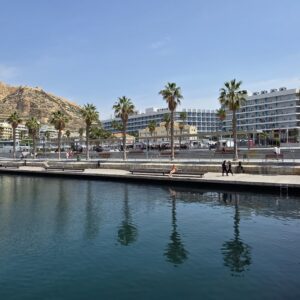
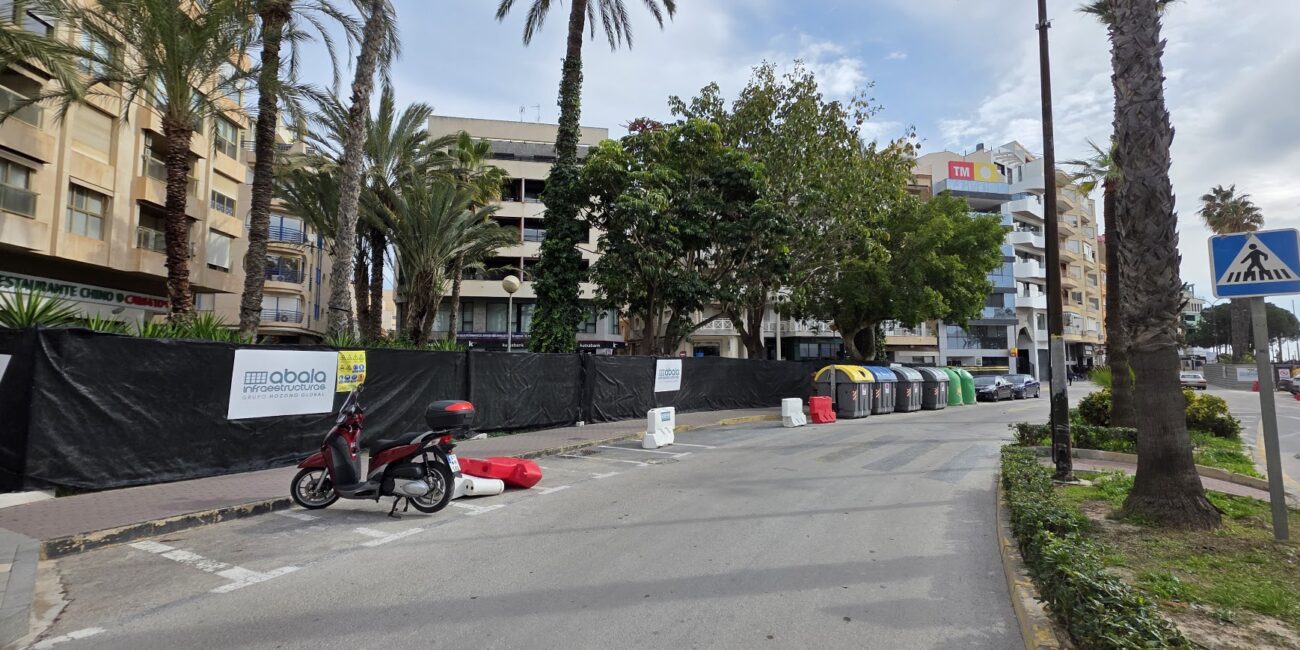
Work teams from the company Abala (Hozono Global Group), tasked with the redevelopment of the port area in central Torrevieja, closed the last remaining roadway on Avenida de La Libertad to vehicular traffic at approximately 11:00 a.m. yesterday, Monday 3rd August. The avenue, built during the 1970s, is now permanently closed to private cars and will only be accessible to emergency services and authorised delivery vehicles. The route is being fully pedestrianised, matching the surrounding zone that spans the leisure centre, the Juan Mateo promenade, and the Juan Aparicio promenade.

As a result of the closure, traffic arriving from María Parodi, Azorín, and Faleria Avenue via the Vista Alegre promenade is now directed out of the port district through Rambla Juan Mateo. Immediately following the implementation of the new route, heavy traffic jams formed at the traffic lights where Rambla Juan Mateo meets Calle Ramón Gallud. Drivers faced significant delays, horn honking, and confusion, with numerous delivery lorries for local hospitality businesses driving into restricted zones by mistake, alongside double-parked vehicles beside the central three-star hotel in Torrevieja.
Shifting plans and costs
In November 2022, the mayor of Torrevieja, Eduardo Dolón, announced that the redevelopment of the port area—including a new leisure facility, modernised areas for the funfair, and the hippie market—would require putting all central city traffic underground, at an estimated cost of 165 million euro. Following opposition from apartment owners along Avenida Vista Alegre and feedback from engineers, the scope was scaled back to placing traffic underground only along the final stretch of María Parodi Street and the connection from the leisure site to Calle Ramón y Cajal. Later proposals suggested expanding surface road capacity instead, such as adding two lanes on Calle María Parodi by removing parking and outdoor seating, and dedicating two lanes on Calle Ramón Gallud.
Ultimately, the private concessionaire for Paseo del Mar opened the full complex, including underground parking, and constructed an internal road to handle vehicle exits for its facilities, the fish market, and Marina Salinas.
Municipal investments and local access
Although Torrevieja City Council has invested over 40 million euro in seafront infrastructure and renovations, planned improvements to access routes into and out of the port area remain unfulfilled during peak summer traffic.
A temporary roundabout built for port access has proved too small, and a single-lane road now connects this roundabout to the Juan Mateo promenade. The layout required the previous demolition of the old tourist office building in Capdepont Square to make room for the roadway, a decision revealed to the public only after plans were finalised without prior public consultation.
The primary alternative route to Calle Ramón y Cajal aimed at bypassing Calle Ramón Gallud congestion is Calle Heraclio, one of the few narrow historical streets remaining in the town centre. Parking and outdoor seating were banned on Heraclio Street and along one side of Calle Ramón y Cajal over a year ago to assist traffic flow. However, the council chose not to alter outdoor seating or parking setups on Calle María Parodi or Rambla de Juan Mateo ahead of the elections. The Councillor for Traffic, Federico Alarcón, stated that technical reports were inconclusive and that the previously planned 165 million euro underground construction is no longer deemed necessary for the time being.
Current access and public transport
Parking is currently permitted along almost the entire length of the main entry and exit routes, where outdoor seating areas also remain operational. Planned park-and-ride facilities intended to keep vehicles out of the town centre are not yet complete, meaning the nearest active bus stops are situated on Calle Ramón Gallud and Avenida Gregorio Marañón.
Torrevieja City Council has described the closure of the final road segment on Avenida de La Libertad as positive progress for the port redevelopment, which is running more than two years behind schedule. The municipal governing board recently approved an extended deadline of 10 September for construction work on the pedestrian esplanade where the fair is hosted. Paving works are now commencing on the bayside area where traffic previously flowed.
Federico Alarcón clarified that the deadline extension—attributed to delays in regional road authorisations from the Generalitat and extreme summer heat slowing work—will not prevent the funfair from reopening in its traditional site prior to that date.