

The PSOE in Torrevieja has confirmed its willingness to collaborate on the N-332 highway widening project to move it forward, following recent statements by Mayor Eduardo Dolón of the People’s Party (PP). Socialist spokesperson Bárbara Soler, responding to the mayor’s public demand to Minister Óscar Puente to put the long-awaited works out to tender, stated that her party will support any procedure that unblocks the project, although she rejects what she considers the People’s Party’s political exploitation of the issue.

The Socialists attribute the main problem with the project to the urban planning conditions of the section, which are making it very difficult to approve a final construction plan. They point out that the road, built as a bypass in the 1980s, became enclosed within urban development plans, and that Torrevieja City Council failed to reserve the legally required easement margins mandated by the Highways Act to facilitate a future expansion.
The PSOE believes that the solution does not lie in a succession of recriminations between administrations, given that the project has been delayed under both PP and PSOE central governments, although it stresses that the origin of the problem cannot be ignored when discussing responsibilities.
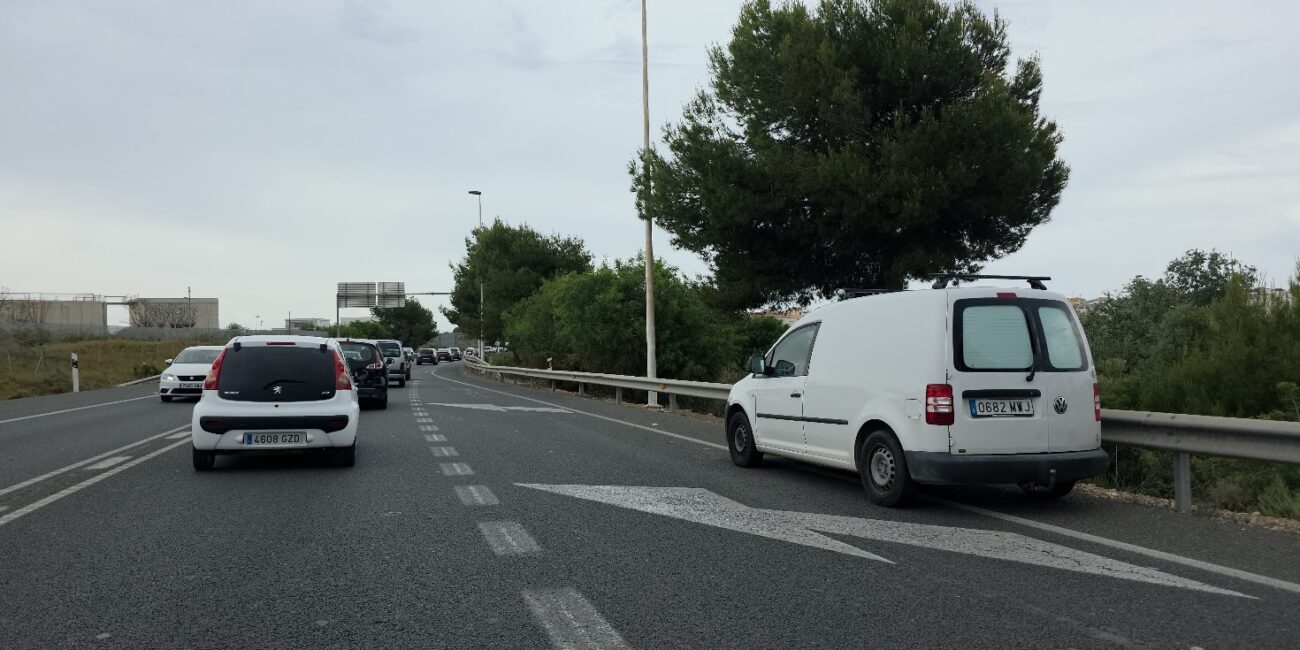
The party prefers to focus the debate on the current state of the process. According to the Socialists, the drafting of the final route is in its final phase, and the project is currently undergoing documentation review. From this point, they argue that the priority should be to demand that the project be given preferential status. The Spanish government plans to invest 55 million euro to widen 4.47 kilometres of the N-332, which is only part of the eight kilometres to be widened. Soler recalled that this section has always been the one planned, even under the previous PP government at the Ministry. The section between the CV-95 and CV-905 is particularly complex due to the limited space available and the potential impacts of the widening.
“The solution does not lie in a series of recriminations between administrations. You will find us working together,” stated Bárbara Soler, spokesperson for the PSOE.
The PSOE is calling for responsible adherence to deadlines, given the project’s technical and urban planning challenges. They also criticise the PP for demanding speed when, according to the Socialists, both the Torrevieja local government and the Valencian regional government have repeatedly missed deadlines on other major projects. This is a clear allusion to the widening of the CV-95 highway itself. They also question whether Eduardo Dolón’s demand for a meeting with the ministry is to address the impact of the route on local projects.
The Socialists affirm that they will continue to support any initiative that serves to promote the widening of the N-332 highway. They indicate their willingness to collaborate when it comes to advancing the project, not when the issue is used to gain political advantage, weaken the opposition, or maintain a partisan discourse.
Regarding the lack of available land, which has delayed the environmental assessment and the development of alternatives since the project’s drafting was awarded in 2018, the Green Party reiterated its position on the matter this past Saturday. They asserted that Torrevieja City Council has for years violated the Highways Act, which requires a 100-metre easement from the centreline of a state-owned road to be respected for future development. The municipality managed to get the State to reduce this requirement to just 25 metres. The Green Party directly points to the person responsible for this narrowing of the right-of-way to widen the road from one lane in each direction to two: former mayor Pedro Hernández Mateo, who was convicted of corruption and allowed the developers to proceed.
The occupation of these easements, according to the version also maintained during his time as mayor by the Green Party’s José Manuel Dolón, facilitated the development of the land by these developers. The Greens claim they used it for housing and businesses. However, on the ground, in the section now planned, this is not exactly the case. What can be seen at a glance in Villa Amalia, the Mediterráneo partial plan, and El Paraíso is that the developers planned the green areas, with municipal approval, on the easement land designated for the road widening project, thus obtaining a double benefit: complying with the legal requirement for green spaces by including an easement they should have respected, and increasing their total buildable area through this practice.
The current duplication project has forced the consideration of public land for the duplication, such as the cemetery parking lot, to fit the section, or to sacrifice green space and make intricate adjustments, especially with the exit and acceleration lanes.
Only a few specific residential areas are directly affected: in the Acequión expansion area, with apartment blocks and a swimming pool on Calle Villa Madrid or Ciudad de Barcelona, right at the 25-metre limit, or next to the exit lane with the Altos del Edén blocks, just five metres away. There, the road widening and its auxiliary access roads are a very tight fit.
The widening project can go ahead because the current road itself is much wider than required for two lanes.
Other Articles

Orihuela police patrol car involved in N-332 crash after pursuit