


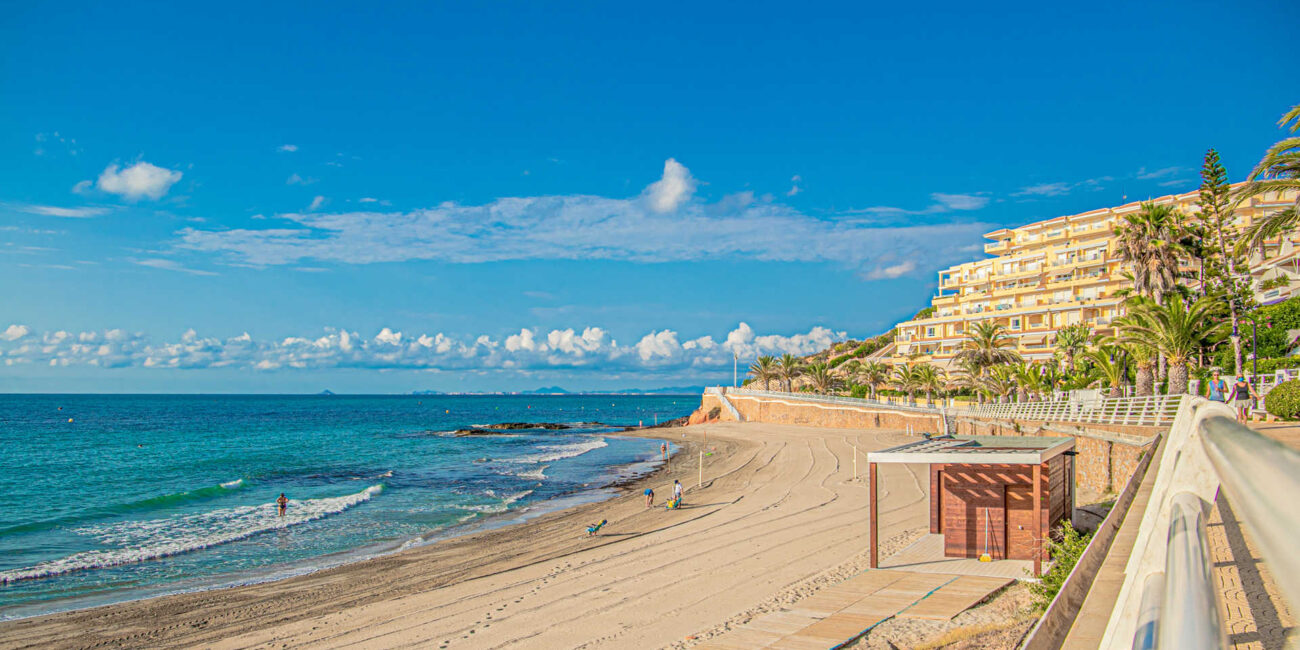
The Orihuela Coastal Council proceeded this afternoon, Wednesday 26th August, to the reopening of the beaches after confirming that the water quality is within the established limits. As reported here, within the framework of the Bathing Water Quality Control Programme, managed by the relevant Regional Ministry, elevated levels of certain microbiological control parameters had been detected in the analysed samples. Specifically, the results exceeded twice the maximum permissible values for one of the pollution indicators, which led to the temporary closure of both beaches as a preventative measure to guarantee the protection of public health.

Recent analyses have confirmed that the levels of the control parameters are currently within the established limits, so the necessary conditions are met to proceed with the reopening of La Glea and Aguamarina beaches for bathing. The Coastal Council expresses its gratitude for “the understanding and cooperation of citizens and visitors during the temporary closure period, a measure adopted as a preventative measure and in accordance with the recommendations of the health and environmental authorities.”
The Coastal Authority stated on Tuesday, when it decided to close the beaches, that it would identify the source of the wastewater contamination. However, it did not explain in its press release whether it had been able to determine the cause of the contamination. As has happened in previous incidents in recent years, the City Council has simply announced the beach closure and the reason, but has chosen not to specify the causes. Although water contamination in an incident like this is not easy to determine, especially since hours may have passed between receiving the analysis and the decision to close the beaches. Translated to the regulations governing alerts on bathing water quality, the analyses that led to the closure detected in the waters more than 400 CFU/100 ml of enterococci or, where applicable, 500 CFU/100 ml of Escherichia coli.
Several beachgoers at the beaches that remained closed with red flags on Tuesday afternoon that once lifeguards stopped working at 8:00 p.m. in both coastal areas, there was no control whatsoever over access to the water. Many people continued swimming. The red flags were flying on those beaches, so it was the responsibility of the users to enter the sea. These same users also indicated that the actions of the Local Police officers on jet skis and along the shore were limited to what they could manage during a few hours of the morning and afternoon shifts. However, this presence was not consistent, and many bathers, as also happens when the red flag is raised indicating unsuitable sea conditions, ignored the prohibition and remained in the water. The Local Police, as has become customary in the last two months, reported on this intervention with videos and images separate from the official municipal communications.