


Torrevieja will face the start of the school year with additional prefabricated classrooms to accommodate its growing student population, particularly in secondary education. The Department of Education had already received more than 200 applications for enrolment outside the regular registration period over the summer. Estimates suggest this figure could rise to 250 or 260 during the first days of September across preschool, primary, and secondary levels, reflecting a rate very similar to previous years.

Mare Nostrum expansion
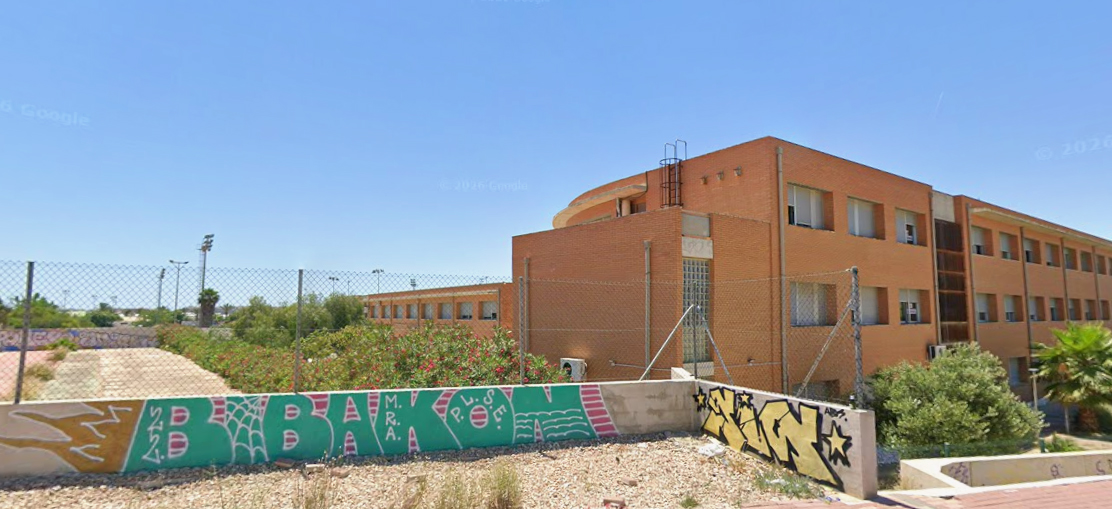
The Councillor for Education, Ricardo Recuero, explained that the expansion linked to the IES Mare Nostrum school includes approximately five classrooms, as well as restrooms and a multipurpose space. These facilities will primarily serve the first and second years of ESO (Compulsory Secondary Education) and have been designed to allow for future expansion if needed. The modules will initially function as an extension of Mare Nostrum and represent the first step towards creating a future branch campus, and later the city’s seventh secondary school, IES number 7.
The Regional Ministry has opted for a phased implementation by first preparing the necessary spaces to enroll the students, before formally establishing the new section later. At the end of the last school year, with teachers on strike, it was announced that this extension, located on a municipal plot of land adjacent to the IES Mare Nostrum high school, would begin the school year as an affiliated section of that school rather than simply an extension.
Recuero indicated that spaces have also been adapted in various schools to open more classrooms and accommodate the increase in students transitioning from primary to secondary school, especially to create new first-grade classes. The final numbers of classes and students will not be finalized until enrollment and withdrawals are updated and the school admissions committees begin their work.
Applications outside regular period
The pressure does not originate solely from students already enrolled in the city. The Education Department registered more than 200 applications from families after the regular admissions process had ended, covering preschool, primary school, and secondary school.
Recuero anticipates that the number of applications will reach between 250 and 260 once the first school placement committees meet. Appointments for submitting documentation were already scheduled until almost 10 September, with the rate of new student arrivals matching that of the previous year. Schools must first update their actual vacancies after accounting for new enrollments and withdrawals. The committees then assign late-enrolling students, taking into account family preferences, address, and school locations whenever possible. When there are no places available at requested schools, prefabricated classrooms are used as a reserve to guarantee enrollment. Last year ended with approximately 17,000 students enrolled in Torrevieja, although the City Council does not yet have the final figure for the start of the new academic year.
Infant and primary school provision
The councillor linked the need for new classrooms to the city’s rapid growth. The greatest pressure is concentrated from the final years of primary school through the first years of secondary school. The continued increase in classrooms in primary schools eventually shifts to secondary schools when those students move on to the next stage of education. In primary school, the largest available space is at school number 16, a three-stream school currently operating at around 40% to 45% of its 600-student capacity. The City Council plans to use its vacant spaces to accommodate some of the additional students arriving in September.
For the first time in the last three school years, the city will not face problems accommodating new primary school students, although it continues to do so in temporary facilities. It has been necessary to set up three entire schools in temporary buildings: numbers 14, 15, and number 16. The latter opened its doors at the end of the last school year in one of the largest prefabricated facilities in the Valencian Community in terms of the number of prefabricated modules.
All the plots of land now used for these schools previously housed temporary classrooms during the 2000s and 2010s. For example, the IES Mare Nostrum site currently being expanded was formerly the site of the IES Mediterráneo. School Number 14 was formerly the site of the Habaneras school, whilst the plot occupied by number 16 was the site of the Amanecer school’s prefabricated classrooms for seventeen years. That land, which is also an undeveloped green area in Mar Azul, has only been free of classrooms for one year.
Financial costs
The use of temporary classrooms comes with a financial cost. For the planned expansion of the IES Mare Nostrum school alone, which will add six classrooms, the Generalitat (Valencian regional government) faces costs of 264,079 euro including taxes. This covers the supply, assembly, 36-month rental, and subsequent dismantling of the temporary classrooms, in addition to the cost of site preparation and adaptation carried out by the municipality.
Other Articles

Online back-to-school spending set to rise by 20% in 2026
Santa Pola approves 40 year Pola Park extension