



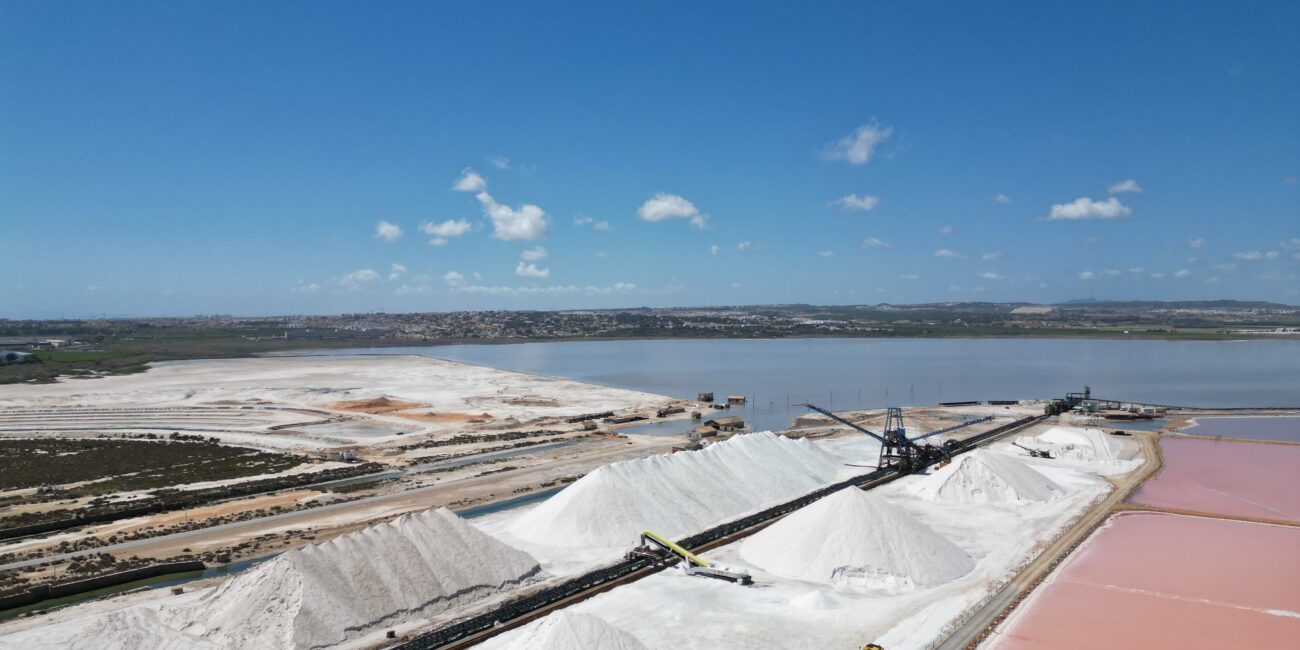
Torrevieja saltworks has commenced its harvesting operations for September, targeting a production of around 500,000 tonnes of salt alongside 350,000 tonnes currently stored in the salt pans. Joseph Pérez, managing engineer of the New Saltworks Leasing Company, noted that approximately 250,000 tonnes are designated for the international market, distributed primarily to Central Europe and the Nordic countries via large-tonnage maritime transport from the port of Torrevieja.

Weather patterns throughout the upcoming autumn and winter will dictate whether these initial production forecasts are met or if export demand rises due to harsh winter conditions and snow-clearing needs across Europe. An additional 250,000 tons are allocated to the growing domestic market in Spain. Harvest estimates rely on analytical factors including brine saturation, precipitation, and chloride accumulation within the Torrevieja lagoon during the summer months.
Shipping operations at the salt dock utilise vessels ranging between 6,000 and 13,000 tonnes. Beyond de-icing applications, the salt supplies the fishing, food, and chemical industries. The company is actively entering high-purity chemical markets requiring low magnesium content, engaging with the French multinational group Salins to establish long-term supply operations spanning decades, supported by a specific sieve installed at the industrial complex.
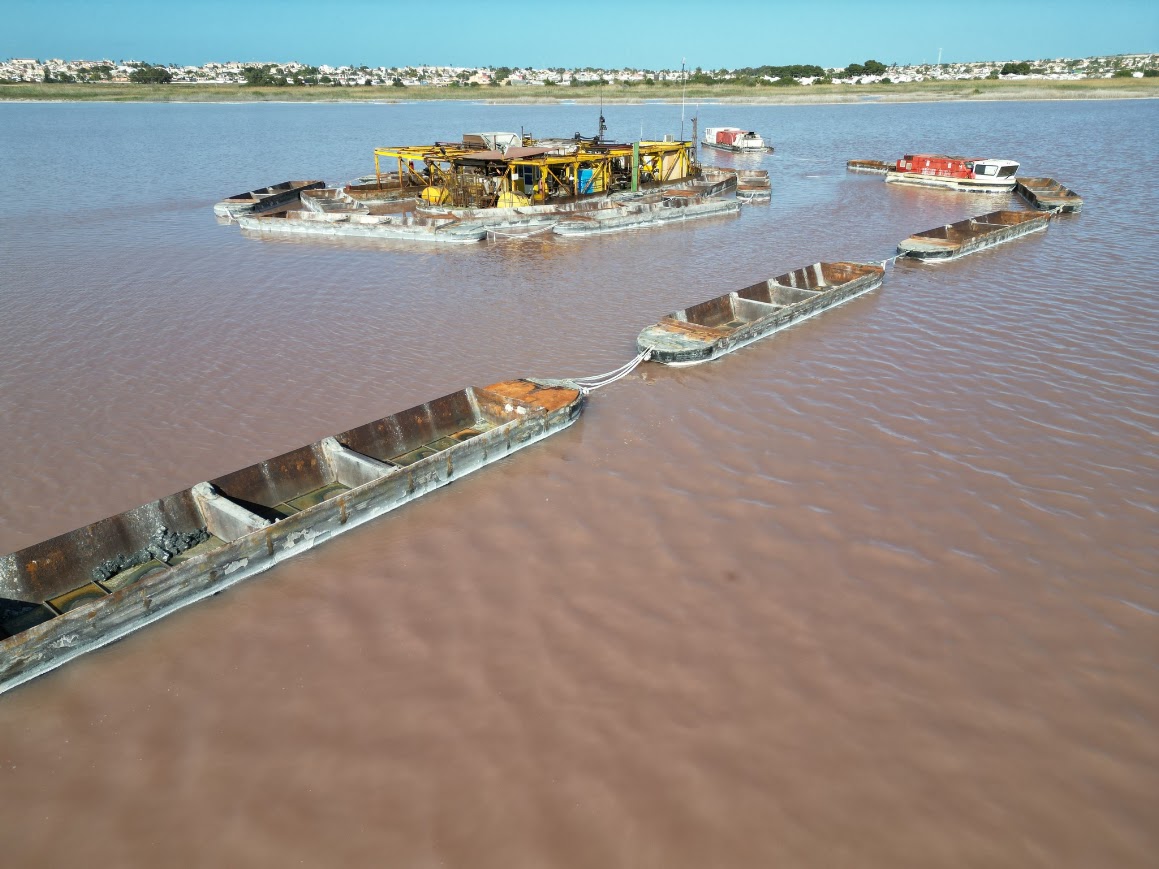
Extraction is focused on the eastern half of the 1,400-hectare wetland within the Torrevieja and La Mata Lagoons Natural Park, while the western section functions as a heating system for brine saturation. Continuous year-round operations have been standard since the Pinoso brine pipeline launched in the 1970s, with scheduled pauses only in August for essential maintenance within the corrosive environment.
Financially, the company reported revenues of €10.04 million for the 2024 fiscal year, marking a 2.7% increase from the previous year, while losses dropped by 73.3% to €420,207. The workforce stood at 76 employees in 2024 with a payroll investment of €3.66 million, accompanied by additional hires in 2025 for processing operations.
Tourism initiatives introduced in 2018 have expanded further, drawing approximately 50,000 visitors via tourist trains, guided walking and cycling tours, gastronomic events, and facility rentals. Tourism activities now constitute around 5% of total company operations, providing higher profitability than traditional salt markets.
The Torrevieja production process utilises the lagoon as a large crystallisation tank. Seawater enters the La Mata lagoon for initial evaporation before transferring to the main lagoon alongside brine from the Pinoso deposit delivered via a 55-kilometre pipeline. Once sodium chloride concentrations reach approximately 300 grams per litre, the salt crystallises and forms a bottom crust. A GPS-guided salt harvester lifts a five-centimetre layer of crust, loading the material onto barges that are towed by tugboats across the lagoon to washing and stacking facilities.
Other Articles

Arrested in Benidorm for murdering his partner and hiding the body
Health authorities declare scabies outbreak in San Vicente del Raspeig