


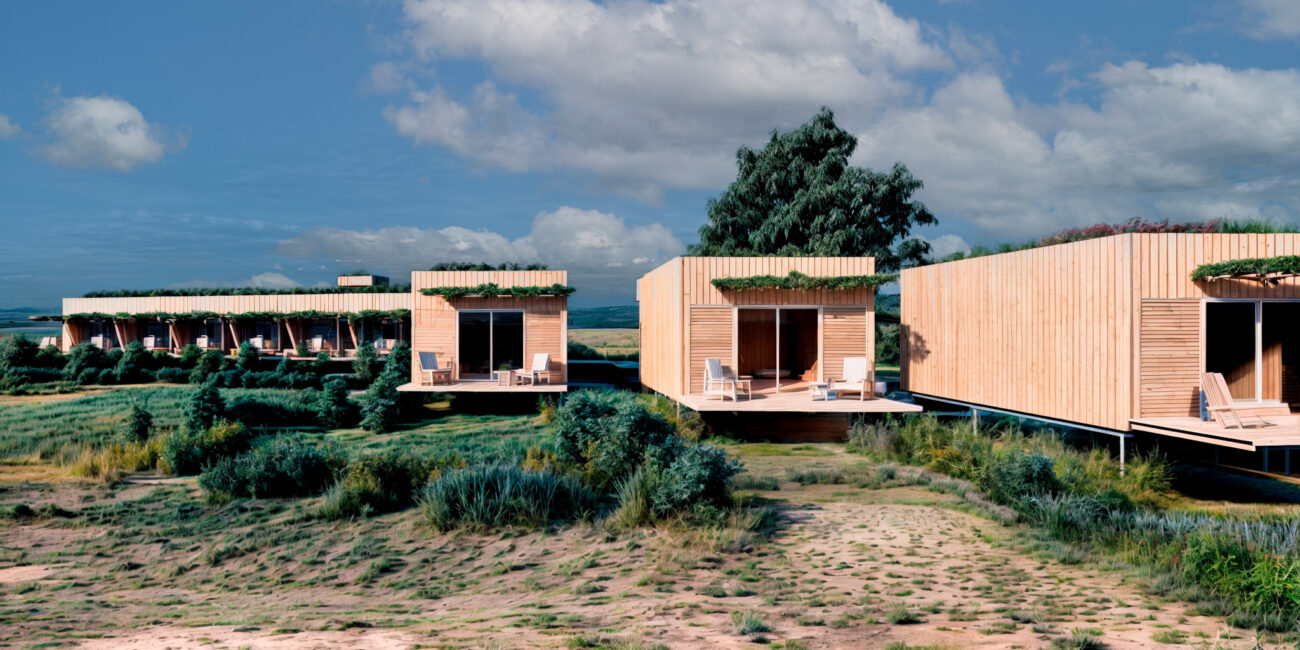
The planning process for the proposed eco hotel within the lagoons of Torrevieja and La Mata natural park must step back several administrative stages. The Torrevieja Town Hall has ordered a new public information period lasting thirty business days after identifying procedural deficiencies. These flaws were highlighted in objections raised by Amigos de los Humedales del Sur de Alicante and the Socialist Party of Torrevieja, alongside warnings from the regional government that the initial environmental impact assessment could not proceed because the promoter’s documentation was incomplete.

Signed by the Chief Official, the municipal resolution requires that all technical documentation be made available for digital download—a step the town planning department failed to complete previously without clear justification. Furthermore, the ruling broadened the administrative bodies required to consult on the project, notably adding the Guardamar del Segura Town Hall to the roster of reviewing entities.

The development plan proposes utilising nearly 170,000 square metres of protected rustic land near Casa Sala, close to the edge of the La Mata lagoon. The concept includes roughly fifty rooms split between the restoration of a historic agricultural building and detachable cabins spread across 13,000 square metres. Additional features comprise a wellness zone with a spa, meditation areas, natural cold plunge pools, and a jacuzzi utilising an old irrigation reservoir; a parking area of nearly 700 square metres; an agrivoltaic plant spanning more than 13,000 square metres; 12,000 square metres designated for vineyards; over 45,000 square metres for a pollination zone; and 40,000 square metres for a permaculture garden. The developers framed these plans around concepts of sustainability, biodiversity, and wellbeing.
The resolution does not represent a rejection of the project. The municipal decree clarifies that it is a procedural step rather than a final decision on the core matter, meaning the process is not barred from continuing. However, it requires corrections before the proposal can advance towards an Environmental Impact Declaration and the granting of a licence. The company had already applied for a licence directly but must now navigate stricter oversight.
Among the major defects uncovered is the public consultation period. The Town Hall originally published an edict on 21st July granting twenty days, in line with regional regulations on environmental prevention. Nevertheless, the municipal legal report concluded that state legislation must apply to projects subject to environmental impact assessments, setting a minimum of thirty business days and requiring publication in the official regional gazette.
The decree now orders this step to be fully repeated, with the new announcement published in the official gazette of the regional government, the Official Gazette of the Province of Alicante, the municipal notice board, and the electronic office. The timeframe will run for thirty business days starting the day after publication.
To guarantee transparency, the decree mandates that technical documentation be accessible online. Previously, interested parties were required to visit the town planning department in person during specific hours to review thousands of pages across dozens of files—an unusual restriction for a project of this scale. The Chief Official’s report specifies that the complete environmental impact study and basic project must be published on the transparency portal without time restrictions on consultation.
The regional environmental authority also flagged multiple shortcomings in the paperwork submitted by the applicant, Inner Wellness Eco Resorts S.L. The agency noted that the representation authorisation lacked a valid electronic signature, the environmental impact assessment application was left blank, and the requested ordinary environmental evaluation paperwork was missing entirely. Consequently, the regional government concluded it could not open the environmental evaluation file due to an incomplete dossier.

Additional notifications sent to affected parties and neighboring landowners on 28 July provided only ten days for consultation, which the report deemed insufficient given the project’s complexity. Impacted entities include the Ministry of Finance—which owns the salt flats—the regional government, and an adjacent landowner. The revised procedure grants them the same thirty-business-day window as the general public, alongside new notifications dispatched to local conservationists and political representatives in Torrevieja.
The project must also undergo evaluation regarding territorial compatibility under regional plans, including landscape and coastal protection frameworks. Because a major portion of the proposed solar plant falls within the municipal boundaries of Guardamar del Segura, that local authority is formally integrated into the consultation phase. Furthermore, reviews must be conducted by the Directorate General of Natural and Animal Environment and the management of the La Mata and Torrevieja lagoons natural park.
Although the park’s master plan allows existing structures to be adapted for tourism and recreation under specific conditions regarding sewage treatment and landscape integration, environmentalists have pointed out other restrictive clauses that explicitly ban hotel use within the protected park regardless of private ownership or historical building status.
Finally, the dossier must be submitted to the Directorate General for Cultural Heritage to assess impacts on ethnological assets, as well as the Segura Hydrographic Confederation and the Provincial Costas Service in Alicante, given that parts of the scheme fall within flood-risk zones and coastal protection servitude strips.
Other Articles
Abala set to secure Torrevieja Museum of the Sea and Salt contract
Torrevieja readies for 2026 Fiesta Blanca at Parque Antonio Soria