


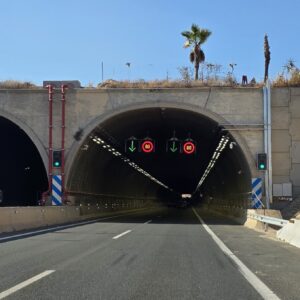
New traffic regulations allowing motorcycles to use the right-hand shoulder during traffic jams cannot yet be applied to the heavily congested N-332 variant in Torrevieja.

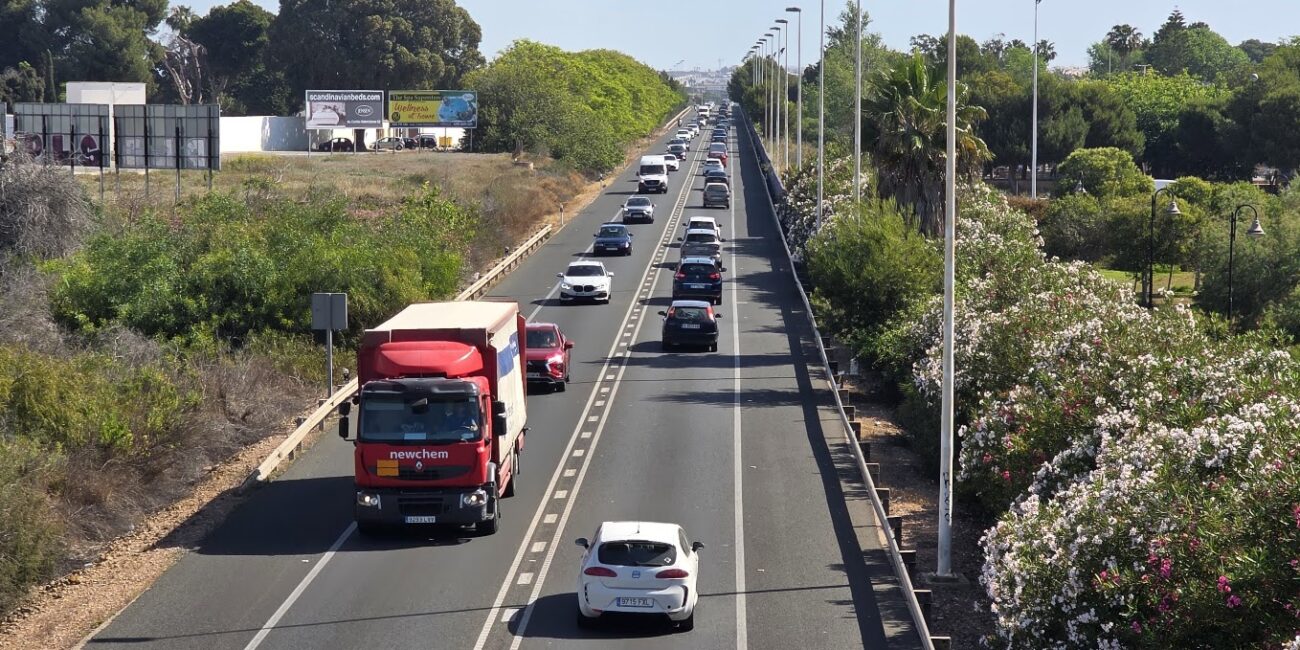
The N-332 variant in Torrevieja handles up to 55,000 vehicles daily during peak days in August, despite featuring only a single lane in each direction. Daily tailbacks occur year-round in specific sections, particularly between the CV-95 bridge and the exit for Parque de Las Naciones. While local drivers avoid using this route for short trips within Torrevieja, many motorcyclists choose the variant to overtake stationary traffic on the right using its wide shoulders. Although previously illegal, motorcyclists initially welcomed rule changes authorising such manoeuvres, but significant conditions apply that prevent its immediate use on the busiest road in Torrevieja.
The new traffic regulation introduces a limited option for motorcyclists to use the right-hand shoulder to advance when traffic is stationary due to congestion. However, this authorisation is subject to several conditions and does not apply automatically to every road. The regulation, which took effect on Thursday, 1st October, permits the extraordinary use of the right-hand shoulder for motorcycles on specific sections only if the road owner and the traffic authority have previously agreed on the designation. This agreement has not yet been reached for the National-332 in Torrevieja, meaning it is neither authorised nor signposted. Consequently, the Guardia Civil will continue issuing 200€ fines for improper overtaking on the right.
Federico Alarcón, the councillor for traffic and security at Torrevieja Town Hall, noted that although the 8-kilometre variant runs through residential areas of Torrevieja, it remains a state-owned highway. Therefore, the state holds the responsibility for adopting decisions regarding such signage. Alarcón explained that Torrevieja cannot formally request this signposting, and that the Guardia Civil operating in the area or the Directorate-General for Highways should initiate the request, much like past decisions to ban overtaking with double continuous lines or install warning lights for rear-end collisions. Furthermore, the regulations dictate that authorized sections must feature fixed vertical signs and road markings.
The authorisation applies due to congestion. Under these specific conditions, motorcycles may advance along the right-hand shoulder at a maximum speed of 30 km/h in single file without obstructing other authorised users. The reform does not grant motorcycles free use of the shoulder outside of explicitly authorised and signposted sections during stationary traffic. Driving on the shoulder without meeting these exact conditions constitutes a serious infraction punishable by a 200€ fine, leaving motorcyclists on non-signposted routes exposed to penalties.
Other Articles

Electric scooter crackdown in Alicante leads to dozens of fines
Lightning strikes causes fire in Torrevieja as storms hit