
A delegation from the Orihuela Moros y Cristianos association took centre stage along New York’s Fifth Avenue, leading the sixty-second Hispanic Day parade organised by Spanish benevolent society La Nacional. Defying wet weather in traditional cloaks and tunics, 64 participants joined the procession along a 1.4-kilometre route past iconic Manhattan landmarks, spearheaded by the 2026 Armengola, Pilar Hernández, and accompanied by municipal councillors taking part as costumed marchers.
Neither cold weather nor persistent rain could deter the firm steps of 64 participants from the Orihuela Moros y Cristianos celebration as they took to the streets of New York. The delegation took part in the annual Hispanic Day parade, organised by the Spanish Benevolent Society known as La Nacional, a long-running event celebrating its sixty-second edition with the goal of showcasing unity and the shared heritage of Spanish-speaking nations.

Following appearances in previous years by other traditions and celebrations from the Vega Baja area, the Asociación de Fiestas Santas Justa y Rufina from Orihuela received an official invitation to march along New York’s Fifth Avenue, bringing the history and folklore of the city to the United States. In total, around 80 members of the festival community travelled to New York for what Enrique Riquelme, president of the association, described as an indescribable experience.
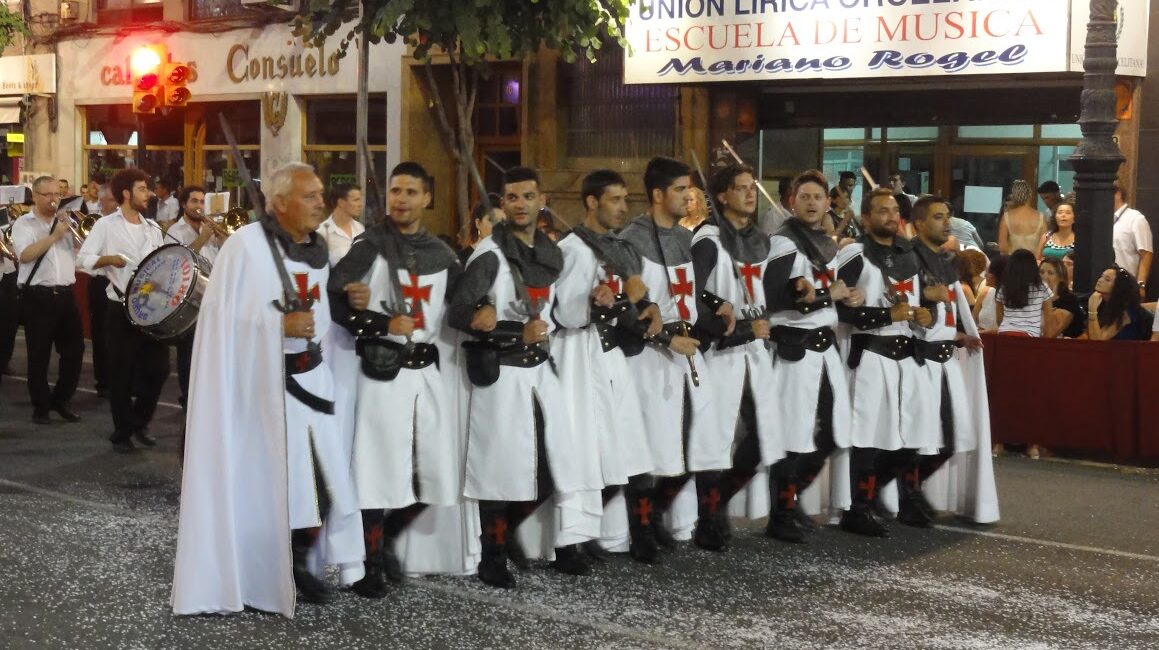
From the early hours of the morning, participants began donning the elaborate outfits brought over from Spain, assisting one another with make-up and hair styling. Dressed in tunics, long cloaks and traditional footwear, the group took the New York subway, creating a striking medieval presence that captured the attention of dozens of commuters. Pilar Hernández, who represents the central historical figure of the Armengola for 2026, recalled that bystanders stopped them constantly in the hotel, along public pavements and on the underground system.
Although rainfall began early in the day and continued throughout the event, the participants pressed ahead, incorporating raincoats and umbrellas into their attire to ensure the occasion went ahead smoothly. The Orihuela delegation enjoyed a particularly prominent role, having been chosen to lead the entire parade ahead of delegations representing around twenty Hispanic communities comprising roughly 6,000 cultural representatives.
To introduce the spectacle to the crowds along Fifth Avenue, the Orihuela association displayed a large banner featuring both physical and digital promotional material. The banner included a QR code linking onlookers to a dedicated English-language Instagram account showcasing videos and information about the celebrations. Enrique Riquelme explained that the intention is for the platform to remain active well beyond the New York trip, serving as an ongoing information channel for tourists and international residents.
Directly behind the banner marched the Armengola 2026, Pilar Hernández, accompanied by Enrique Riquelme and the 2026 Moorish Ambassador, Francisco Sánchez. Behind them followed escort groups made up of festival participants and former figures from Orihuela heritage, including past Armengolas such as Marisa Vidal, Ángeles Vidal, Loli Sánchez and Mª Carmen Martínez, while other women wore ceremonial garments on loan from other titleholders to represent the city liberator.
The contingent was completed by two women’s rows and a final men’s row wearing robes loaned by the Comparsa Caballeros Templarios. Marching within the men’s group as participants were Manuel Mestre, deputy mayor and coastal councillor, and Gonzalo Montoya, councillor for tourism, whose presence highlighted a broader lack of formal institutional representation from Orihuela Town Council.
Marching to classic festival compositions, the participants delivered a mix of solemnity and lively celebration along a 1.4-kilometre route spanning from 43rd Street to 66th Street, passing landmark locations including Rockefeller Centre, St Patrick’s Cathedral and Central Park.
The parade coincided with an additional commemoration for La Nacional, following the naming of the corner of 14th Street and Eighth Avenue as “Little Spain-La Nacional Way” one month earlier to honour Spanish migration history in New York. Established in 1868 as a cultural, social and gastronomic centre, the society has marked almost 160 years of heritage and originally founded the Hispanic Day parade to foster cultural ties across the Spanish-speaking community.