


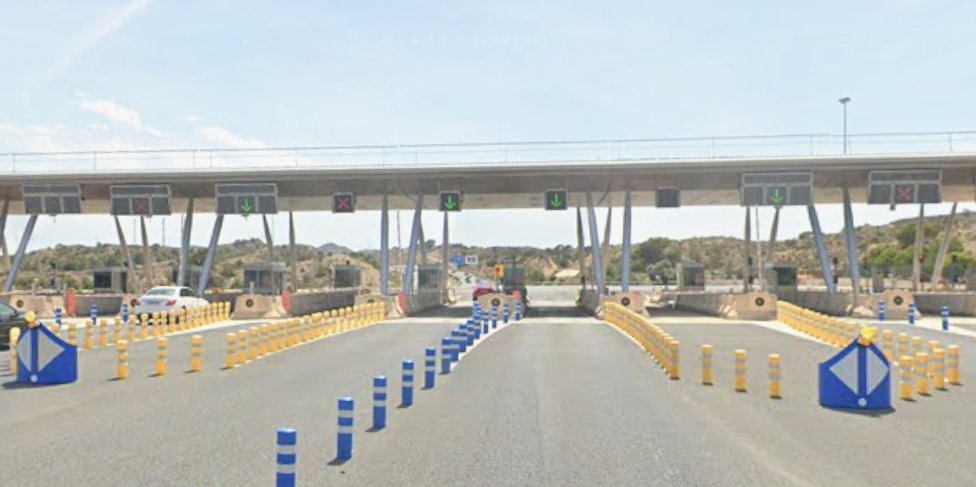
A new labour conflict has started since there are no more tolls on the AP-7 motorway as it goes through the Alicante ring road. The State Land Transport Infrastructure Company (SEITT), which runs this highway, has started a plan to lay off 30 individuals who work for the toll collection service. The CCOO union has vehemently criticised this move.

There is now a workforce that says they were left in a condition of full uncertainty after a move that has certainly made it easier for many drivers to get about. And there’s where the conflict lies: while making the road toll-free has been framed as a matter of public interest, the unions say that the workers are the ones who would pay the price for this choice.
SEITT, the public firm that the Ministry of Transport and Sustainable Mobility oversees and runs various state highways, has made this collective dismissal process official when the toll barriers were taken down on the AP-7 in Alicante. The Council of Ministers agreed this toll liberalisation at the end of 2025, after a time when people could use this roadway for free.
The CCOO union, on the other hand, says that the plan to cut jobs “lacks objective justification” and that it is not because of an unanticipated production or organisational problem, but because of a political choice that was made before. The union says that there hasn’t been an unanticipated decline in activity or an unexpected change in how the service works. Instead, they say, there was a deliberate decision to stop collecting tolls, which meant getting rid of the jobs that went with it.
That’s what the union is most upset about. The workers’ representatives say it’s hard to believe that a public corporation can fire employees for organisational reasons when the Administration itself has made the adjustment that makes that service useless. The union thinks that the reason for the layoffs is not something that just happened, but something that was planned from above.
People are much more unhappy because this predicament didn’t happen overnight. In 2024, other unions had previously warned AP-7 staff about the uncertainties they would face if that part became temporarily toll-free and labour measures were put in place that affected the workforce.
In this case, CCOO also looks at how the company makes decisions. The union is worried about how close SEITT’s management is to the government agency that oversees the highway’s administration. They say that this deal would lead to a mass layoff with no meaningful options for people affected.
That’s where the tale stops being just about business and starts being about people and work. The organization says that underlying the statistics are people who have been going through temporary layoffs for a while now, with no permanent work and no more unemployment payments. CCOO also says that the corporation hasn’t suggested any social support measures to lessen the effect, even though this is the case.
Not only is the criticism aimed at the proposal to cut jobs, but also at how it is being run. The union can’t believe that a public firm would act this way when it directly impacts dozens of families. So, it needs a different approach, with job solutions that stop the removal of a toll from becoming a social issue.
The problem also has effects that go beyond the AP-7 itself. Many groups have called for the Alicante ring road to be toll-free because it would ease traffic on other highways and make everyday commutes easier. It is an important piece of infrastructure for traffic in the south of the province. The unions, on the other hand, think that this better flow of traffic shouldn’t come at the cost of abandoning those who have worked on the ring road for years without a future.
The balance between public service, managing infrastructure, and jobs is now the most important part of this story. And what the workers’ representatives are angry about is that, in this case, the weaker party is once again left to fend for itself.
CCOO still doesn’t like the concept and wants a real negotiating process to start so that other options can be found instead of layoffs. They say that what’s at stake is not simply the closing of some toll booths, but also the future of 30 individuals who have been stuck between administrative decisions and promises that never turn into solutions for far too long.
Other Articles

Elche Book Fair starts next Friday, April 17th