


The Segura River Basin Authority (CHS) has not waited for the formalisation and has already suggested a business for the modernisation and enhancement of the supply valves from the La Pedrera reservoir to the Campo de Cartagena canal, located in the municipality of Orihuela. This contract is funded with ERDF funds and is foreseen to enter into force on the 30th, with a ten-month execution time to restore full operability and optimise the management of the supplied flows .

The joint venture Construcciones Alpi e Ingeniería del Agua y la Energía -UTE Valvulería Pedrera-, which obtained the highest score among the five other businesses that participated in the contest, was the one that made the winning offer. Three other corporations bid slightly lesser amounts (the lowest being €1,269,196) and two bid higher amounts (up to € 1,557,829 ).
For the aspects evaluated, the technical report notes that it has very good content and level of detail in the explanatory and supporting documentation of the proposal, as well as good clarity and coherence in the studies and complementary proposals; very good selection of the equipment chosen; shows a good knowledge of the construction process; very good justification and description of the materials used; adequate development of the Health and Safety team, with staff training and defined preventive measures; takes into account limitations and difficulties of different natures and proposes measures for the reduction of noise and waste generation.
Infrastructure
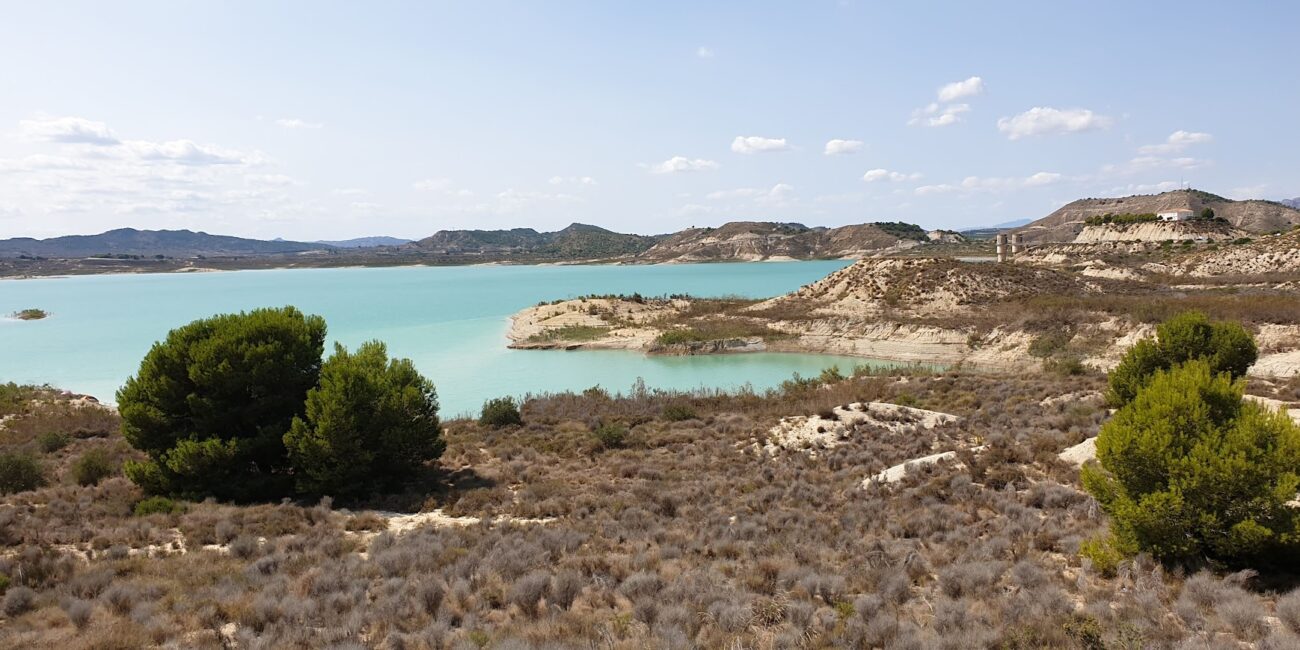
The La Pedrera reservoir is a significant facility in the Tajo-Segura post-transfer system that regulates the flows for the irrigation of the Campo de Cartagena and the urban supplies controlled by the Taibilla Canals Association.
However, the continuous use of its components has caused different occurrences, such as leaks in the gates of the intake tower, breakdowns and operational issues in the valves of Howell-Bunger valves, which makes it necessary to modernise it for the precise management of the provided flows.
As expected, these failures induce the leakage of fluids or the admission of external agents, which, in turn, produce problems such as pollution, inefficiency of the system or waste of resources.
The planned measures are: full rehabilitation of the dam’s gates and intake elements, upgrade and revision of existing valves, and installation of new regulating elements in the post-transfer canal.
improvements will also be made to the hydraulic control and management systems, and there will be parallel adaptation work – such as clearing and removal of material – on the main dam and its dykes.
The CHS points out that with this intervention progress is being made in enhancing the optimisation of the functioning of a vital infrastructure for southeastern Spain , adapting it to the current needs in water resource management.