
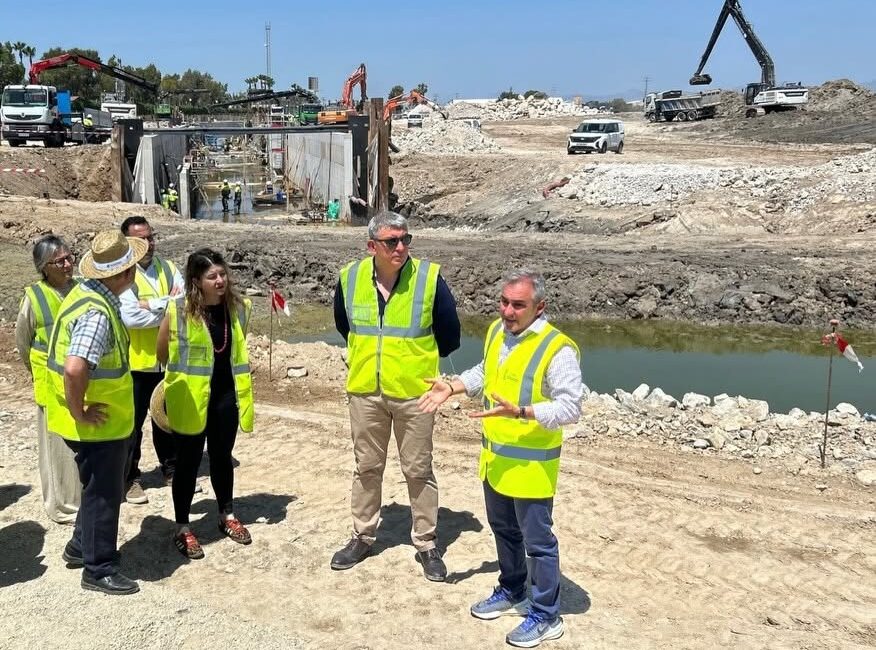
The Generalitat has removed 80,000 cubic metres of sludge from the mouth of the old Segura riverbed, completing 96% of the work planned in the dredging project. The milestone was highlighted by the Minister of Agriculture and Water, Miguel Barrachina, during a visit on Monday to the flood control works currently being carried out in the final section of the riverbed in Guardamar del Segura.

The operations visited by the regional minister are structured around two complementary schemes that form part of the wider strategy to improve safety against flooding in the Vega Baja del Segura. On one side is the project to restore the riverbed slope at the mouth of the Segura River, which is nearly complete. On the other side is the first phase of the scheme to improve hydraulic capacity in the Vega Baja of the Segura River, specifically the green corridor of the Azarbe del Señor.
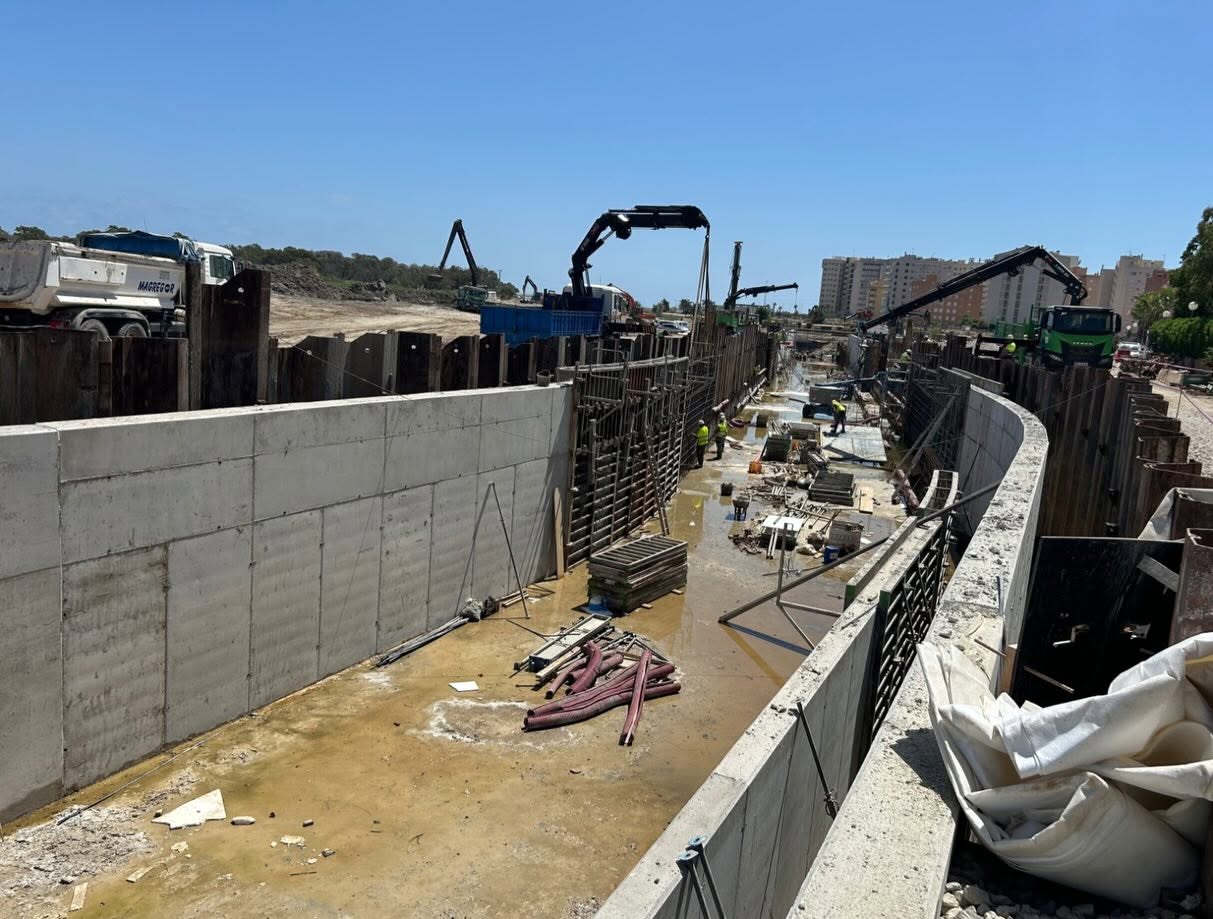
These initiatives represent an investment budget of 16 million euro. Barrachina pointed out that this expenditure is currently the largest being undertaken by the Consell to address flooding risks across the province of Alicante. The Green Corridor scheme involves constructing a reinforced concrete channel running parallel and adjacent to the Queen’s Irrigation Ditch whilst incorporating the Lord’s Irrigation Ditch, which is currently piped underground. This planned channel has a total length of 620 metres, a cross-section width of 9 metres, and varying depths between 1.5 and 4.5 metres. The project, structured in three distinct sections, accommodates water flow from both irrigation ditches in the event of an overflow.
The Green Corridor work, awarded to the public company Tragsa, has now reached 64.39% completion, consolidating overall progress for flood prevention in the area. Alongside Barrachina, the site visit was attended by the Government Delegate in Alicante, Agustina Esteve, the Director General of Water, Lourdes María Pérez Berná, the Mayor of Guardamar, José Luis Sáez, and the Mayor of Almoradí and regional deputy, María Gómez. This investment runs alongside almost three million euro being spent on constructing the San Fulgencio containment dike.
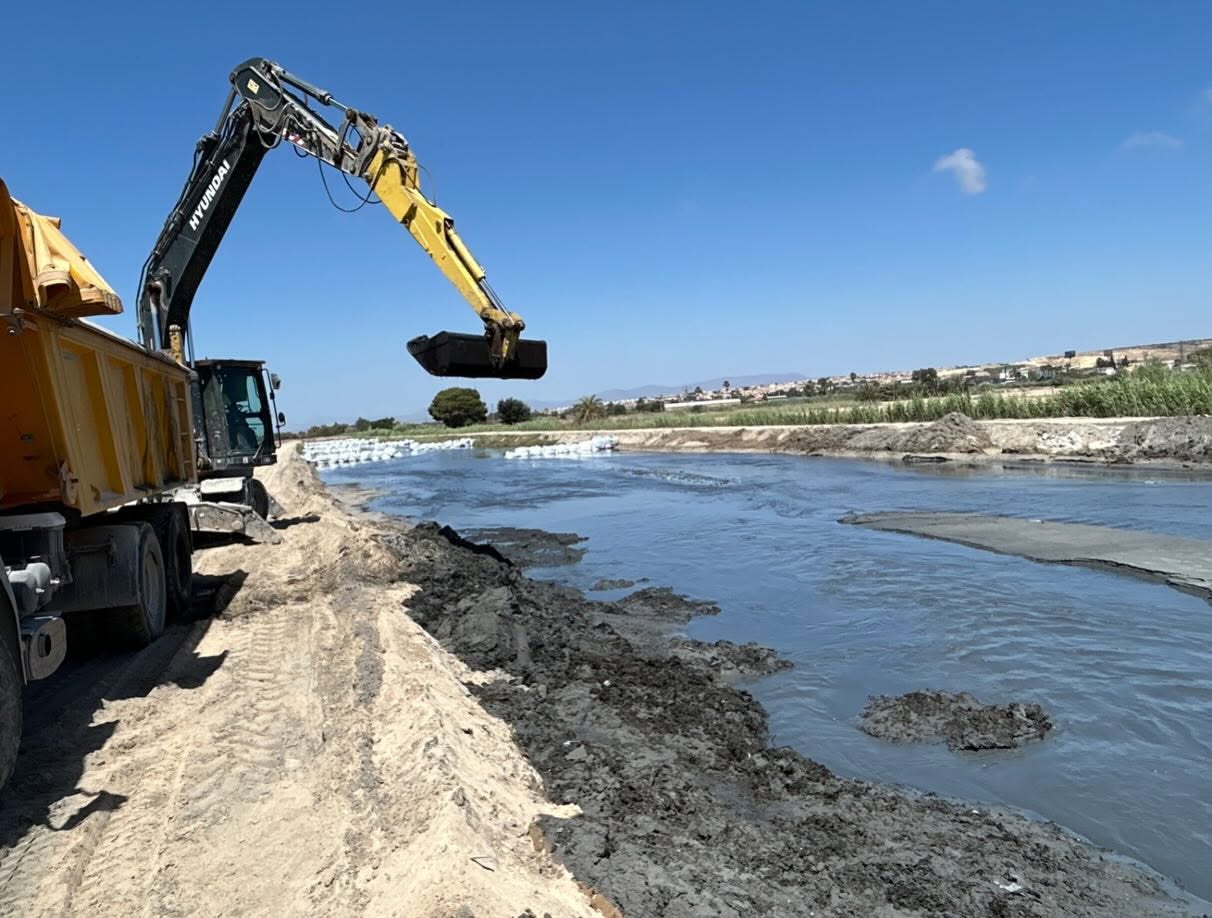
All of these projects were designed to channel and drain accumulated water after periods of heavy rainfall, reducing flood risks for population centres across the Vega Baja del Segura region. They also aim to optimise water resource use during these events for more efficient water management. These initiatives are among the most important actions within the Vega Baja Flood Prevention Plan. They were originally designed by the previous Valencian Government (Consell del Botànic) following the severe floods caused by the Santa María storm in September 2019, and the current Valencian Government has continued their implementation on the ground.
Barrachina emphasised the Consell’s commitment to protecting the territory and modernising water infrastructure in the Vega Baja region, with total investments exceeding 57 million euro to strengthen flood safety and irrigation efficiency. He stated that 35.6 million euro is being allocated to water projects in the province of Alicante in 2026 alone, affirming that water infrastructure remains a strategic priority. The Generalitat’s 2026 budget includes 90.8 million euro in water infrastructure investments, representing a 33% increase from the 68 million euro allocated the previous year. “We are committed to modernising irrigation systems, the Júcar-Vinalopó water transfer project, and investments in the Vega Baja region,” Barrachina stated.
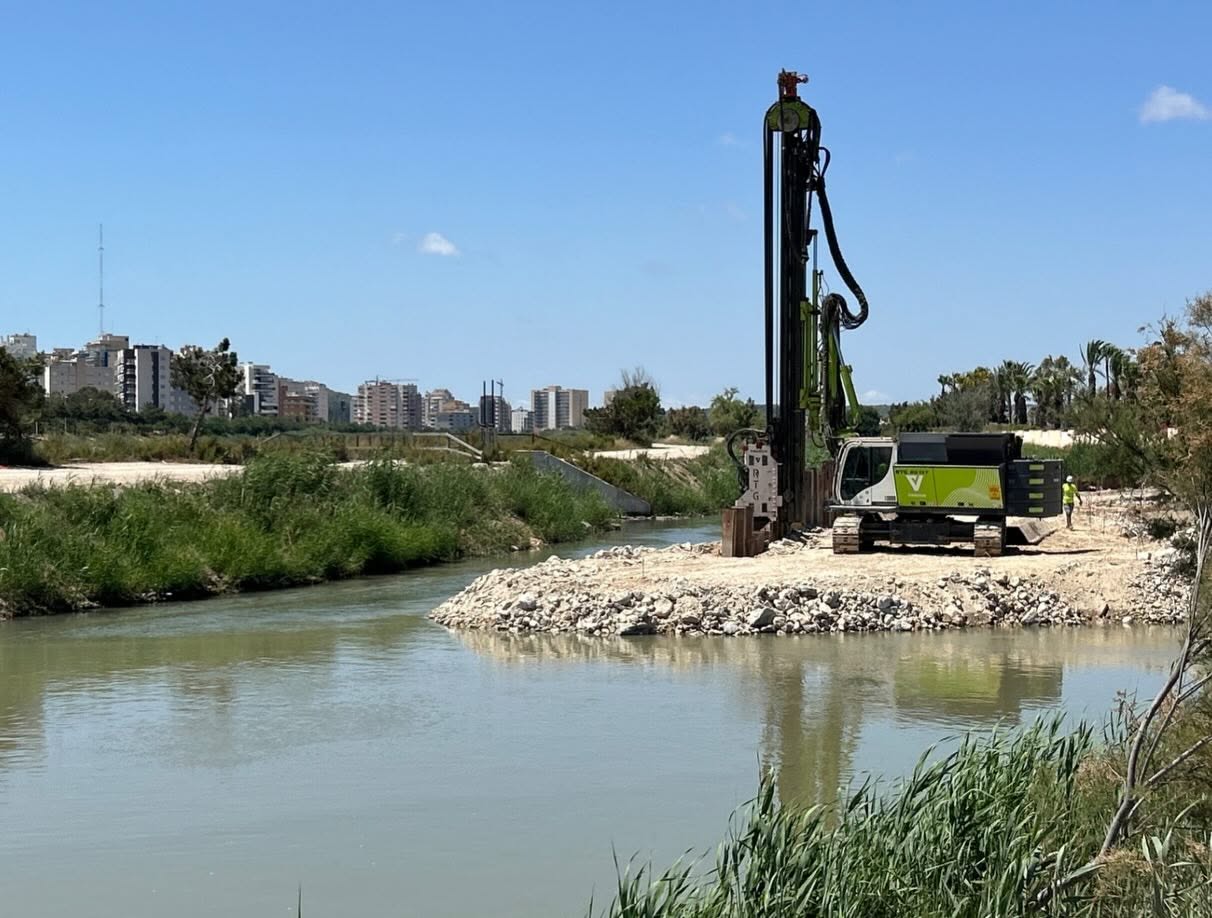
The ongoing works are the result of a plan dating back more than six years at the regional government level. Farmers and local municipalities have long demanded these measures, particularly the dredging, as they believe the lack of a gradient caused by the silting up of the old riverbed was a primary cause of the flooding that submerged thousands of hectares during the 2019 storm.
However, environmental groups like Friends of the Southern Alicante Wetlands have countered that dredging is highly ineffective and forces the removal of materials with high mercury contamination, the final disposal of which they claim remains unclear. Nonetheless, municipalities, farmers, and environmentalists do agree on the effectiveness of removing the culverts from the irrigation ditches.
They also agree that the most effective measure to prevent flooding across the final stretch of the river—which passes through Guardamar del Segura, San Fulgencio, Daya Vieja, and Daya Nueva—would be constructing an overpass over the N-332 highway. This would eliminate the barrier effect the road currently has on water flowing into the traditional irrigation network and old riverbed. However, this alteration requires approval from the central government, which has yet to take significant flood control measures in the Vega Baja region since 2019, despite previously promising over 400 million euro for this purpose between 2022 and 2027 through the Segura River Basin Authority. Currently, only proposals exist.
Other Articles