



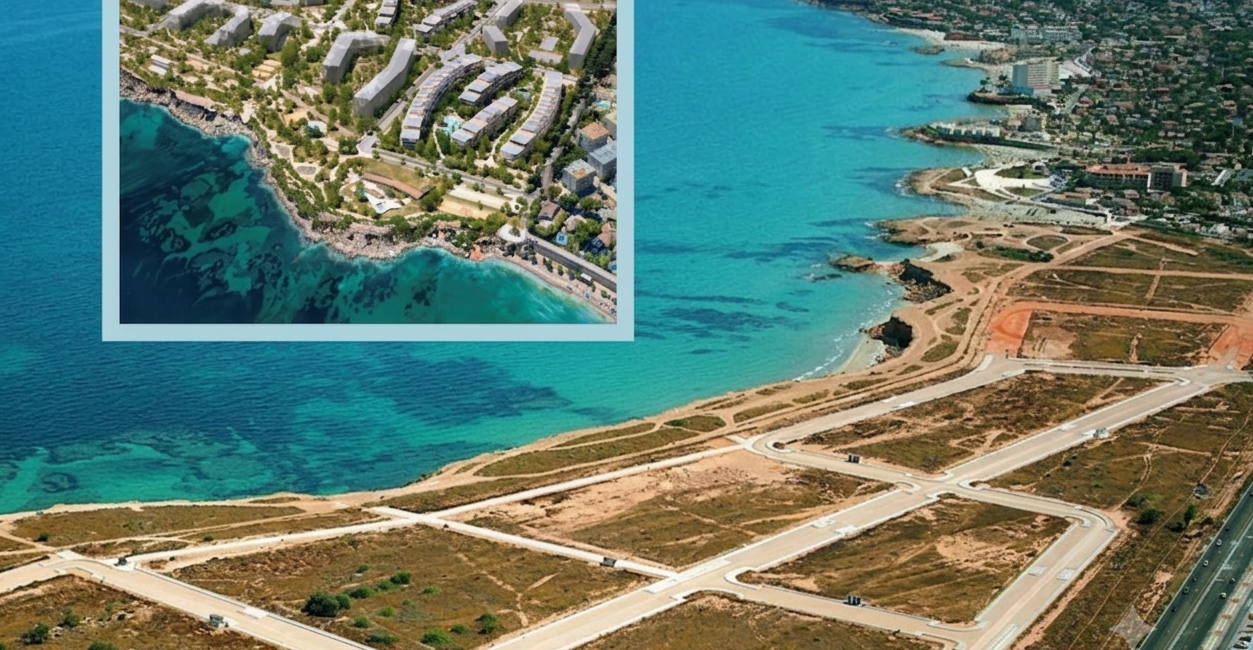
The future urban development of Cala Mosca, which involves the construction of around 2,200 homes on the last unbuilt kilometre of the Orihuela coastline, remains conditional on a key infrastructure project to guarantee the supply of drinking water to Orihuela Costa. The project refers to the second water reservoir planned by the local council, which has recently gone out to tender for 2.34 million euro and will allow the current storage capacity to be doubled.

Sources from the municipal government team have confirmed that the viability of the residential project depends, among other requirements, on reports certifying the availability of a drinking water supply to meet the needs of the projected population increase. In this sense, the launch of the new tank is essential to obtain the necessary water guarantees.
The same sources ensure that the infrastructure will soon be a reality and highlight that it will not only allow future urban developments to be served, but also reinforce the security of the supply for current residents of the Orihuela coast.
At present, Orihuela Costa has a single strategic drinking water reserve in the El Canal area. The council explained during the tender presentation that the existing capacity barely guarantees the supply for about five hours in the event of a breakdown or incident in the network. With the new reservoir, which will have an additional capacity of 6,000 cubic metres, the margin of autonomy will be extended to ten hours.
The need for this infrastructure was already highlighted by the local authority itself, which acknowledged that the lack of storage capacity is a problem dragged out since 2010. The new tank constitutes the first phase of the Drinking Water Supply Master Plan for Orihuela Costa, updated in 2023, and forms part of a wider strategy to ensure the supply to both current homes and the urban growth included in the General Plan.
A key piece to unlock Cala Mosca
The construction of the 2,200 planned homes in Cala Mosca has been surrounded by social, political and judicial controversy for years. The sector, located between Playa Flamenca and Punta Prima, constitutes the last stretch of the Orihuela coastline free from intensive urbanisation and has been the subject of intense resident and environmental mobilisation to stop its transformation.
However, the development maintains its administrative processing, and one of the determining aspects for its progress is precisely the guarantee of sufficient water resources. Urban planning regulations require certifying the availability of drinking water to meet the demand generated by the new homes before definitively authorising this type of action.
The local government points out that the execution of the second reservoir will allow progress towards that objective and guarantee that the supply network can meet both current needs and those arising from the planned growth on the coast.
In addition to the new tank, the Master Plan includes a second phase with new pipes, an alternative intake from the Cartagena canal, an additional header tank and improvements to the arterial distribution network. The final objective is to provide Orihuela Costa with a hydraulic infrastructure capable of supporting all the urban growth planned in the municipality without compromising pressure, flow or the available reserves during incidents.
Meanwhile, the Cala Mosca project continues to await the gathering of all necessary sector reports, amongst them those related to the water supply, an issue that positions the future reservoir as one of the key pieces for the development of one of the most controversial urban sectors in the Alicante province.