

One of the most frequent questions on the beach these days along the Elche coast is when the beach bars will open. These services are sorely missed when they are not readily available, especially during these days of extreme temperatures when many beachgoers appreciate taking a break on the sand for a refreshing drink. However, that lively scene with background music, mojitos, and tapas will have to wait at least another week.

The installation of the kiosks is months behind schedule, given that in previous years some would already be up and running by Easter. This year, the PP-Vox coalition government anticipates that the nine kiosks planned from El Altet to La Marina will be ready by the second half of July, despite Mayor Pablo Ruz’s statement on 20th June, during the symbolic raising of the Blue Flags, that they would open gradually over several days.
A few weeks ago, when summer officially began, the local government attributed the delays to the expiration of the concessions awarded three years ago. With the extensions exhausted, the City Council was forced to put the nine coastal lots out to tender again, a longer administrative procedure which they explain has been conditioned by the authorisation of the Coastal Authority.
Irene Ruiz, the Tourism Councillor, explains that the agency under the Ministry for Ecological Transition did not give its approval until the end of April, having previously required the City Council to commit to installing water pipes for several beach bars located between El Carabassí and El Altet. These improvements have been implemented a year after the City Council itself commissioned a technical project to analyse the feasibility of connecting one of these businesses to electricity, water, and sewage services.
Regarding the authorisations to begin summer activities, the two-party coalition claims that they arrived very late and that until then the local administration had no more room to manoeuvre to launch the tender for occupation of the public maritime-terrestrial domain.
“It is quite a large process, and the public deadlines are what they are. We have not been able to expedite it,” the councillor stated, adding that all processing deadlines following the awarding of the contract will close between 10th and 11th July. The municipal department explained that all the successful bidders are ready to begin setup as soon as these dates arrive.
“Starting next week, the beach bars will begin to appear, and the expectation is that they will all be up and running without any problems,” the councillor assures.
However, the City Council acknowledges that one of the bidders bypassed the process and began assembling one of the beach bars before completing all the administrative procedures, forcing them to close it down afterward. This explains why, for several days now, the demountable structure has been completely closed off on Arenales beach, along with a pergola erected on the sand. Since there are no signs indicating the business is open, some beachgoers are wondering what a closed beach bar is doing in the middle of summer.
In other areas, especially on Carabassí beach, there are some plots of land cordoned off and levelled on the sand for the future location of another of these services, although there are still no materials or workers on site.
The lack of beachfront services is also having a direct impact on the only active beach bar in the area, La Milla, located on the San Bartolomé de Tirajana promenade and open for most of the year. They have noticed an increase in customers who are only buying drinks or takeaway food before returning to the sand, a demand that would normally be met by the various beach bars scattered along the coast. This additional influx has also somehow forced the establishment to combine terrace service with a growing volume of takeaway orders.
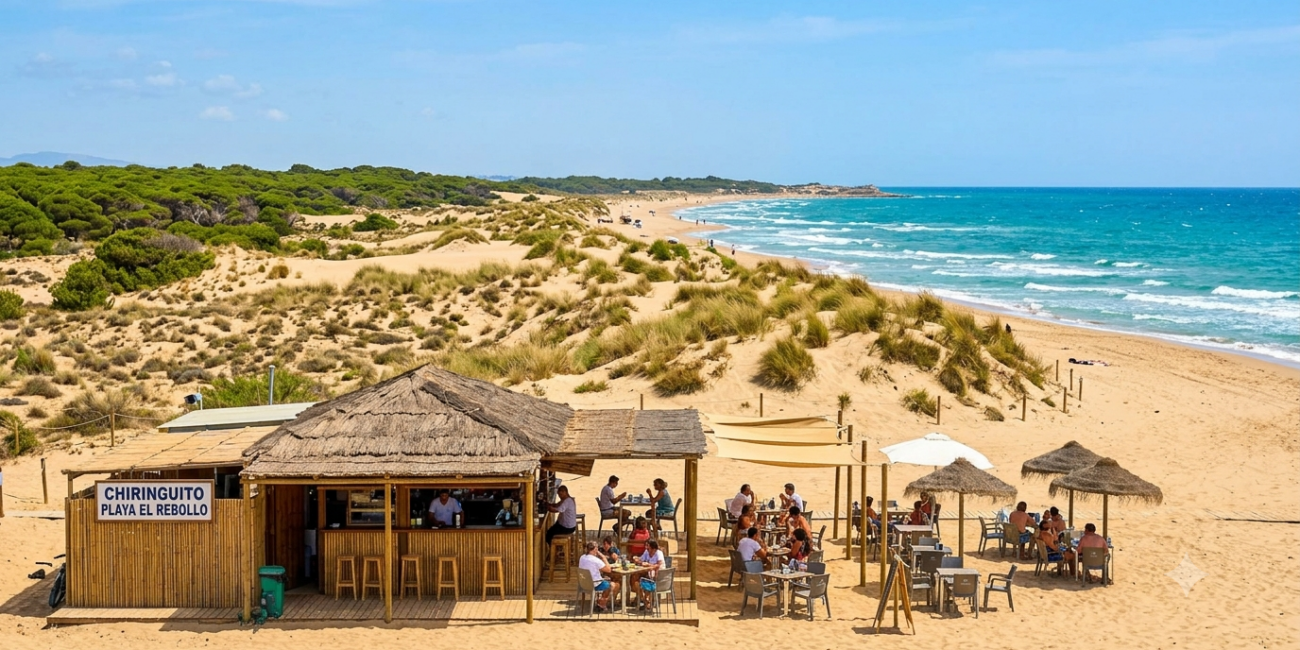
The new tender outlines nine food service areas located in Arenales del Sol, El Carabassí, El Altet, El Pinet, La Marina, and El Rebollo. The specifications stipulate a uniform design for all kiosks, featuring wooden structures, natural materials, and neutral colours to minimise their visual impact on the coastline. Volume limits for music will also be imposed, and live performances will be prohibited, as the local government reiterated several weeks ago.
The concessions, extended for another three years, also include a long operating season. The El Carabassí lot, which has the highest fee, is authorised to operate from 15th March to 31st October. Two of the three beach bars in Arenales del Sol and the one in La Marina can extend their activity until 30th November, while the rest will end at the end of October, except for the one in El Altet, whose authorisation expires in September.
The Tourism Department wants to clarify that the delay only affects these establishments and not the rest of the seasonal services, arguing that the rescue and lifeguard system, the sunbed and umbrella areas, cleaning, maintenance and the portable public toilets for rent at some of the access points to the walkways are fully implemented and that, according to users, they are insufficient, just as they point out that there are foot showers that do not work perfectly.
Vicente Martínez, a resident of Elche who has spent his summers in Arenales del Sol since the 1980s, laments that tourist services such as beach bars are arriving so late, and lists other shortcomings that the district has been dragging along, which are more evident in the middle of the high season, such as the progressive disappearance of local businesses, the closure of the last newsstand and other traditional establishments in the area such as a tobacconist, as well as the lack of a leisure offer that encourages both local life and tourism.
This resident hopes that the arrival of investments like the supermarket, which is still preparing for its opening, will encourage overnight stays in the village because he understands that many tourists end up choosing to go to other places like El Altet or Gran Alacant where there are more amenities and facilities for getting around by car, given that there is a part of the population that remains wary of the government team’s decision to make the main avenue one-way, even though, according to the City Council, the objective was to improve safety in situations of conflict such as the passage of large vehicles such as buses.