



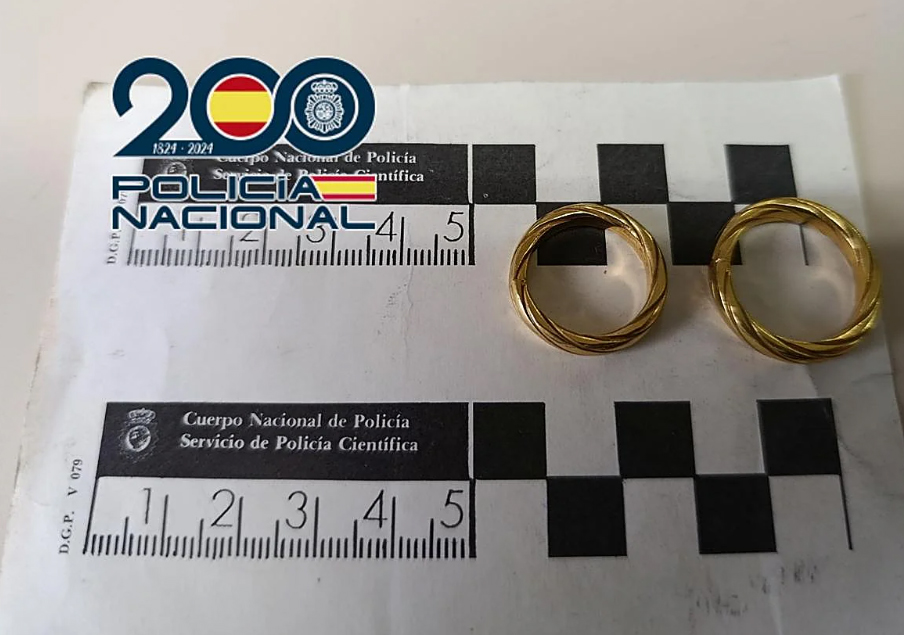
At first glance, they appeared to be solid gold jewellery, which could be potentially profitable for shops that specialised in such items. However, the reality was quite different. The items were merely gold-plated, albeit with a thick layer. National Police officers in Elche have dismantled a criminal group dedicated to committing fraud in these types of establishments, where they attempted to pass off the counterfeit jewellery. In total, five people were arrested: four men and one woman, aged between 40 and 48, for alleged repeated fraud and membership in a criminal organisation.

The National Police launched an investigation after receiving multiple complaints from managers of businesses that specialised in the purchase and sale of gold. They reported that various customers had sold or pawned pieces which, upon closer inspection, were found to be base metals coated with a layer of gold thick enough to pass initial checks.
The investigation revealed that the suspects acted in a coordinated manner. They distributed operations among different establishments and on different days, not only to avoid suspicion but also to study the verification systems used by each business with the aim of circumventing them.
Agents attribute at least nine fraudulent operations to the group during the month of July, involving both sales and pawns. The items included earrings, bracelets, crosses and rings that simulated solid gold. In some instances, the suspects used a recoverable pawn method to facilitate the initial acceptance of the pieces, ensuring the final sale only after their apparent authenticity was verified.
During the inquiry, the relationship between several individuals was confirmed, as were distinct similarities in the design and manufacture of the jewellery, which supported the theory of an organised criminal act. The seized items were placed at the disposal of judicial authorities, and the detainees were brought before the duty magistrate in Elche.
With these events in mind, the National Police are reminding professionals in the gold sector of the importance of thoroughly verifying the authenticity of purchased pieces. They also highlighted the cooperation of the affected merchants, whose prompt reporting was crucial to solving the case.
Other Articles

Ten Algerian migrants intercepted after reaching Benidorm by boat