


The Constitutional Court has decided to maintain the suspension of sections of the Law on the Protection and Management of the Valencian Coast relating to the preservation of traditional coastal housing, while lifting the suspension on the Inventory of Degraded Land Included in the Public Maritime-Terrestrial Domain, according to a decision published in the Official State Gazette.

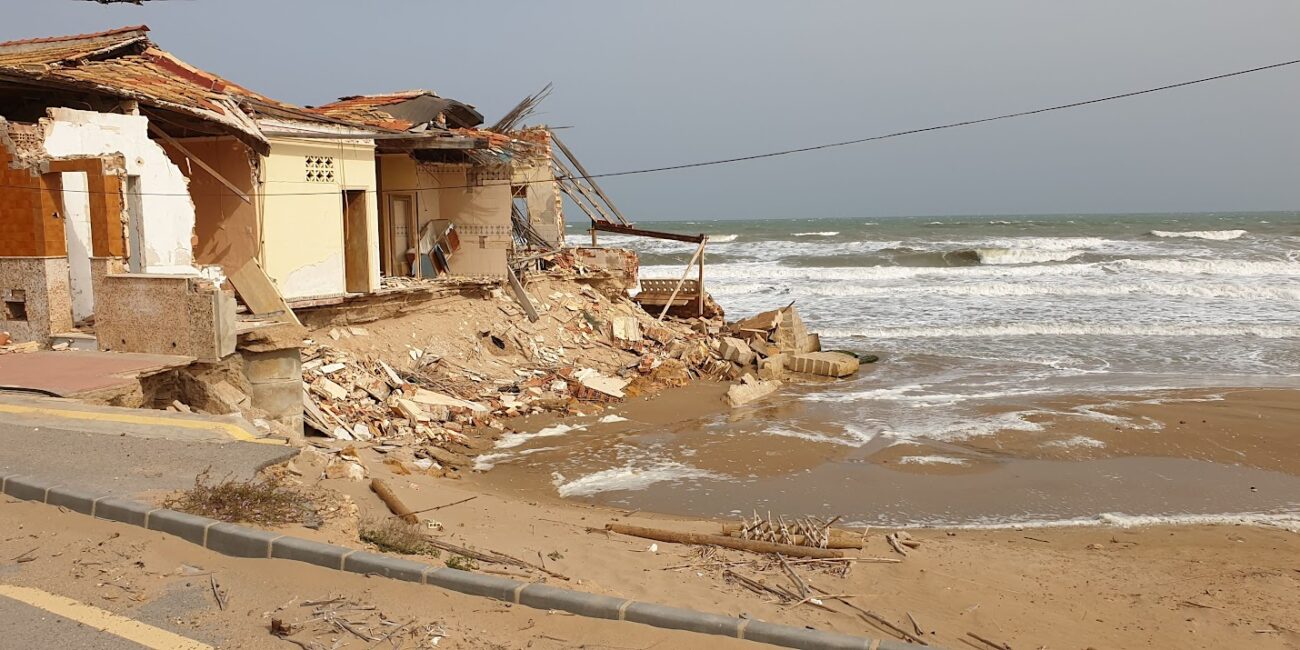
One of the primary housing clusters targeted for protection by this legislation is the beachside neighbourhood of Babilonia in Guardamar del Segura. A demolition order for 80 properties has been in place there since March 2025, although the order was paused while the appeal was heard. While the court ruling does not directly demolish the Babilonia houses, it suspends the regional law that could have protected them as an ethnological site. The Generalitat can no longer use this precautionary measure against the Coastal Authority, leaving the future of the properties dependent on national legal procedures, final court decisions permitting demolitions, and any applicable protective measures outside the suspended article.
Babilonia Beach in Guardamar del Segura is explicitly named in the proceedings. Documentation from the Directorate General for the Coast and the Sea states that the State Administration ordered the demolition of the homes for environmental and safety reasons following the expiry of their concessions, decisions upheld by both the National Court and the Supreme Court. The documentation indicates that the company in charge held the required municipal licence and that residents had consented to begin demolitions in September 2025.
The decision also impacts residents of the Pinet homes on the Elche coast, who face a similar situation. Although they do not yet have definitive demolition resolutions, there are concerns that the Coastal Authority may choose not to extend their concessions.
Following the entry into force of the Valencian statute, the Generalitat stopped planned demolitions by adopting preventative heritage conservation measures and accepting the application to designate Babilonia as an urban centre of extraordinary ethnological importance. The Constitutional Court noted that implementing the Article 17 regime significantly influenced state efforts to regenerate public land, though it did not evaluate the legal scope of those specific actions. The administration maintained that demolitions are intended to restore the beach and dune system.
As a result, Babilonia loses its specific protection as an ethnological centre under the Valencian Coastal Law, meaning the regional government can no longer prevent state action under that article or via the amendment to the Valencian Cultural Heritage Law if homes break state coastal restrictions. The mayor of Guardamar del Segura, José Luis Sáez, stated that the ruling allows the administration to carry out planned demolitions as it sees fit.
Under Article 17, the Generalitat was permitted to designate groups of buildings with historical, cultural, or ethnological significance as urban areas of special value, where demolition would cause a loss of that value. It also enabled specific conservation plans, studies, and agreements with the State to remove certain properties in the public maritime-terrestrial realm from the public domain. The ruling now permits the State to proceed with demolitions in Guardamar del Segura that were halted when service withdrawals began in September 2025.
The Ministry for Ecological Transition contended before the National Court, based on scientific studies from government agencies, that the row of houses causes significant beach erosion and that storms present a threat to the structures and occupants. Conversely, residents blame the narrowing of the beach on the construction of the breakwater at the port of Guardamar del Segura at the mouth of the Segura River in the 1990s. Fighting a legal battle since 2018 alongside multiple protests, residents claim official reports support their stance that the State must act to prevent further erosion, whilst highlighting the vernacular architectural style of the 1920s and 1930s homes featuring sea-facing ground floors and porches. The Ministry has not yet responded regarding its next steps.
The Spanish Government appealed the legislation, leading the Constitutional Court to suspend the enforcement of Article 17 and the first final provision regarding urban areas with special ethnological value in March, limited to building groups used for commercial, residential, or traditional economic activities. The court also suspended the fourth extra clause regarding the inventory of degraded lands in the public maritime-terrestrial domain.
The court clarified that its current decision evaluates solely whether to maintain or lift the suspension, rather than determining the constitutionality of the regulation or power distribution between the State and the autonomous community. It acknowledged State arguments that lifting the suspension would cause difficult-to-repair or irreversible harm to the public maritime-terrestrial domain and environmental interests.
Although a bilateral commission was established between the government and the Generalitat to resolve disputes over approximately twenty articles of the Valencian regulation, agreement was reached on all matters except those regarding the centres of ethnological value.