


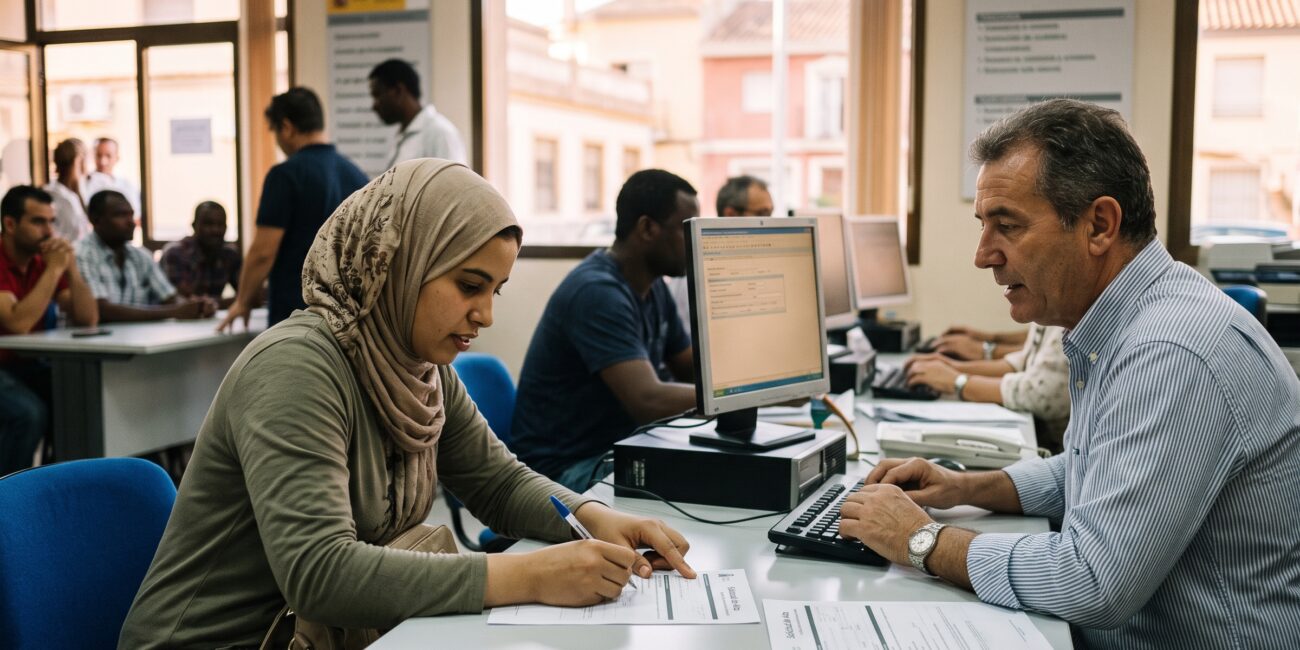
Spain has seen a substantial transformation in its labour market, driven largely by the extraordinary regularisation process that has pushed foreign registrations with the Social Security system to historic heights. By the end of August, the average number of foreign contributors reached more than 3,550,000 across the country, marking an increase of 39,535 people compared to the previous month. On an annual basis, the number of non-national workers rose by 15.72 percent year-on-year, significantly outpacing the national average increase of 3.1 percent for the workforce as a whole.

According to data released by the Ministry of Inclusion, Social Security and Migration, non-national employment surpassed the 3.5 million threshold for the first time when adjusting for calendar and seasonal effects. This milestone follows an increase of 479,004 foreign contributors over the past 12 months. Since June 2022, the count of workers from overseas has grown by more than 1.2 million, meaning that foreign workers have filled 50.9 percent of all new jobs created since the labour reform was enacted.
This nationwide surge comes against a backdrop of local debate in international hubs such as Torrevieja. Foreign residents form a significant pillar of Torrevieja’s ongoing growth, contributing to both the local workforce and wider public finances through taxation. Despite this, Torrevieja’s Councillor for International Residents, Gitte Lund Thomsen—herself an immigrant tasked with looking after the town’s international community—had previously expressed opposition to the regularisation process that has enabled thousands of people to work and contribute legally.
Across Spain, the newly regularised workforce is diversified across multiple sectors and employment categories. Up to August, the general scheme accounted for 79.8 percent of the 337,917 newly enrolled contributors, while 16,912 individuals, or five percent, registered as self-employed. In terms of gender distribution, men represented 60.2 percent (203,418) of the newly registered total, whilst women accounted for 39.8 percent (134,499).
Foreign workers now represent 15.9 percent of the total Spanish labour force. The highest concentration is found in the hospitality sector, followed by agriculture, construction, administrative activities (20.2 percent), and transport (18.5 percent). Non-nationals also comprise a substantial share of special schemes, making up 47.6 percent of registrations under the special household scheme and 39.2 percent under the special agricultural scheme. Furthermore, job security amongst foreign employees has strengthened, with 86.8 percent employed on permanent contracts—nearly 30 percent higher than the pre-reform average between 2017 and 2021—whilst temporary contracts have dropped to 14.1 percent.
Other Articles

Torrevieja City Council awarded prestigious Sports Quality Seal
