


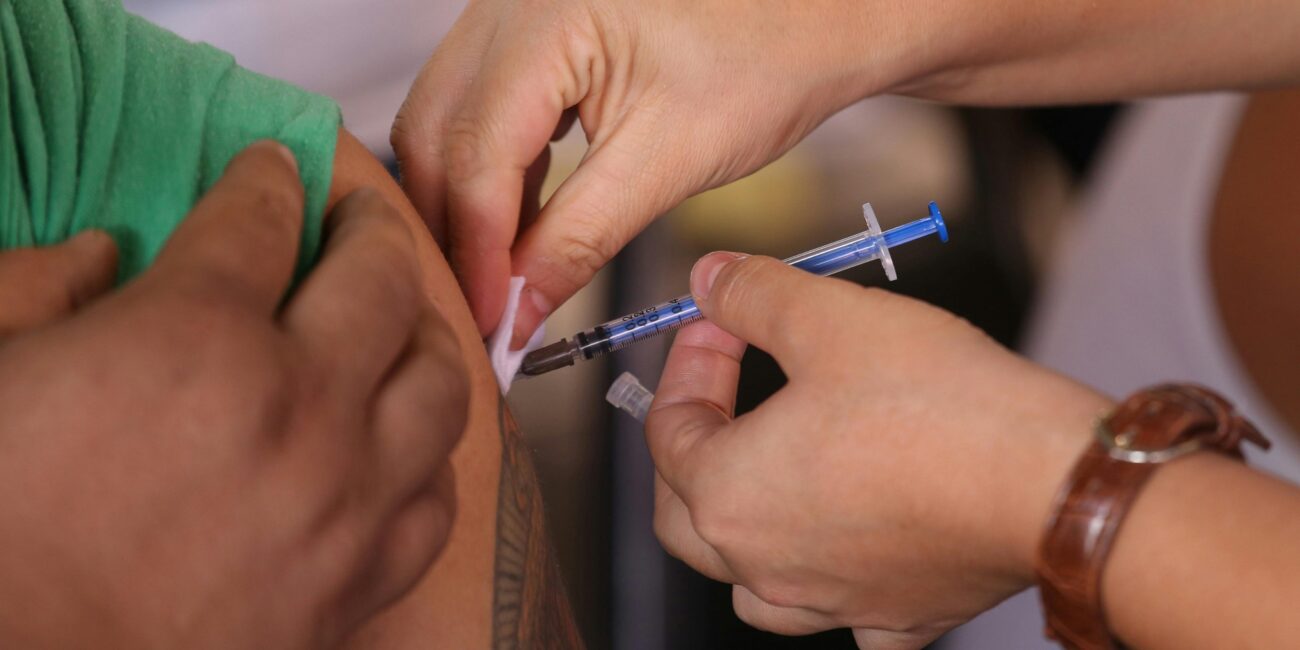
Health institutions in the Valencian Community are now offering free vaccinations against the human papillomavirus (HPV) to males under the age of 21, who were born in 2005 or later. The Valencian Ministry of Health published an amended vaccination schedule in the Official Gazette of the Valencian Government (DOGV) on Tuesday, March 24th, which established this. As confirmed by sources within the Valencian Government, all of these males who have not yet been vaccinated due to personal choice—that is, by paying for it—can now visit their primary care physician to request immunisation.

This vaccine has been administered to Valencian minors since 2022, when the Valencian Health Department implemented the protocol specified by the Ministry of Health in 2018. It has been available to girls free of charge since 2009, 13, years prior. The most recent official data indicates that 70,002 men have been immunised in the Valencian Community, with 23,458 in Alicante, 8,020 in Castellón, and 38,524 in Valencia. This new vaccination program could potentially benefit nearly 150,000 minors, as the male population between the ages of 12 and 21 is estimated to be approximately 220,000, according to data from the National Institute of Statistics (INE).
This is the second update on HPV vaccination in a brief period, as a single-dose vaccine was approved last year, ensuring the same level of immunisation as the previous two-dose regimen. The Ministry of Health contended that the programme’s adherence would be “significantly increased” as a result of this adjustment, as it is a single dose. “The World Health Organization (WHO) concluded in 2022 that there was substantial scientific evidence indicating that a single dose could provide a duration of protection and efficacy that was comparable to the previous two-dose regimen,” stated Mara Garcés, the Deputy Director General of Prevention and Health Promotion.
Men who were not included in the vaccination schedule were only able to obtain it by paying, with the exception of at-risk groups, who received it free of charge. A prime example of this is men who engage in sexual intercourse with other males. Families that elected to immunise their children or young men in their twenties who desired to safeguard themselves did not find the procedure to be cost-effective. Depending on the vaccine brand, the average cost per dose ranges from 150 to 170 euros. Additionally, prior to the change that was approved last year, age dictated the necessity of two or three dosages. As an individual aged, the number of injections required increased, and as a result, the cost.
Additional modifications to vaccines
The vaccination regimen is subject to additional modifications in the document published in the DOGV (Official Gazette of the Valencian Community). For instance, the meningococcal vaccine is substituted with a quadrivalent vaccine, which provides protection against serogroups A, C, W, and Y. Furthermore, the age range for the second dose of the measles, rubella, mumps, and varicella vaccines has been expanded to include children between the ages of two and four. The first dose of all three vaccines is administered at 12 months, with the exception of the chickenpox vaccine, which is administered at 15 months. This modification in the measles vaccine is occurring in the midst of a resurgence of cases and only a few months after Spain lost its status as a disease-free country. Alicante was the site of an outbreak in the Valencian Community a few months ago.
The Ministry of Health is also promoting the immunisation of children against childhood influenza, which will be administered to children up to 71 months old or six years of age. Additionally, the respiratory syncytial virus (RSV) vaccine is being included in the adult population. It is important to mention that this autumn marked the first time it was administered to individuals over the age of 65 and at-risk groups. This decision is affirmed by the official publication, which incorporates it into the predetermined vaccination schedule.
What is the rationale for receiving HPV vaccinations?
The most recent official data from 2021, which was released by the Health Department, indicates that 200 new cases of cervical cancer are detected in the Valencian Community each year, resulting in an incidence rate of 7.6 cases per 100,000 women. The mortality rate is approximately 50% of all diagnoses, despite the low number of cases.
A preventative technique with a success rate of nearly 90% is the human papillomavirus (HPV) vaccine. The infection has the potential to result in cervical cancer in women, as well as other types of cancer, such as anal or oropharyngeal cancer.
Gynaecologist Ana Bernabéu says that a study was currently underway to investigate the efficacy of a single dose in adolescents (and two doses in adults). Bernabéu emphasised that the vaccine’s effectiveness is enhanced when an active sexual life is not initiated, as sex at an early age is a risk factor.
Other Articles
Man accused of being a Russian spy arrested in Alicante