



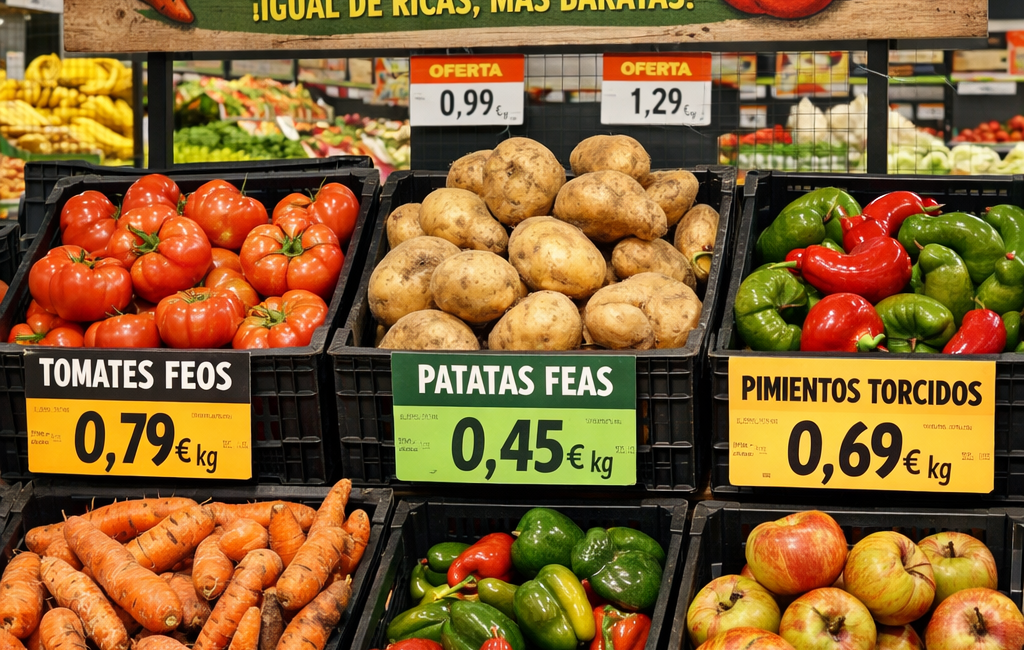
The Spanish government’s new law to reduce food waste has gone into effect. This new legislation mandates pubs, restaurants, and supermarkets to implement a range of procedures to keep food out of the garbage, which will benefit consumers. Establishments that do not comply with the laws will face fines ranging from €2,000 to €500,000.

But what precisely is the new regulation on food waste, and how will it benefit consumers? We provide all of the details below.
The new law establishes best practice measures for the administration and the various links in the chain to avoid food waste, such as requiring commercial establishments to have lines of sales for “ugly, imperfect, or unaesthetic” products to “promote the consumption of seasonal, local, or organic products”.
All of these foods will be discounted by up to 30%, benefiting the consumer by allowing them to purchase fruits and vegetables in good shape and quality at a lower price simply because of their less attractive appearance.
The regulation also seeks to incentivise the sale of products with upcoming “best before” or “use by” deadlines, based on the hierarchy of consumption priorities. The government will implement laws and initiatives to promote the alignment of “best before” dates with food waste prevention, including training and awareness campaigns on the proper interpretation of these dates.
Food chain agents will also be urged to increase the best before dates of their products to ensure acceptable quality, and research and innovation on the viability of foods to extend shelf life will be fostered.
Finally, collaboration agreements with companies, social initiative entities, and other non-profit organisations or food banks must be signed in order to donate surplus food.
Other Articles

