


The price of petrol and diesel is heading into the final stretch of June with very good news for Spanish drivers. The improved situation regarding the conflict in the Middle East is already having an impact on other products in the European market. Indeed, the reopening of the Strait of Hormuz is already reflected in the drop in the cost of oil, gas and fuel.

This confirms the Basjite’s position on diesel fuel after the United States and Iran confirmed the signing of a memorandum of understanding that opens a 60-day period to negotiate the details of a final peace agreement between the parties. As a first step, the Islamic Republic of Iran will immediately reopen the Strait of Hormuz, while the United States will immediately lift the naval blockade.
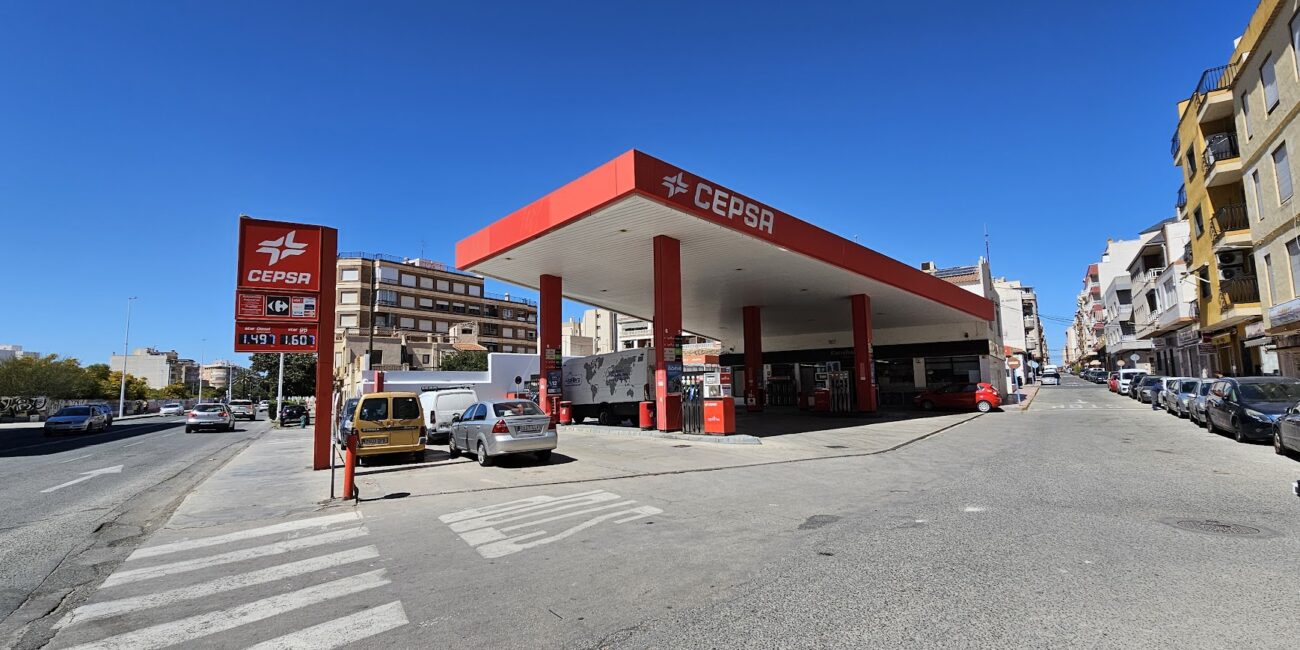
Specifically, the average price of a litre of diesel this week stood at 1.592 euro, its lowest level since the first week of March, after falling 1.42% compared to last week, according to data from the European Union Oil Bulletin.
In this way, the average price of diesel is consolidating well below the 1.883 euro it reached in the week prior to the entry into force on 22nd March of the Government’s fiscal measures to contain the impact on prices of the war in Iran.
In the case of the average price of a litre of gasoline, which has been less affected by price increases since the start of the conflict in Iran, it has also experienced a further decline this week, falling 1.4% compared to last week, to reach 1.5 euro, its lowest level since the third week of April.
It is worth remembering that on 20th March, the Executive, in an extraordinary Council of Ministers, approved a reduction to 10% of the VAT on diesel, gasoline and other hydrocarbons, as well as the reduction to the minimum allowed by the EU of the special tax on hydrocarbons and special aid for transporters and the agricultural sector, to counteract the increase of this raw material in international markets after the rises in the price of oil due to situations such as the blockade of the Strait of Hormuz, measures that, in principle, will be in force until 30th June.
These measures contained the upward spiral of fuel prices, which had led to a string of ten weeks of increases, due to the impact of the crisis in the Middle East that has driven up the price of a barrel of crude oil since the end of February.
Despite this, with this week’s prices, filling an average 55-litre diesel tank costs 87.56 euro, about 12.7 euro more than a year ago, when it amounted to about 74.8 euro.
For gasoline vehicles, filling an average tank (55 litres) currently costs around 82.5 euro, about 2.2 euro more than a year ago, when it exceeded 80.3 euro.
Despite the upward trend in recent months since the outbreak of the conflict in Iran, both fuels have always remained far from the highs recorded in the summer of 2022, in July, when gasoline reached 2.141 euro and diesel 2.1 euro.
The price of fuels depends on multiple factors, such as their specific price (independent of that of oil), the evolution of crude oil, taxes, the cost of raw materials and logistics and gross margins. Furthermore, the evolution in the price of crude oil is not directly reflected in fuel prices, but rather with a time lag.
With these levels, the price of 95 unleaded gasoline in Spain remains below the European Union average, which stands at 1.804 euro per litre, and the eurozone average, which stands at 1.84 euro. In the case of diesel, the price in Spain is also lower than the EU average, which is 1.804 euro, and the euro area average, where it stands at 1.86 euro.
The Ministry for Ecological Transition and the Demographic Challenge allows users to search and compare fuel prices at gas stations and electric vehicle charging points across the country through the Hydrocarbons Geoportal. The geoportal provides information on current discounts offered by gas stations of stores such as Carrefour, LIDL, Ikea or El Corte Inglés; or by banking entities through their credit or debit cards.
The evolution of oil and gas prices has become the best stress test of the impact of the peace agreement between Washington and Tehran. The price of Brent crude has fallen 14% since June 11th to around $77.40 a barrel based on data from the close of European markets, levels not seen since February.
Meanwhile, gas prices are also reflecting the easing of geopolitical tensions. The price of Dutch TTF, the European benchmark, has fallen 19% to 41.91 euro per megawatt hour (MWh) from 49.98 euro per MWh the previous week.
Changes in crude oil prices do not translate directly to fuel prices at service stations; there is a time lag. However, the expectation of an end to the conflict is beginning to be reflected in prices. Fuel prices have continued their decline for the sixth consecutive week over the last seven days.