



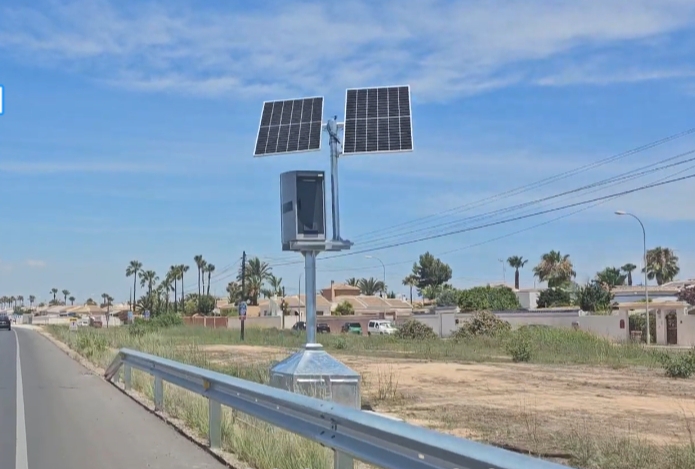
The number of speed cameras on Spanish roads has officially surpassed 3,600 following a significant expansion over the last five years. According to data from the latest V Radar Observatory report, compiled by Coyote using figures from the DGT traffic authority up to May 2026, the national surveillance network has grown by 37% since 2021, when 2,640 units were registered.

The network expansion has continued steadily over the last twelve months, with the installation of 226 new speed cameras across the country, representing a 7% annual increase. Among the recent technical additions to the national network is the introduction of mobile trailer-style cameras to monitor traffic.
The distribution of these devices shows a strong focus on built-up areas, with 44% of all speed cameras now located in urban zones. Meanwhile, 32% of the devices monitor secondary or conventional roads, and the remaining 24% are situated on major motorways.
Regionally, Catalonia, Andalusia, and Castilla y Leon lead the country with a combined total of 1,774 devices, which accounts for nearly half of all traffic cameras in Spain. Looking at other regional breakdowns, Madrid currently operates 273 cameras, the Basque Country has 257, the Comunidad Valenciana has 236, and Galicia has 234.
The rate of network growth has varied significantly between regions over the past year. The Canary Islands recorded the sharpest annual increase at 33%, followed by Murcia at 22%, and both Asturias and the Comunidad Valenciana at 15%, while Galicia saw a 10% rise. When looking at a broader five-year timeline since 2021, Asturias has experienced the highest total growth at 60%, followed by the Canary Islands at 56%, Cantabria at 50%, the Balearic Islands at 44%, and La Rioja at 38%.
The report highlights a growing trend of regional and municipal authorities taking an active role in managing local traffic speed control, particularly within urban environments to safeguard drivers and pedestrians.