

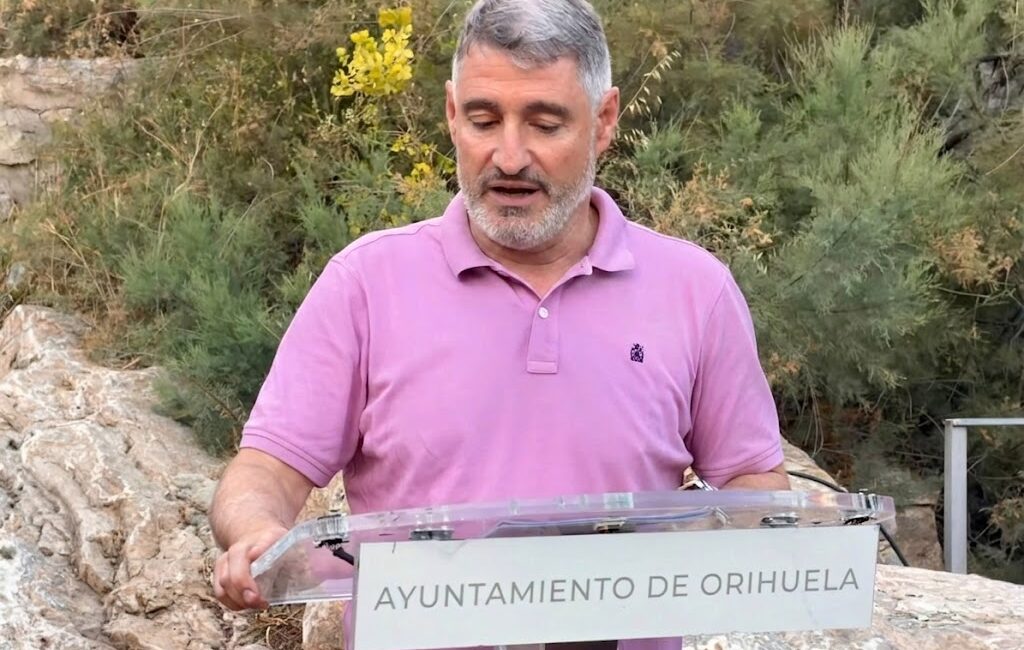
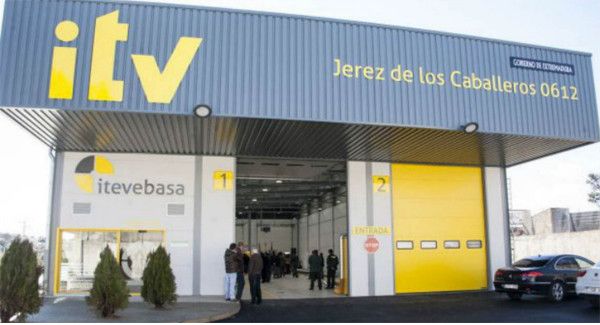
The Palace of Justice in Orihuela has hosted the final session of the oral hearing in which the mayor of Orihuela, Pepe Vegara, has stood trial. Vegara is accused of an alleged crime of falsification of commercial documents and two counts of tax fraud during his time as the administrator of the Vega Baja ITV Station. Three other company partners and an intermediary businessman were also tried alongside him.

According to the prosecution, Estación ITV Vega Baja spent 1.4 million euro in 2005 on purchasing 100,000 promotional diaries to distribute to its customers. This massive expenditure represented a quarter of the company’s total revenue for that year, exceeding its entire personnel costs. The prosecution alleges that while the actual market price of the diaries was 1.30 euro, they were purchased from an intermediary for 17 euro each. This was allegedly done to artificially reduce profits and slash corporate tax and VAT payments by more than half a million euro.
The events under scrutiny date back to 2004 and 2005 and were first reported in 2010, long before Vegara took on his political role. Both the Public Prosecutor’s Office and the State Attorney’s Office have maintained their request for a prison sentence of six and a half years for each defendant. This consists of three years for VAT fraud and three years and six months for corporate tax fraud. In addition, prosecutors are seeking a fine of 2,933,700 euro for corporate tax fraud and 629,587 euro for VAT fraud. They also demand civil liability payments to the Treasury totalling 645,000 euro, comprising 157,396.80 euro in VAT and 488,990.50 euro in corporate tax, plus late payment interest.
Conversely, the defence has demanded the acquittal of the accused. They argued that the dispute should have been handled through an administrative regularisation procedure rather than criminal courts. Pointing to serious procedural errors and an investigation that has dragged on for 21 years, the defence claimed a lack of due process rendered the proceedings null and void. They also argued that undue delays should, in the event of a conviction, reduce any sentences by two degrees. Furthermore, they cited the statute of limitations for the VAT fraud charge, which they say should eliminate that three-year sentence, expressing confidence that any corporate tax conviction would be reduced to just a few months.
The prosecution, however, requested a conviction, asserting that invoices issued by intermediary firm Oricofi to the vehicle inspection station did not fake the existence of the planners, but rather their price. The prosecutor described the 17 euro unit price as “exorbitant”, “unrealistic”, “fictitious”, and “completely unjustifiable”, used solely to inflate deductible expenses, boost VAT paid, and fraudulently lower the company’s tax liability.
To support this, the prosecution relied on a tax inspection report showing that the diaries followed a chain of intermediaries with much lower prices: starting at 1.31 euro from the wholesaler, rising to 1.56 euro, then 1.97 euro when sold to Oricofi, before jumping to 17 euro on Oricofi’s invoice to the ITV station. This final price hike of over 762 per cent was presented as the primary proof of the crime.
The prosecution attributed the physical creation of these invoices to Vicente Casanova, the administrator of Oricofi. The ITV administrators, Pepe Vegara, María del Carmen Cutillas, and Ricardo Pérez, are accused of acting as necessary collaborators who consciously benefited from the documents. Although the defence argued that decisions were made by one of the founders, Ramón Pérez Cases, the prosecutor pointed to testimony from a former manager stating that the three directors did indeed hold decision-making power.
Furthermore, the prosecution highlighted that some promissory notes issued to Oricofi were withdrawn in cash almost immediately by Casanova, a method described as typical of fraudulent billing. The State Attorney’s Office has also accused Ramón Pérez Zambrana, suggesting that some of this cash returned to the vehicle inspection company’s sphere, allowing both tax evasion and the recovery of the spent funds.
In contrast, defence lawyers Manuel García Martínez, Pilar Hernández, Ignacio Pérez Valero, and Salvador Mas argued that no document falsification occurred because the transactions were real. They insisted that since the diaries were actually delivered and paid for, the dispute is merely an administrative disagreement over whether the price was excessive and what expenses could be deducted, rather than a criminal offence.

