


Speeding proved far more costly on Alicante’s roads during 2025. The total amount of fines issued by the Directorate General of Traffic in the province reached 28,714,641 euro, almost eight million more than the 20,789,853 euro recorded during the previous year.

The increase was particularly pronounced in fines for speeding. These fines generated 13,217,799 euro, compared to 7,200,643 euro in 2024. The rise was therefore 83.56% in just one year, according to the summer report prepared by the European Automobile Association (AEA).
Alicante recorded the fourth largest provincial increase in Spain in the amount of speeding fines. Only Almeria (179.95%), Granada (166.85%), and Valencia (87.02%) saw higher increases. Santa Cruz de Tenerife (75.29%) and Asturias (67.61%) followed.
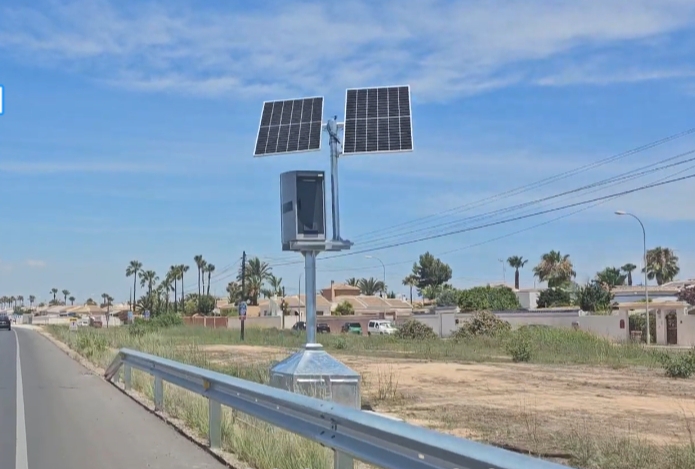
The report identifies one of the country’s main enforcement hotspots in the province. The speed camera installed at kilometre 7 of the CV-905 issued 72,557 citations during 2025, making it the second most active device in all of Spain, even issuing a ticket to the official Torrevieja City Hall car.
Only the speed camera located at kilometre 326 of the A-7 highway, in the province of Valencia, surpassed it, reaching 90,766 citations. That camera had only recorded six fines during 2024, because it began operating at the end of the year.
Following the speed cameras in Valencia and Alicante is the one at kilometre 127 of the A-15 highway in Navarre, with 67,445 citations. Fourth place goes to the camera at kilometre 1 of the TF-2 highway in Santa Cruz de Tenerife, with 49,641 fines, and fifth to the one at kilometre 968 of the A-7 highway in Malaga, with 45,050.
Alicante’s presence in the ranking is not limited to the radar on the CV-905 at the entrance to Torrevieja. Five devices from the province are among the 50 speed cameras that issued the most fines in Spain last year.
The second speed camera in Alicante on the list is located at kilometre 0 of the A-77A, with 30,742 citations. It ranks eleventh nationally and does not appear with any recorded activity in the 2024 comparison.
Nearby is the speed camera at kilometre 8 of the A-70, which issued 29,488 citations, compared to 18,196 the previous year. This represents an increase of more than 11,000 fines in twelve months.
The fourth speed camera in the province included in the ranking is located at kilometre 13 of the CV-86 highway, with 24,732 citations. Its activity skyrocketed compared to the 385 citations recorded during 2024.
Completing the list in Alicante is the speed camera at kilometre 27 of the A-70, with 14,616 citations. It is the only one of the five that slightly reduced its activity, since a year earlier it had issued 15,432 fines.
The amount of fines collected for speeding makes Alicante one of the provinces with the highest revenue associated with speed cameras. Its 13.2 million euro places it fourth nationally, behind Valencia (18.9 million euro), Madrid (17.9 million euro), and Cadiz (16.5 million euro).
The amount of fines for speeding represents approximately 46% of the 28.7 million euro recorded for all traffic violations in the province during 2025.
Furthermore, Alicante recorded the second largest increase in Spain in the total amount of fines. The rise was 38.1%, surpassed only by Granada, where the increase reached 71.44%.
In absolute terms, Alicante also ranks among the provinces with the highest total volume of fines. Only Madrid, with 70.4 million euro; Valencia, with 39.8 million euro; and Cadiz, with 32.8 million euro, have higher amounts.
Across the country, the DGT’s speed cameras reached a record figure of 246,802,934 euro in fines for speeding during 2025, 14% more than during the previous year.
According to AEA, the increase is not due to widespread driver indiscipline, but mainly to the implementation of new devices located at strategic points on the road network.
The organisation estimates that the money generated by speeding fines already represents 41.5% of the total amount of traffic penalties in Spain, not including Catalonia and the Basque Country, which have transferred powers in this matter.
The report also highlights the concentration of fines issued to a small group of devices. Of the more than 1,000 speed cameras deployed, the 50 most active ones issued 1,342,285 fines throughout 2025.
European Associated Motorists argues that a significant portion of these speed cameras are located on motorways and dual carriageways, while conventional roads account for approximately 70% of accidents involving casualties, according to the organisation.
The president of AEA, Mario Arnaldo, believes that the DGT should review its speed control policy because, in his opinion, the current distribution of speed cameras is not sufficiently reducing either speeding or accidents.
This assessment comes from the drivers’ organisation, which interprets the high volume of fines as a sign that some of the devices are primarily used for revenue collection. The DGT, for its part, typically defends speed controls as a tool for reducing the number and severity of accidents.
The data, in any case, paints a particularly significant picture for Alicante: five of the most active speed cameras in Spain are in the province, one of them ranks second nationally, and the amount of speeding fines practically doubled in one year.