


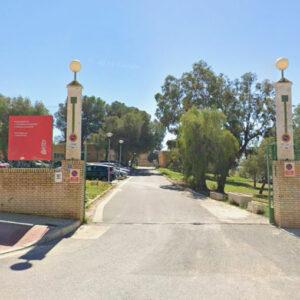

The state-owned company Acuamed has estimated the electricity supply required to maintain operations at the Torrevieja desalination plant in 2027 at 48.6 million euro. The budget for the facility is calculated using an estimated consumption of 378 GWh. This results in a base cost of 40.17 million euro, with an additional 8.43 million euro in VAT, bringing the total to the budgeted 48.61 million euro. This represents a 20 per cent increase compared to 2026, when the electricity bill was set at 40 million euro including VAT.

The energy bill required for reverse osmosis technology—separating water molecules from salts using pressure—remains the highest cost in producing each cubic metre of water, which sits at around one euro. Sixty per cent of this figure represents energy investment. The Torrevieja desalination plant currently produces over 80 cubic hectometres of water annually. It plans to increase production to 120 cubic hectometres starting in January 2027, although the supply contract does not explicitly mention this increase. However, the estimated cost, with its 20 per cent rise, appears designed to cover the higher demand.
Of the total water generated, around 100 hectometres will be allocated to the intensive irrigated agricultural sector of Campo de Cartagena in Murcia (70 per cent of total use), whilst 20 per cent will remain in the province of Alicante. This will go mainly to Riegos de Levante Margen Izquierda and the irrigation communities of the Margen Derecha in the Vega Baja, including Orihuela, San Miguel de Salinas and Pilar de la Horadada. The remaining 20 hectometres are reserved for urban consumption. However, when not needed for urban supply since the plant began operating in 2014, these flows have been used by the same irrigation communities grouped in the Central Union of Irrigators of the Tajo-Segura Aqueduct to help alleviate transfer shortages, which now face further projected cuts due to ecological flow increases on the Tagus endorsed by the Supreme Court.

The scale of the energy cost is highlighted by the fact that agricultural companies only agreed to receive state-subsidised desalinated water under a ten-year agreement ending in 2032 to avoid financial ruin. Irrigators pay around 0.40 euro per cubic metre for this desalinated water, with the state and taxpayers covering the remainder.
The annual consumption of 378 million kWh equals just over one million kWh per day, representing a continuous demand equivalent to maintaining an average power of about 43 MW for 24 hours. Based on an average household consumption of 3,500 kWh per year, the energy projected for the plant equals the annual consumption of roughly 108,000 homes. Applied to electric mobility, assuming 15,000 kilometres driven per year at 18 kWh per 100 kilometres, those 378 GWh could power approximately 140,000 electric cars for a year. Nationally, compared to Spain’s annual electricity demand of 256 TWh, the plant’s projected consumption represents about 0.15 per cent of all electricity consumed in the country, though it remains a remarkably high volume for a single installation.
This consumption represents a sustained operational need to draw seawater, pump it, process it through desalination and transport the flows to distribution points. This continuous requirement for high-pressure pumping to separate salt from water is the key factor driving up the price of desalinated water before it reaches tap or irrigation networks.
To help reduce energy costs, Acuamed is processing plans announced by Prime Minister Pedro Sánchez in February 2024 to build a self-consumption solar power plant in the area. Progress has been slow, remaining at the preliminary design stage due to opposition from municipalities where the site has been proposed. The facility would cover approximately 150 hectares of agricultural land across San Miguel de Salinas, Orihuela and Almoradí.
The contract for the Torrevieja facility forms part of a larger agreement. Acuamed, which reports to the Ministry for Ecological Transition (MITECO) and manages state desalination infrastructure as well as the Júcar-Vinalopó water transfer, has prepared a single electricity supply contract through 2027 for all its operations. This overall tender has a base budget of 178.48 million euro including VAT. Torrevieja remains the largest desalination plant in Europe and represents the largest single-facility energy consumer in the group. Since reaching full production speed in 2018 following the construction of a new electrical substation that doubled capacity from 40 to 80 cubic hectometres annually, its energy costs have consistently hovered around 40 million euro per year, exceeding 50 million euro during the 2022–2023 energy crisis. Previous supply contracts have been awarded to major energy operators, primarily Iberdrola and Acciona.
Acuamed notes that the financial figures do not represent a fixed price. Demand from desalination plants and pumping stations varies based on user requirements, hydrological cycles and legal obligations. The contract does not guarantee a fixed consumption or expenditure, as final payments will reflect actual energy measured by metres. Acuamed considers these facilities essential for urban supply and high-stress agricultural irrigation, justifying the need to secure continuous power through 2027 as the current agreement expires on 31 December 2026.
The contracted energy must come entirely from renewable sources, established as an essential obligation where the successful bidder must provide guarantees of origin issued by the CNMC or equivalent systems. The pricing formula for high-consumption lots, including Torrevieja, will combine day-ahead (OMIE) and futures (OMIP) market indices, accounting for 95 out of 100 evaluation points, with the remaining 5 points covering demand flexibility management. The contract will run for twelve months from 1 January to 31 December 2027, with potential earlier activation for preparatory work.

The desalination process begins by drawing seawater a few hundred metres offshore from Los Náufragos beach, filtering out coarse debris such as algae, sand and organic matter before applying finer filtration and chemical treatments to protect reverse osmosis membranes. High pressure then forces seawater against thin membranes to separate fresh water from concentrated brine, which is returned to the sea. Producing 80 cubic hectometres of water requires drawing more than double that volume in seawater. The resulting fresh water is then remineralised, disinfected and pumped to the Campo de Cartagena post-transfer canal, the La Pedrera reservoir and the Taibilla Canal Consortium network.
Over the past fifteen years, political and agricultural debate around desalination has evolved. Farmers who once strongly opposed the technology now view it as a necessary complementary water source, focusing their concerns on costs and water quality. Meanwhile, the central government relies heavily on desalination despite delays in connecting the facility to areas lacking physical access, stalled solar power projects and delays in constructing a second Vega Baja desalination plant intended to add 100 cubic hectometres of capacity. Locally, Torrevieja City Council continues to question the facility whilst demanding promised municipal compensation works, which remain stalled due to a judicial investigation into historic management cost overruns at Acuamed.
Other Articles

Orihuela launches its 2026 summer cinema programme
Elche unanimously agrees to tackle airport noise pollution